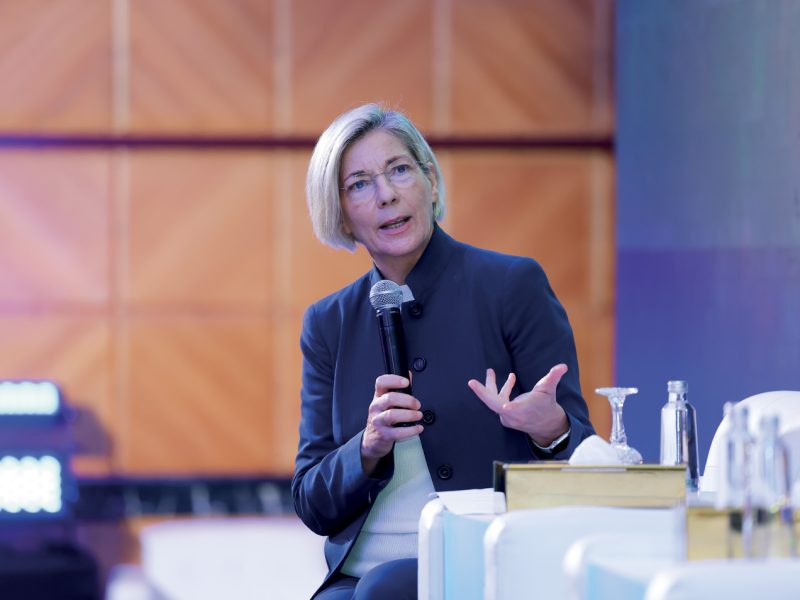
Vienna Eleuteri, an anthropologist and environmental scientist, has a clear mission: to develop tangible, science-based projects in the yachting field aimed at safeguarding the health of a living organism, the sea
by Chiara Risolo
It is rare to meet someone called Vienna. It is an unusual name for a person.
Yet, it only takes a few words to realise how fitting it is. From that splendid European city, she has inherited the proverbial pragmatism, order, and rigour. Her surname, Eleuteri, is also intriguing. Anyone with a background in classical studies will recognise a familiar sound: eleutheria. It is a Greek word meaning freedom. Well then. Vienna Eleuteri, an anthropologist and sustainability scientist, embodies all of this, or rather, this too. This is reflected in her impeccable academic grounding and superb critical thinking, which is indeed free. A mindset honed in the field of research – urgent and necessary – to find concrete answers to a single question: ‘What can we really do to help the environment?’. It’s a huge question that often veers towards populism: grand, inconclusive words to win applause and justify a token appearance in some debate.
// «For many of us, the sea is, above all, an ENCOUNTER: a shifting light, a silence that brings inner peace. It is a living entity that breathes in the currents, preserves memories in its salt, and shapes our climate. And it reminds us of an essential TRUTH: life is not the sum of its parts, but a relationship». //
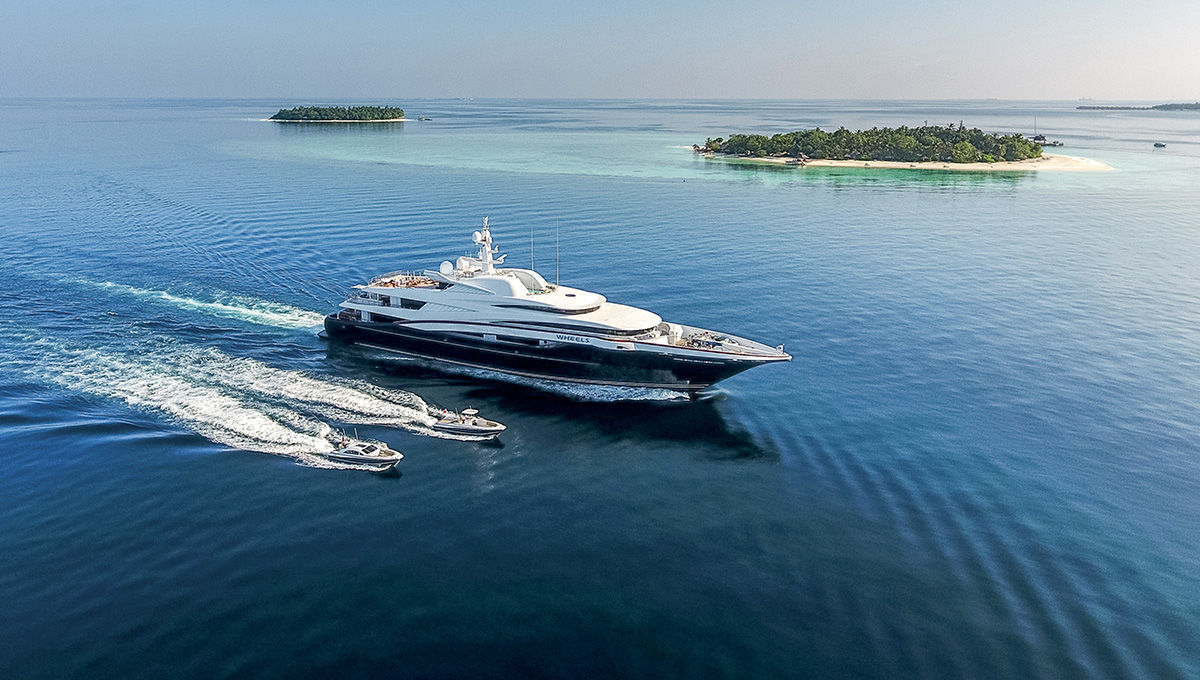
Vienna isn’t having any of it. In an interview with Barche, she outlined a potential new direction that, in this instance, pertains to sustainability in yachting. “For years, in this sector, the word ‘sustainability’ has risked remaining nothing more than a promise uttered in many different languages: isolated initiatives, declarations, good intentions. What was missing was what makes a transition credible: a common framework. A shared, scientific, replicable method. Without a method, sustainability remains an aspiration; with one, however, it becomes a responsibility”, says the scientist.
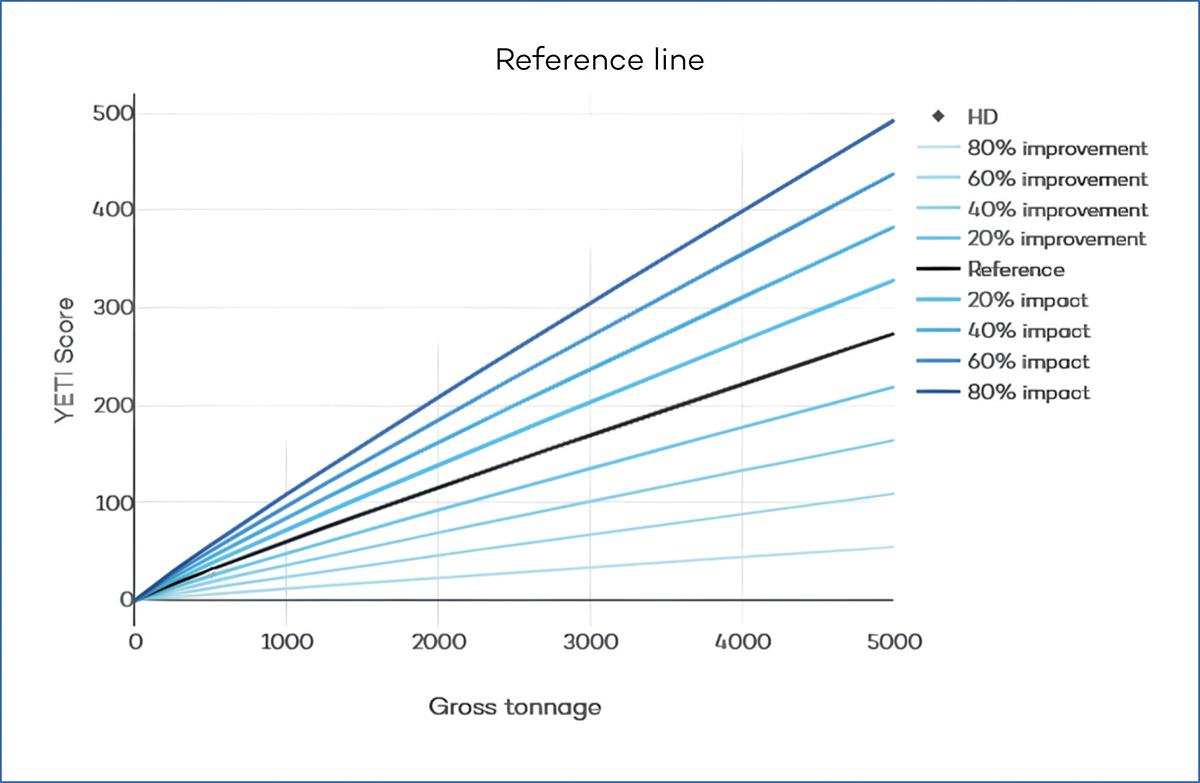
“On 3 February, something changed. With the approval of ISO/TS 23099, a technical specification that introduces a standard method for measuring and comparing the actual environmental impact of superyachts, sustainability finally has a benchmark that leaves no room for last-minute interpretations”, she continues. In Vienna’s view, however, metrics are not the final aim but the starting point, “because truly measuring one’s impacts – in a holistic and systemic way – does not merely serve to reduce harm. It serves to chart a different course, moving beyond net-zero and steering towards what we now call nature-positive”, she points out.
// «My background is multidisciplinary, but anthropology remains my preferred lens through which to view the world: it has taught me to SEE systems not as individual parts but as networks of relationships – between people, economies, cultures, and ecosystems. Everything moves TOGETHER, and nothing exists in isolation». //
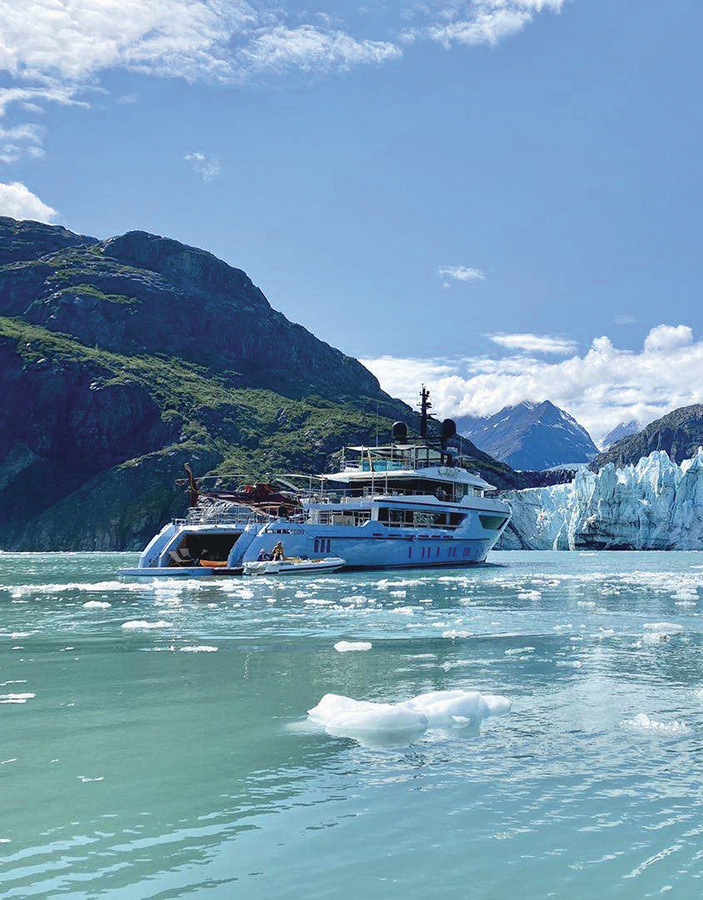
And it is in this context that Ocean Assist, emerges as the latest in a series of programmes through which Eleuteri supports and accelerates the sector’s transformation. It is a long-term, coherent and forward-looking initiative, driven by scientific determination and a love of the sea. The project originates from a simple yet revolutionary insight: “Ensuring that metrics are not merely numbers, but become quantifiable and comparable environmental contributions, capable of guiding investment in blue carbon ecosystems and triggering a genuine multiplier effect – climatic, ecological, social and economic”, she emphasises. The Water Revolution Foundation, a non-profit organisation dedicated to fostering a more sustainable boating industry by ensuring transparency and scientific rigour in its programme development, has also played a pivotal role in this steadfast and virtuous endeavour. Let us explore further into the mind of a genuine scientist – a journey which, in itself, regardless of the subject, is a wonderful experience.
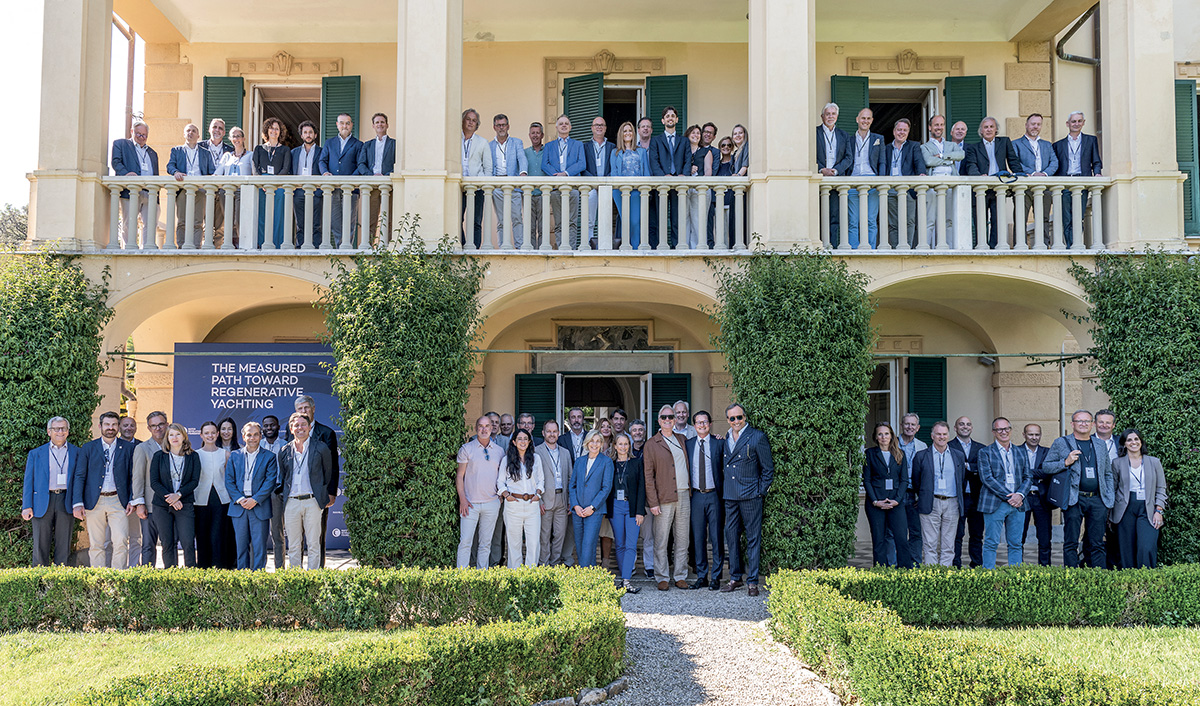
The photo shows the third edition of the event, hosted by Sanlorenzo in Lerici, where the 2050 Roadmap for Regenerative Yachting was signed.
The Water Revolution Foundation is a non-profit organisation dedicated to creating a more sustainable boating industry, ensuring transparency and scientific rigour in the development of its programmes. “The Foundation was established to accelerate the creation of a transformative ecosystem capable of placing the science of sustainability at the centre of a strategic industry that, by its very nature, has a special relationship with the sea. It is not an isolated project, but a meeting point where shipyards, designers, supply chains, research bodies, the media and institutions can stop working in parallel and begin to collaborate towards a common goal. I have had the honour – and the genuine pleasure – of witnessing this shared goal embraced by people I regard as ‘revolutionaries’ in the best sense: Henk de Vries, Peter Lürßen, Philippe Briand, Martin Redmayne and Robert van Tol, co-founders and above all, passionate fellow travellers, capable of transforming a vision into a collective journey. Sanlorenzo is also a partner of the Water Revolution Foundation, and Massimo Perotti has taken a personal interest in and actively participated in the Business Leaders Event we organise each year. Ultimately, the mission has always been the same: to prepare the sector for the future. Not simply ‘more sustainable’ as a slogan, but more mature, responsible, and capable of making clear, informed decisions about how to coexist with the sea without depleting what sustains it”.
// Vienna Eleuteri was named Trailblazer of the Year at the 2024 Women’s Yachting Awards and received the title
of WOMAN OF EXCELLENCE, an official honour bestowed
upon her in 2025 by the Italian Senate. //
You work in Saudi Arabia, where you collaborate with the Saudi Red Sea Authority, a government entity. What exactly do you do? The Saudi Red Sea Authority oversees the regulation and development of maritime tourism on the Red Sea; I am involved in shaping the future Maritime Tourism Law, aiming to create a regulatory framework that focuses not only on the sector’s growth but also on its ability to foster balance, quality, and value over time. The challenge is to build a model that incorporates sustainability, safety, governance, and a regenerative vision from the outset. Not a corrective measure applied after the fact, but a well-planned development from the very beginning. In this sense, the Saudi Red Sea today represents a particularly important testing ground, where measurement can inform policy and policy can guide informed decision-making.
Why did you dedicate your heart, time, and energy specifically to yachting? I have always loved sailing. It taught me that the sea isn’t something to be conquered; it’s something to listen to. However, beyond the romantic aspect, my entry into yachting originated from a practical question: ‘How is it possible that such an advanced industry, so closely connected to the sea, still lacks a shared method for truly measuring its environmental impact? It was also because of this question that I decided to take on a role that was new to the industry at the time, becoming the sector’s first sustainability manager in 2010, with a clear goal: to bring scientific tools to yachting.
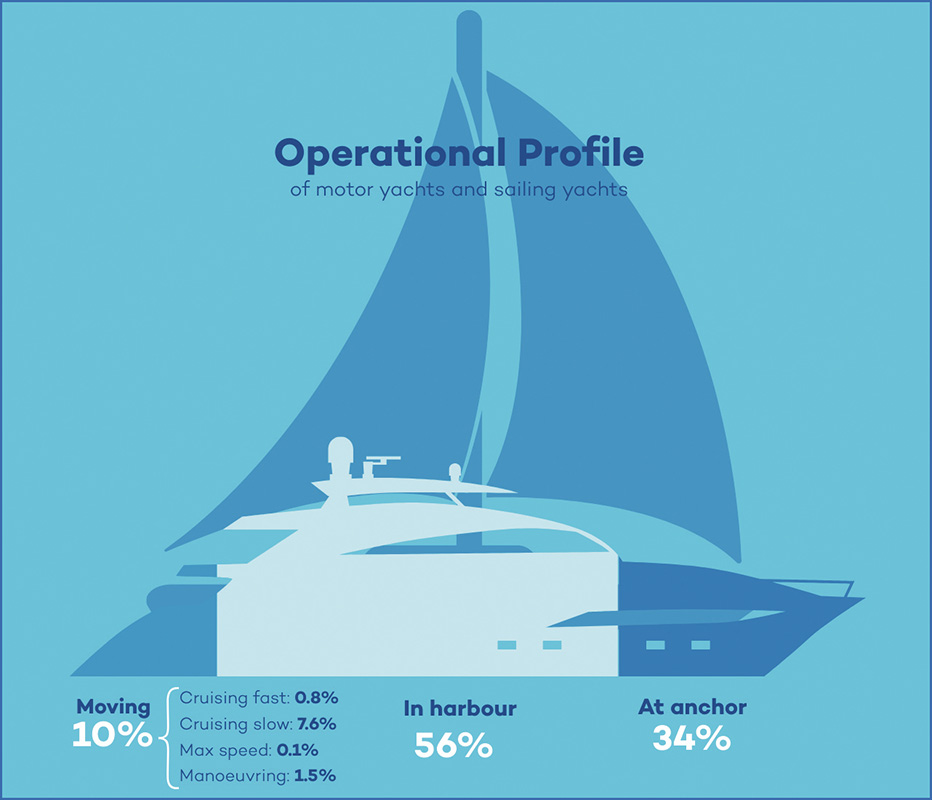
What do you mean when you say that metrics are not just numbers? Established metrics are scientific tools that help us define operational profiles, compare performance and impacts, and move beyond simple methods. In the past, many aspects were purely qualitative; now, they can be measured and compared. That is the key: when impact becomes measurable, it also becomes a responsibility. We must stop focusing on a single point, a ‘convenient’ number, and start considering the bigger picture.
// «I see water as an ETHICAL principle even before a technical one: it is the dividing line between arrogance and belonging. It is the simplest and most difficult lesson: learning to THRIVE without depleting the life that sustains us». //
When can a vessel truly be considered sustainable? Now more than ever, we must choose our words carefully: ‘sustainable’ is not an absolute label. It represents a journey that can be demonstrated. A yacht is credible when it assesses its performance using a shared methodology, minimises its impact in line with real-world usage patterns, and makes its data and decisions transparent. In this context, ISO/TS 23099 does not measure how ‘green’ a yacht is, but how it performs against a common benchmark, fostering better-informed decisions from design to policy. And today, I would add, we must go further: it is not enough merely to ‘do less harm’. We must learn to contribute to the living marine ecosystem actively.
A mark for the Italian shipbuilding industry and one for the international sector, naturally in terms of sustainability. I’d give the former an 8 for its design capabilities, culture of quality, and growing awareness of the issue. The latter earns a 7.5: there are some outstanding examples, but there is still inconsistency in the systematic adoption of tools. The real leap forward, however, is not just technological: it is cultural. We need to move from one-off initiatives to a shared language, from maximum effort to method.
If, on the other hand, you were to assign a mark for humanity’s care of the sea in the broadest sense, what would it be? I’d say a 6. If we consider the sea as a living system, we are still far from achieving normality. There are encouraging signs: the High Seas Treaty (BBNJ) reached the 60-ratification threshold on 19 September 2025 and entered into force on 17 January 2026.
Water Revolution Foundation: What is it, and what exactly does it do? It was established in 2018 out of a very practical, almost inevitable need: to share with the entire yachting sector a scientific model I developed in previous years, which, in 2015, was recognised by the UN and UNESCO-IOC as the Blue Solution. For me, that recognition was not a milestone to celebrate but an invitation to open up, make it accessible, and build an international framework.
«The High Seas Treaty (BBNJ) reached 60 ratifications on 19 September 2025 and entered into force on 17 January 2026. This marks a historic milestone, as it finally introduces stricter rules where there had previously been a legal gap beyond national jurisdiction. However, the gap between conservation and restoration remains vast: we are still well below 30% of the ocean protected (around 9–10% according to various trackers), which means that conservation – though increasing – has not yet reached a significant scale. Meanwhile, the ocean continues to tell us the truth in its most direct language: the ocean’s heat content has reached new record levels, and the WMO notes that about 90% of the excess heat from global warming ends up in the sea. It is here that we see ‘doing less harm’ is no longer enough. We need to leap: to genuinely realise a plan to restore the planet’s most vital system. I hope that a strategic and high-profile industry like the boating sector can lead the way, not only by carefully measuring its own negative impacts holistically and systemically, but also by showing that this awareness can forge a new path».
What steps will follow the approval of ISO/TS 23099? Approval is only the beginning. Now, it is about embedding the standard into real-world processes: design, refit, operations, and policy. It also involves establishing it as a benchmark that enables comparability, transparency, and informed decision-making. However, there is another crucial step: linking measurement to regeneration. If I understand my impacts, I can also decide how to give back value to the living marine system. Net-zero is a threshold. Nature positive is a direction. When this direction leads to actions that enhance ecosystem health, we are genuinely talking about regeneration. In this context, the Saudi experience serves as an advanced laboratory: the work initiated by the Saudi Red Sea Authority is regarded as one of the most advanced applications of its kind, reinforcing Saudi Arabia’s leadership in adopting scientific approaches to sustainability within the sector. The framework I am developing aims to create the first model of a regenerative blue economy.
Water, beyond being a subject of study, what does it mean to you? Water is life; it is a connection. It is the first environment where life learned to exist, and it remains its greatest support today: regulating climate, safeguarding biodiversity, nourishing coastlines, and balancing human communities even when we’re unaware. When we say ‘sea’, we are actually referring to a living infrastructure that enables everything else. That is why the word ‘resource’ always strikes me: it seems to imply ‘something to be taken’. But water is not ‘something’. It is, in a way, a collective organism made up of currents, species, habitats, and invisible cycles. And we are not separate from this organism. We are temporary cells within the same network. Once you understand this, the question changes: it is no longer, “How much can we use?” It becomes, “What can we give back?” Here, sustainability shifts from damage control to a pact. Not out of idealism, but out of realism, because without a healthy ocean, there is no blue economy, no coastal tourism, and no stable climate future. Nor does that ‘green’ we imagine on Earth truly exist.
(Sustainability Yachting – A common benchmark – Barchemagazine.com – Excerpted from Barche, May 2026)