The beautiful island in the Indian Ocean hosts several factories producing ship models, some of which have been worked on the market for decades
by Bruno Cianci
The island of Mauritius has an industrial sector that few would expect to find in this gem off the eastern coast of Madagascar, in the Mascarene archipelago: the artisanal production of ship models.
Considering it a flourishing activity, compared to tourism, would be an exaggeration to say the least; however, it is surprising to note that here, workshops and producers of this type of artefact are by no means few in number. Thanks to competition and the relatively low cost of labour, these workshops produce models that are sold and shipped worldwide – efficiently and at significantly lower prices than similar products made in Europe or North America.
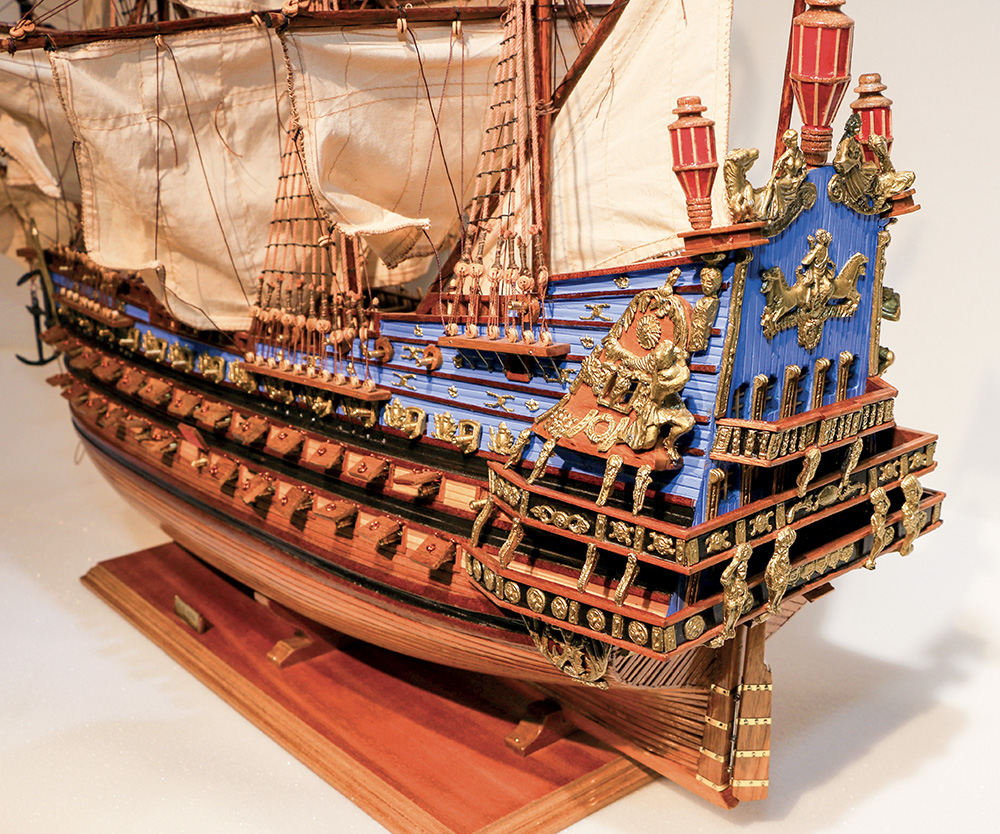
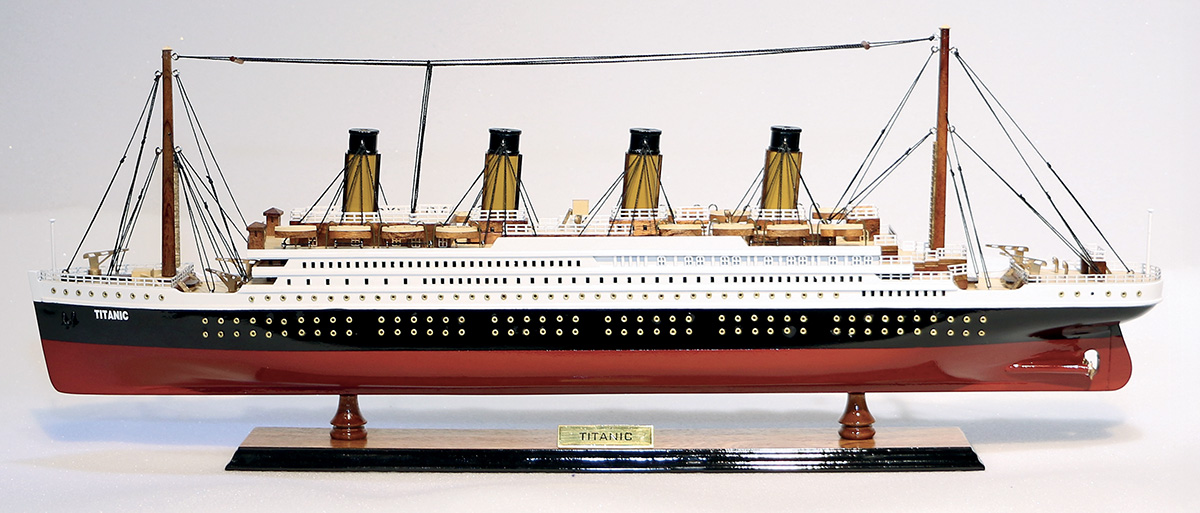
Prices vary considerably depending on size: from around €70–75 for a miniature ship to over €3,500 for a model over a metre in length, whilst half-hull models cost between €40 and €100.
A ‘hub’ for modelling enthusiasts
The area with the highest concentration of these factory workshops is Curepipe, located inland, about a 30-minute drive from the capital, Port Louis (on the western coast), and from the international airport in the southeast of the island. Here, many producers survived the 2008 crisis, which severely affected this industry as much as it did ‘actual’ boating. Some of the most notable workshops include Bobato, Pride of the Island, and, most notably, Le Port. Founded in 1988, Le Port features a showroom and workshop that has become a must-visit destination for visitors seeking handcrafted souvenirs. “Each year – says manager Krisen Pareanen – Le Port produces up to five hundred ship models in various sizes, and maybe about fifty half hulls, which are in much lower demand. We buy the wood, which generally comes from Indonesia, from local distributors. We have had and still have clients from all over the world: in the ’90s, they were primarily European; until the Covid pandemic, we had significant Chinese clients; in recent years, we have been working extensively with prominent Indian clients, but we sell worldwide”.
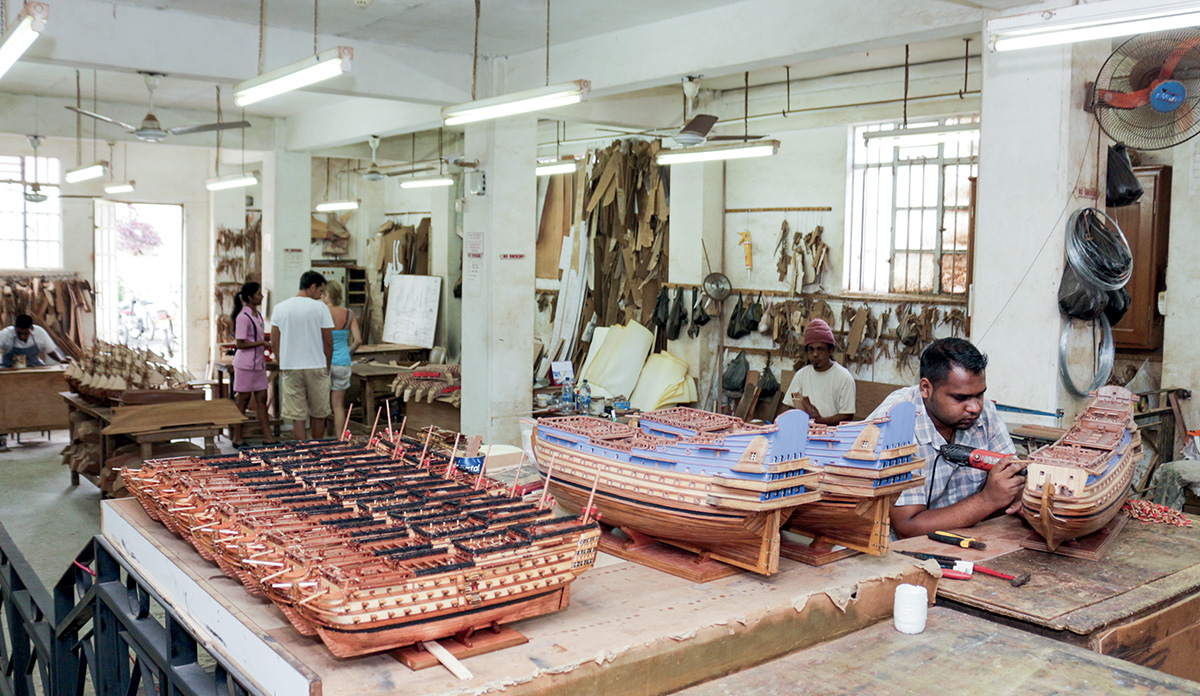
The area with the highest concentration of these factory workshops is Curepipe, inland, half an hour’s drive from the capital, Port Louis, on the west coast, and from the international airport in the south-east of the island.
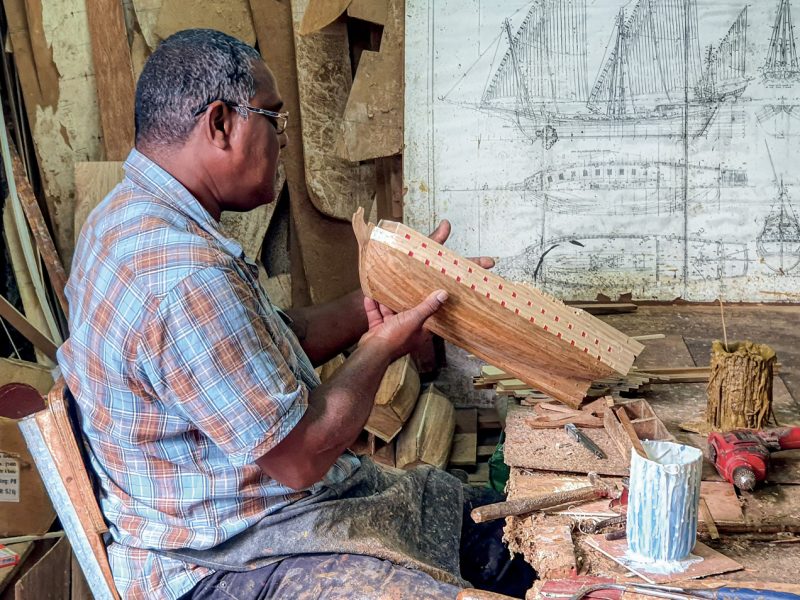
Prices vary considerably depending on the size of the model, from about 70-75 euros for a miniature ship to over 3,500 euros for a model more than one metre long. Half hulls cost between 40 and 100 euros. The models are crafted by a fluctuating number of workers: ten are permanent employees, while twenty more work part-time. Each project takes up to four months to complete, depending on the size, complexity, and, of course, the client’s urgency. Some may require greater effort: “The biggest product we have built”, Krisen adds, “was a model of the HMS Victory almost four metres in length, which can still be admired here in Mauritius. A piece like this obviously required a lot of time to complete”.
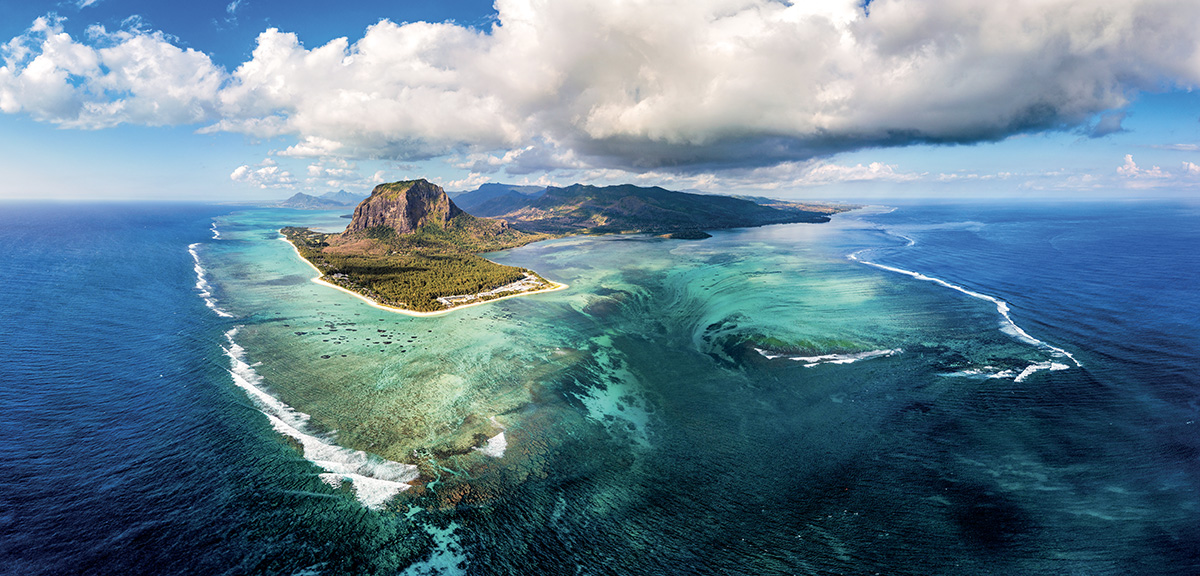
Mauritius at a glance
Mauritius was named in honour of Prince Maurice van Nassau in 1598, when the Dutch first arrived on the island. 102 years later, the island became a French colony (Isle de France), but after the end of the Napoleonic Wars, it was ceded to Great Britain, and Mauritius gained independence in 1968. The popular perception is that Mauritius is a small island where the only activities are swimming and sunbathing, but this is far from the truth. In reality, the island, with a population of around 1.2 million, is large enough that it takes over two hours by car to travel from the northern tip to the southern tip, and no less than an hour from west to east. Another pleasant surprise on the island is the local cuisine: the significant presence of immigrants from the Indian subcontinent (70%), who live alongside Africans, Creoles, and other minorities, means that the cuisine reflects all these cultures, with truly excellent results.
Pocket-sized yachts
While large ships dominate Le Port, yachts have become the speciality of another Mauritius-based company located in the northern part of the island, in the area of Grand Baie, a paradise for outdoor life and snorkelling. The shop in question is called Historic Marine. Founded in 1982 by Charles Edouard Piat, this factory is now managed by his son Serge, a former skipper who, in 2008, when the global economic crisisforced dozens of other model producers in Mauritius to close, decided to invest significant time and money to keep going. “We build between 150 and 200 models a year in our workshop”, says Serge, “depending on the complexity, while our half hulls are only about 25-30 pieces a year. 40-45% of our orders are for models of a particular boat requested by an owner, generally a miniature replica of their yacht. The remaining 55-60% consists of products that visitors choose from among the many pieces we offer in our catalogue: famous ships, boats that sailed in the America’s Cup, or, at times, traditional working ships. Prices vary from about 250 to 2,500 euros for a model made in series to 800-4,500 euros for a unique model made according to drawings provided by the client. Needless to say, the more complete the documentation we receive, the more accurate our models will be”.
Historic Marine’s showroom is a bright space filled with display cases made of wood and glass. Alongside the usual ships, such as Victory and Vespucci, visitors can admire a French war galley, Jacques Cousteau’s distinctive Calypso, ocean liners, Riva and Chris-Craft runabouts, and even sailing boats from the America’s Cup with ancient equipment dating back to the era when the Seawanhaka Rule (1889-1903) was still in effect.
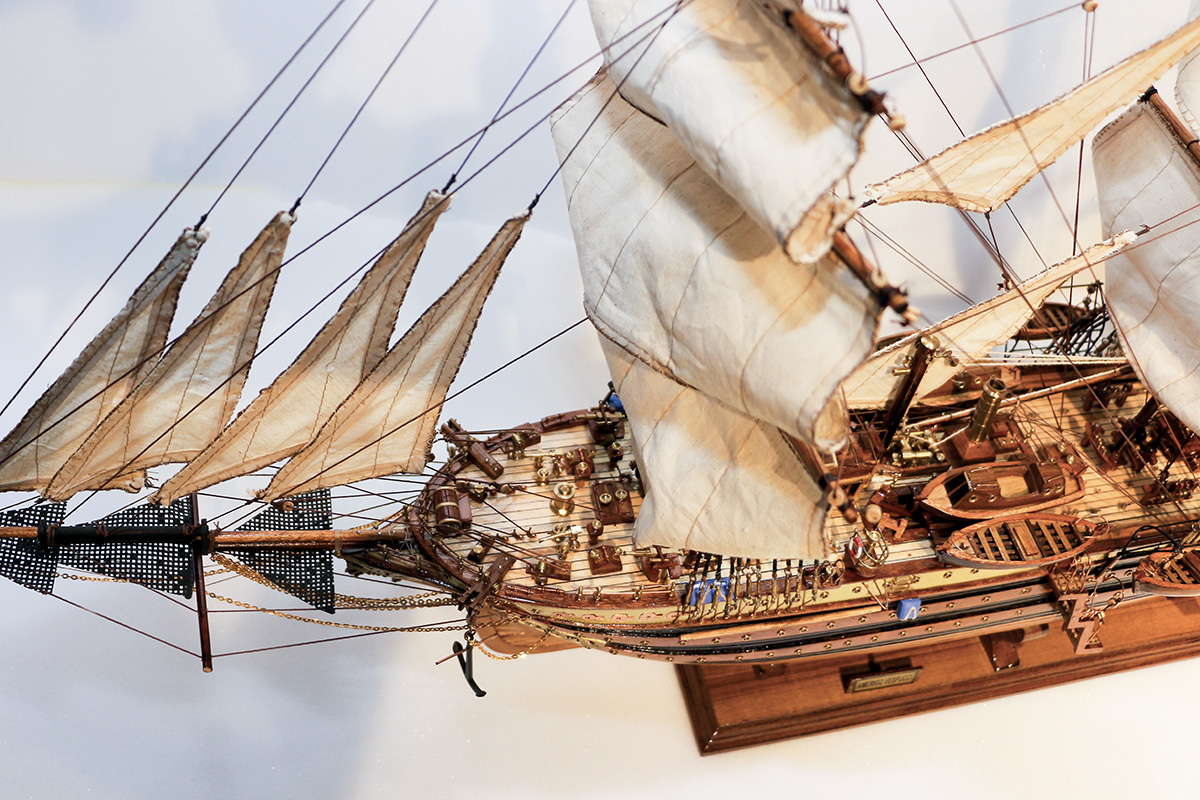
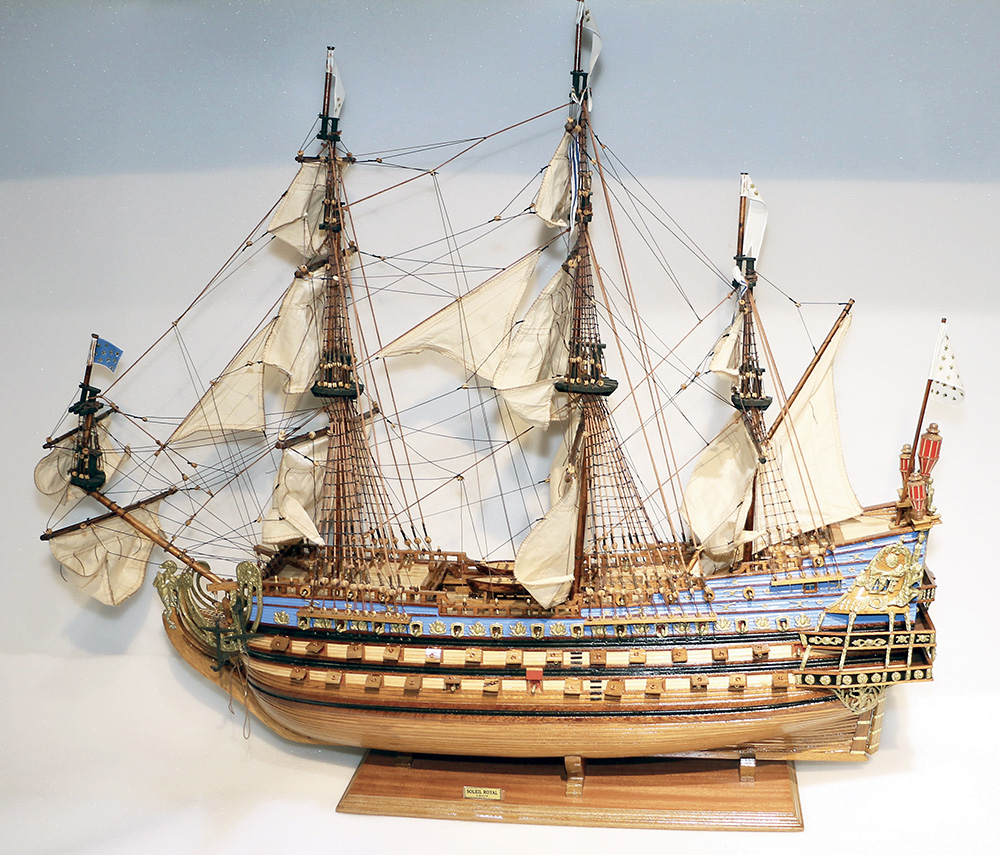
The training ship Amerigo Vespucci (1931) is among the most popular vessels, alongside the timeless Victory (1765), Bounty (1784), Soleil Royal (1669), and Wasa (1627).
Also in this case, as Serge points out, the wood used is of the highest quality and therefore costly. However, he has a significant advantage over competitors: since he owns a carpentry that works with luxury hotels and other prestigious clients, Piat has privileged access to top-grade wood scraps – typically teak or other species from South-East Asia – which are ideal for building ship models. He also makes extensive use of marine plywood and Meranti wood.
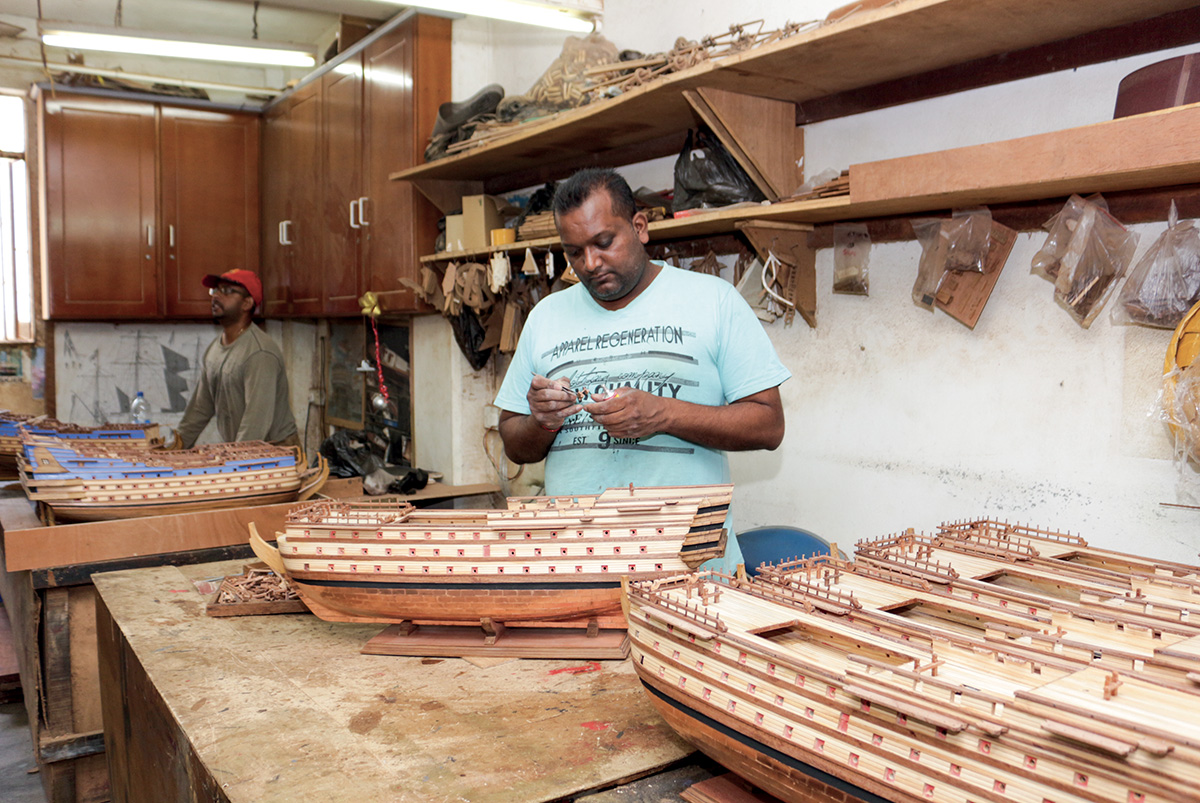
Historic Marine employs 24 people, mostly of Indian origin (who make up about 70% of Mauritius’ population). Some of these employees are women, who generally specialise in rigging and varnishing. As in the most reputable shipyards, some workers are skilled in specific tasks: during our visit, for example, we observed a welder carefully creating a stern railing on a trading ship model; another craftsman demonstrated how to apply a copper coating to a hull – an anti-shipworm protection that enabled the now forty-year-old Victory to play a leading role in the Battle of Trafalgar despite its age.
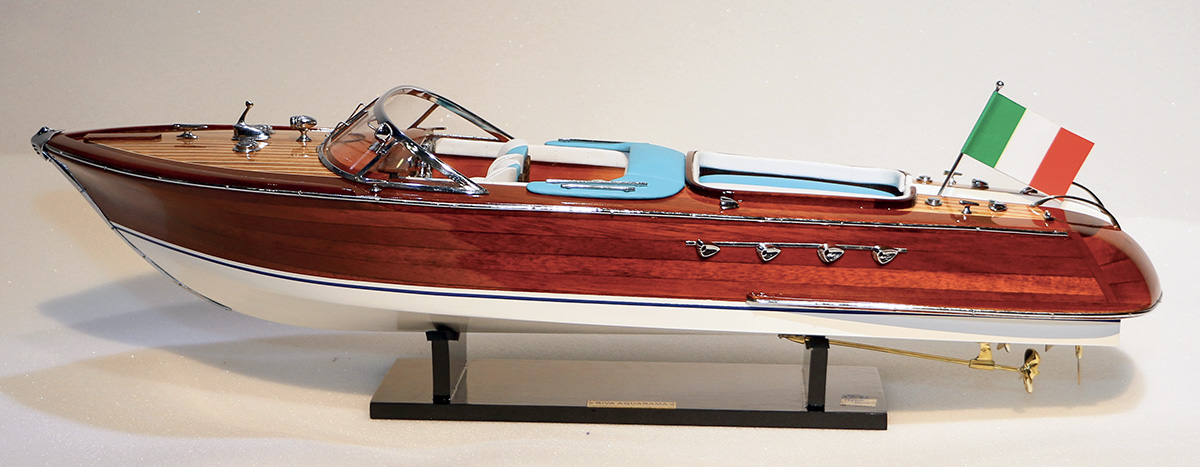
// Each project takes up to four months to complete, depending on its size, complexity and, of course, the client’s urgency. //
Before heading home
Anyone eager to see spectacular ship models in Mauritius should not miss the Mahébourg Historical Naval Museum. Although the building is somewhat neglected due to lack of funds, it remains fascinating and houses models that are likely the most beautiful and accurate ship replicas on the island. Most are large square-rigged ships connected to Mauritius’ rich maritime history. Some were produced decades ago by the company Comajora, founded in 1967, which later went bankrupt along with other industry firms. Its proximity to the international airport ‘Sir Seewoosagur Ramgoolam’ makes it convenient to visit before returning your car to the rental agency and catching your flight home, perhaps with a lovely ship model in your hand luggage
(Veteran Boat – Building models, miniature ships – Barchemagazine.com – Excerpted from Barche, May 2026)