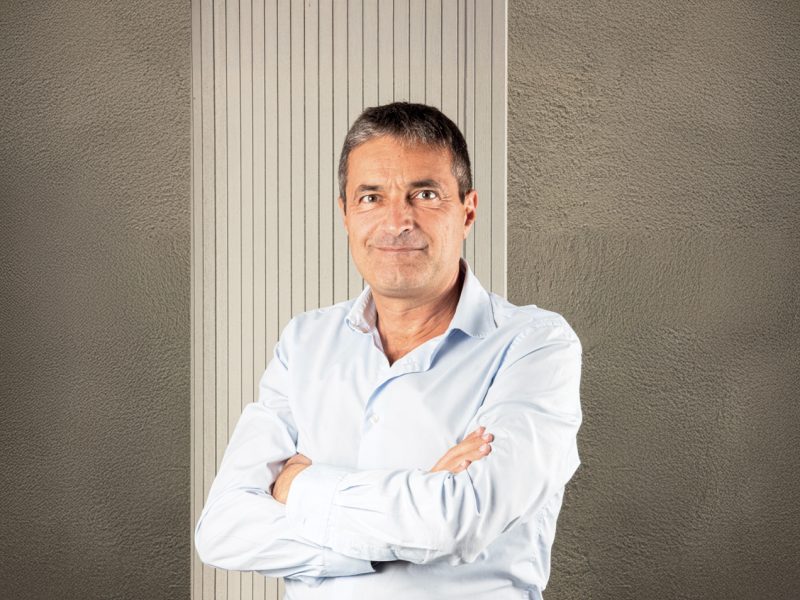
He runs Studio Arrabito Naval Architects without ever having a breather. The workload of new projects, which are increasingly complex and totally customised, leaves no room for delay
by Olimpia De Casa – photo by Andrea Muscatello
Active since the early 1980s, with a growing specialisation in the pleasure craft sector, including fully customised super, mega and giga yachts, the Arrabito Naval Architects design studio is among the most committed and structured in responding to complex requests from both shipyards and private owners. The extraordinary amount of work, combined with a busy schedule of increasingly tight deadlines, forced engineer Giuseppe Arrabito to postpone our meeting several times: “I apologise for the unforgivable delay. These have been very complicated months; we have had several launches, sea trials and ship deliveries. We are not finished yet and will soon start again”.
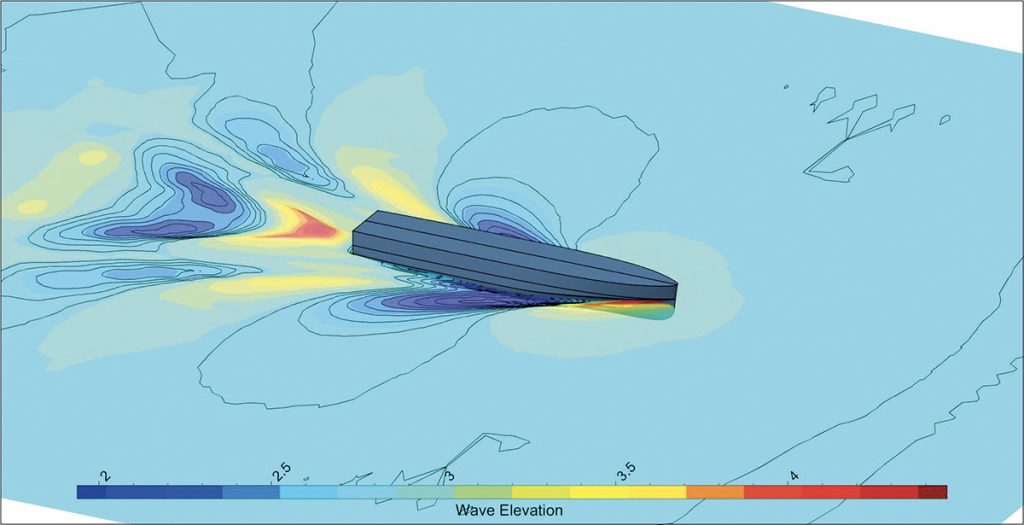
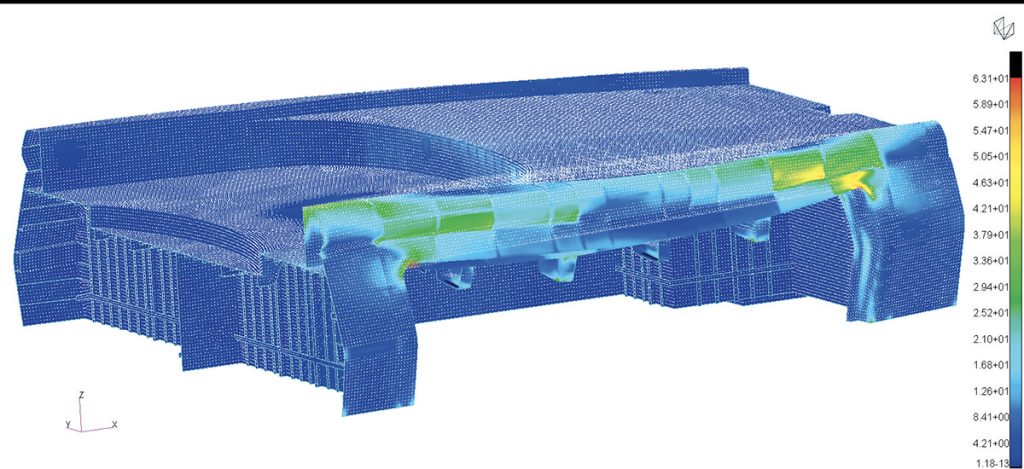
Arrabito Naval Architects si occupa della progettazione di linee di scafo speciali, di prove in vasca, di calcoli strutturali avanzati, di test di stabilità, di calcoli del libretto di stabilità, di ispezioni di perizia tecnica in fase di costruzione della nave o prima della firma del contratto, di servizi CAD-CAM per scafi in composito e stampi per sovrastrutture.
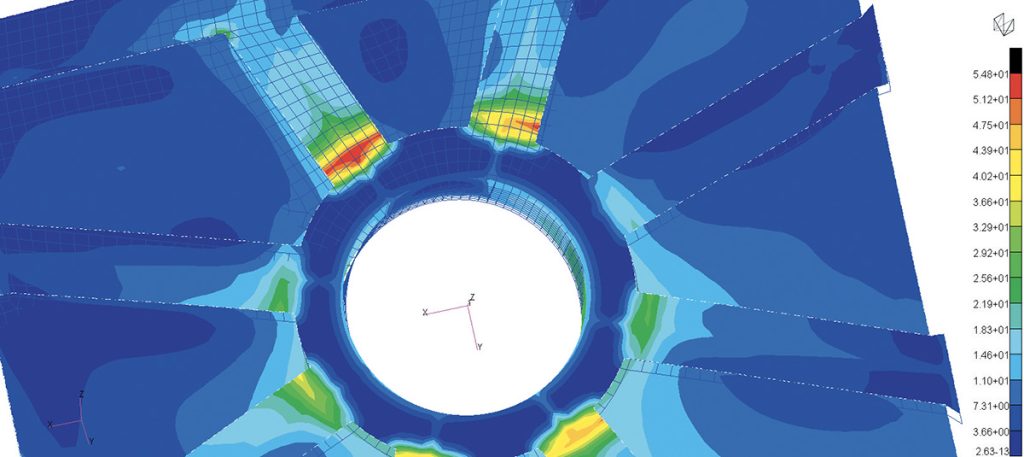
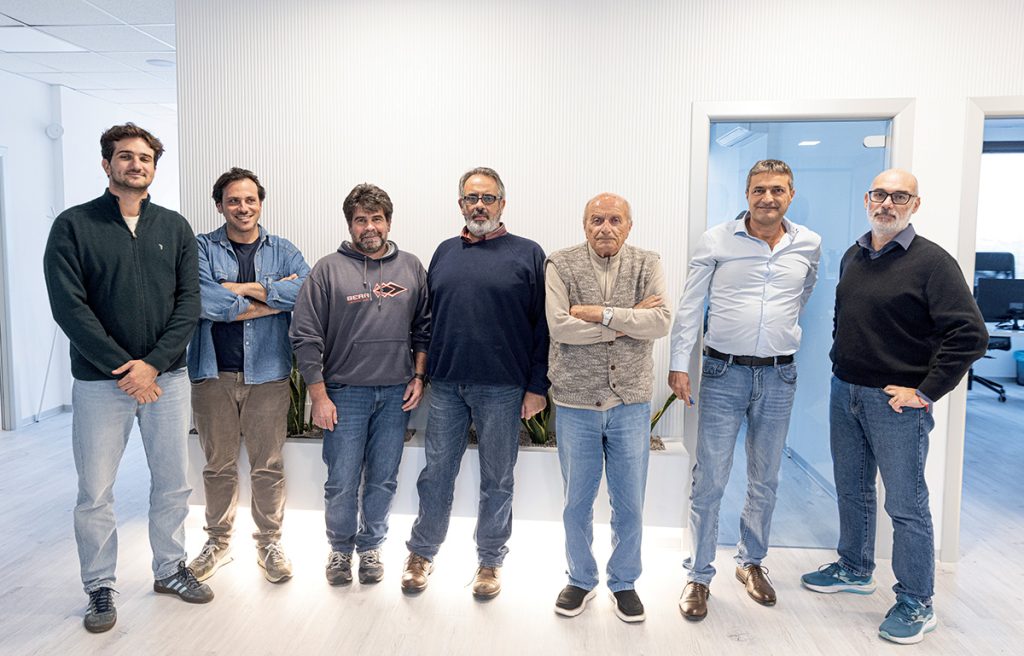
It is in this all-encompassing studio that some of the most up-to-date and technically and engineer-wise advanced large pleasure boats literally take shape: masterpieces of naval architectural genius that distinguish the substantial work of Giuseppe Arrabito and his team. “There are eight of us, almost all naval or nautical engineers, aged between 28 and 56, united by a very high human profile, even more so than a professional one. We work together in a friendly and relaxed atmosphere because that is how I wanted to set up our working environment. In terms of organisation, I decided to divide our skills into specialist areas: hydrodynamics, structural engineering and ‘stability and freeboard’. I have always believed that trying to do a bit of everything prevents you from becoming a top specialist in each of these three areas, which are, to all intents and purposes, the foundations of basic naval architecture”.
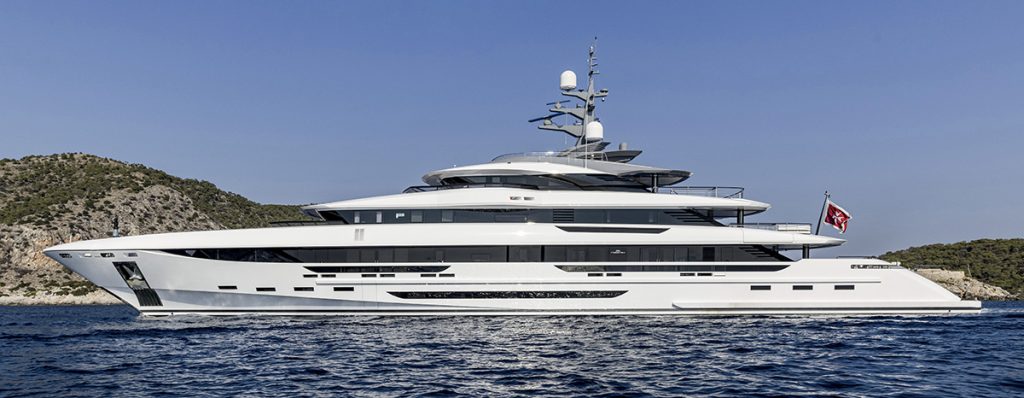
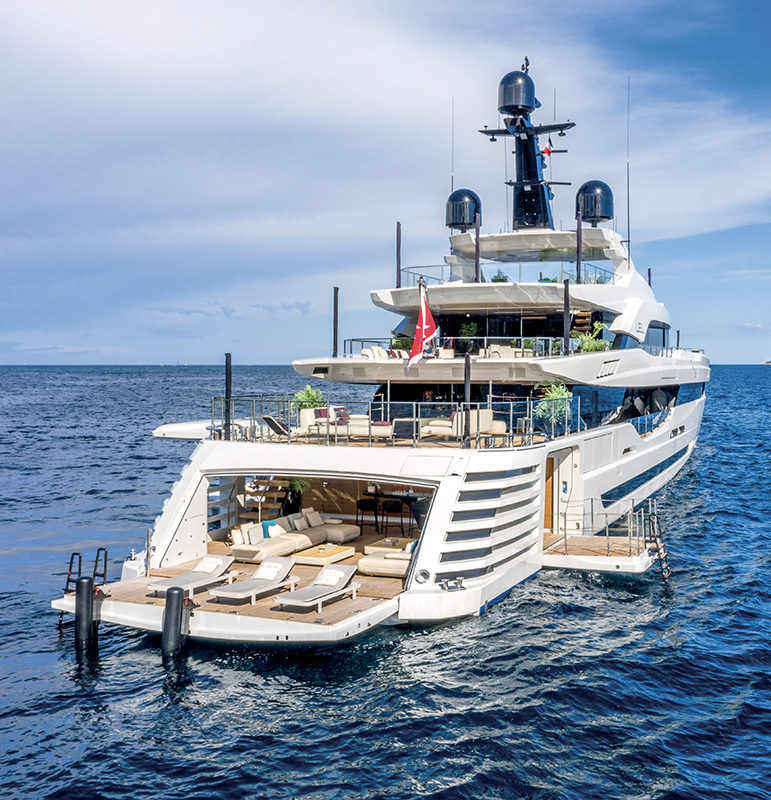
Rossinavi Polaris.
On the topic of beginnings and fundamentals, when did your career start, and what were the key milestones? I started in the 1990s while studying Naval Engineering in Genoa. Still, I have been immersed in the nautical world since I was a child because my father, a naval and nautical designer (engineer Giovanni Arrabito founded the technical studio when he decided to leave the Navy after ten years as director of the nuclear reactor at San Piero a Grado, a joint military centre, editor’s note), always took me with him, wanting to teach me everything he could and hoping to get me interested in this world. I opted for a study/work solution for many years, a choice that I believe was the right one. It was the period when we designed, in collaboration with Carlo Galeazzi, almost the entire Posillipo series by Rizzardi, from 90 to 120 feet, and the naval architecture of the well-known Riva Opera 24m and Riva Cantata 84 with Mauro Micheli, which I remember in our studio with the rolls of drawings of the superstructure construction plans made strictly by hand…
«I am particularly fond of Rossinavi Utopia IV, a project that I would describe as ‘incredible’ and which once again involved us, in our dual role as designers and surveyors, for the owner. This 63-metre aluminium vessel powered by a hydrojet has reached a top speed of 33 knots, developed in tandem with my friend Enrico Gobbi». Giuseppe Arrabito
…Today they seem like small boats, but in the mid-1990s they were considered truly important projects. My first experience as the studio’s front man was a series of projects for the American company Destiny Yachts, initially a spin-off of Allied Marine, based in Fort Lauderdale. We had the incredible opportunity to design nine yachts ranging from 90 to 135 feet, which, in the early 2000s, were among the largest fibreglass boats. It was such a unique and eye-opening experience in an international context, allowing me to see things from a different perspective. During that same period, I was involved in the first project commissioned directly by a shipowner, followed by assistance in its construction. It was a 35-metre semi-planing boat, also made of fibreglass, built by the talented Francesco Guidetti. In 2005, a substantial contract arrived from Cantieri di Pisa for the design of the entire new Akhir series, five models ranging from 30 to 42 metres in length, which kept us busy for several years. This was a significant collaboration which, even today, I perceive as the beginning of my ‘professional awareness’…
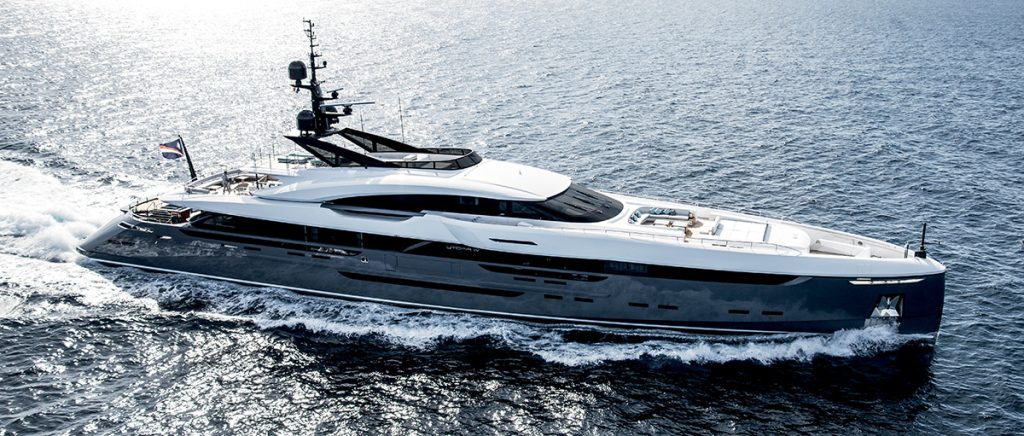
Rossinavi Utopia IV.
…Then came the entire Dreamline range by engineer Peter Zuber, who was responsible for the start of the modern design era and, in many ways, decisive in my encounter with architect Enrico Gobbi. In 2008, the people who allowed us to restructure ourselves were Claudio, Federico and Claudia Rossi of Rossinavi. From that moment on, a relationship of professional collaboration and friendship began that is still very much alive after almost 20 years of collaboration and 23 custom-designed and built ships: vessels ranging from 46 to 70 metres in length of all types, steel displacement and semi-displacement and semi-planing aluminium vessels, and now also fast displacement aluminium vessels with low fuel consumption and impressive speeds, considering their length and relatively modest propulsion power. We have installed virtually every type of transmission and propulsion system on all these projects: shaft drives, water jets, Rolls-Royce pod drives, diesel propulsion, diesel-electric propulsion and hybrid electric propulsion. For us, Rossinavi is not just a shipyard with which we have experienced and continue to experience an incredible design journey, but one where we feel at home.
The mention of ties prompts me to ask her how her passion for naval design began. It came from being immersed in the world of yachting since childhood. It was then that I had the good fortune to meet Memo Picchiotti, thanks to whom my father began his career as a naval engineer. I remember when he took me to the Pisa shipyards, where I knew practically everyone: from the owners Antonio Sostegni, Guido and Fabio Bini to the shipwrights and warehouse workers. I wandered around the warehouse on my own. At the same time, my father spent endless hours in the drawing room, which I remember as huge, full of drafting machines, and with drafting technicians working intently in religious silence. At that time, he was designing the Akhir, built entirely of wood, elm and ash, whose scent I can still smell. These are indelible ‘still images’ for me, like those of his endless hydrostatic calculations with a small Texas Instruments calculator from the 1970s.
Currently, over 3,000 vessels ranging in length from 32 to 160 feet, designed by Arrabito Naval Architects, are sailing around the world.
Does the implementation of a technical project, often little discussed by the builders themselves, perhaps because it is considered to have little communicative appeal, affect the user’s appreciation of the final project? Thank you for this critical question. As I was saying, since I was very young, I have been involved in the nautical world as a naval engineer, or ‘naval architect’ in English. I have therefore regularly observed the insufficient consideration given to those who are at the heart of the project and who, moreover, assume the weighty professional responsibilities that come with it. The engineering side of things is almost always taken for granted, and it is unfortunately common to find that those who developed the naval architecture are not even mentioned. This is a ‘practice’ that I find difficult to accept.
«Every fully customised project inevitably involves research to find new solutions to ever-changing problems, because the requests of shipowners and shipyards are different and more complex each time. It is a never-ending process. Over the last 15 years, we have completed around 40 projects for vessels ranging from 24 to 78 metres in length, 23 of which featured a radically different naval platform. The design of fully customised vessels, which are so important and demanding, means research and development». Giuseppe Arrabito
On the same subject, does the owner generally feel involved in the engineering and naval architecture aspects, or is he only interested in liveability on board? From my experience working directly with owners, I’ve always found that they’re usually happy to put engineering and technical aspects first, even if that means changing the ship’s appearance. If you can explain your ideas to them well, they usually understand what a naval architect is suggesting. One of the big challenges with current full-custom projects is finding solutions to stylistic ideas that often clash with the structural design or with the correct weight limitations and distribution. So, the naval architect might have the not-so-fun job of saying no to ideas that could cause major technical problems down the line for both the shipowner and the shipyard.
«We have started working on an 80-metre naval platform, a yacht powered by a micro nuclear reactor. It will take a long time, but I think we will get there». Giuseppe Arrabito
What projects are you currently working on? In terms of naval architecture, we have six projects underway for Rossinavi for new superyacht and megayacht designs. At the same time, we are also working with Riva, Baglietto and Mengi Yay Yachts.
What was the most challenging project or the most successful result in your career? I would definitely mention the Polaris 70m project (now Polestar), for which we worked as both naval architects and surveyors for the owner. She is still the flagship of the Rossinavi shipyard, a 70-metre diesel-electric yacht with Rolls-Royce Azipull propulsion. It was a highly successful project, spanning four years from design to construction.
Italtecnica was founded in 1980 by engineer Giovanni Arrabito. In 1996, Giuseppe Arrabito, a graduate in Naval Engineering and Architecture from the University of Genoa, joined the team.
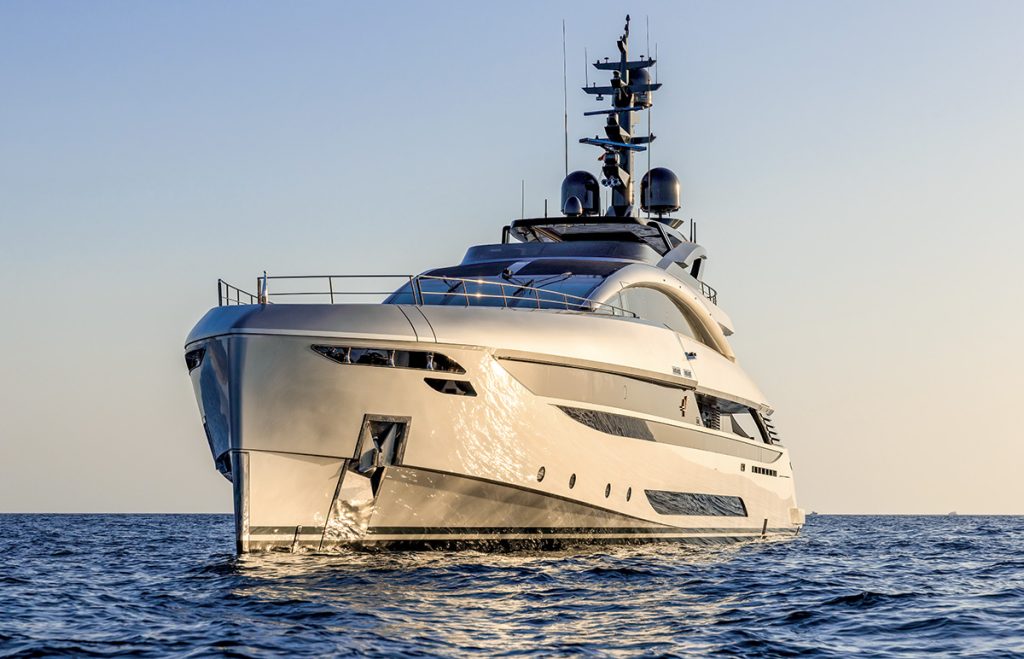
Beyond aesthetic considerations, what benefits do vertical bows, which have become so popular in recreational boating, offer? What are their main limitations? Vertical bows, for yachts of the same overall length, have the advantage of increasing the waterline length, which certainly improves hull performance in terms of speed and fuel consumption. For thirty years, we have been designing extremely projecting bows, known for being particularly ‘dry’. In certain conditions, today’s vertical bows, which are very fashionable stylistically, may not be so due to their intrinsic nature.
What do you think, however, of increasingly large hull glazing surfaces? As a naval architect, I have a decidedly negative opinion. The now huge glazing surfaces make the structural design enormously complex and add considerable weight at the top, as their large spans require increasingly thicker laminates. We must also remember that a yacht is still a ship that must be able to withstand even the most adverse sea conditions in complete safety.
I believe that regulations should be reviewed and updated to curb this trend.
(Giuseppe Arrabito – Proudly predestined – Barchemagazine.com – Excerpted from Barche, January 2026)