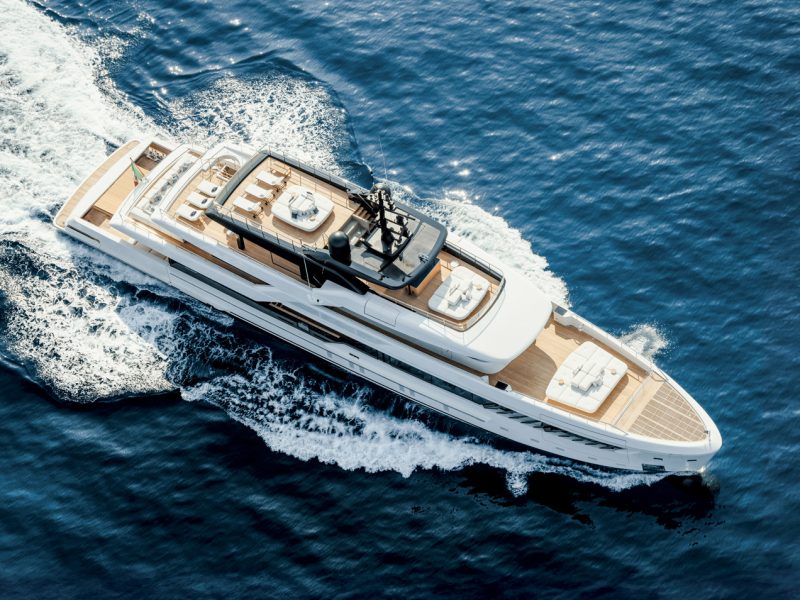
Nanni is a leading player in the nautical world. From sailing boats to super yachts, fast and medium-sized motorboats, to commercial vessels in the passenger transport, fishing, oil and gas, bulk carrier and military boat sectors, its range of engines extends from 10 to 2,200 hp and its generators from 5 to 763 kilowatts. In the pleasure craft sector, the largest unit installed to date is 125 kilowatts, on board the 50Steel Sanlorenzo
by Sacha Giannini
The group is led by Amalia Festa, Gregorio Passani and Michele Insom, who have clear ideas about how to tackle the future, but also how to handle the present. Pursuing consistently achievable objectives, and leveraging partnerships, investments, product research and staff organisation, the company has been able to anticipate, sense and simplify – in advance – the situation for many yards, by offering integrated and diversified systems on a dual track: commercial and leisure use. Nanni not only adapts engines designed for the industrial, automotive and truck sectors to the needs of a boat, but also offers the customisation of a product designed for the sea, with the necessary ‘equipment’ to ensure that everything works not only for propulsion but also for power generation, which it has been developing through teamwork with Kubota since 1976, MAN T&B since 1988, Toyota since 2000, John Deere since 2014 and SCANIA since 2018.
Nanni generators are designed on three motor bases: Kubota for small power ratings from 5 to 36 kW, John Deere for 45 to 150 kW and MAN T&B for 177 to 764 kW, which are intended more for the naval market, such as large bulk carriers or the ‘Ichnusa Lines’ passenger ships operating between Sardinia and Corsica, to name but a few.
Michele Insom, Marketing Director, says: “At first, electricity was not a consideration; it was mainly a propulsion production; generators were manufactured primarily for the commercial market. Over the years, Nanni has grown from a supplier of engines to a supplier of power packages for the nautical world, shipyards and shipowners, including engines, generators and equipment for the operation of the system, from displays to control systems, electrical connectors, throttles and joysticks”.
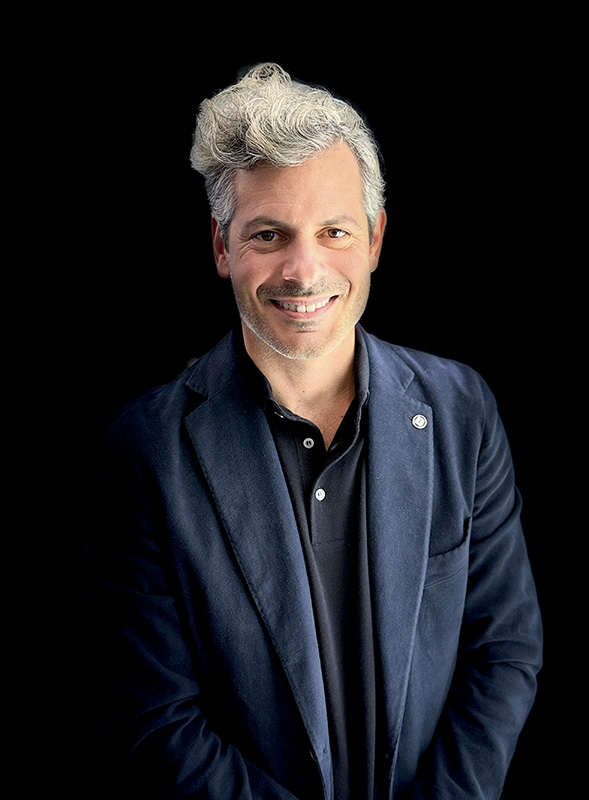
«Our vision for the next 10-20 years is to maintain our “engine-building” spirit, but also to become a different player on the market, capable of offering a standard product that is also a system suitable for integrating every new energy need».
Gregorio Passani, General Manager and Chief Business Officer
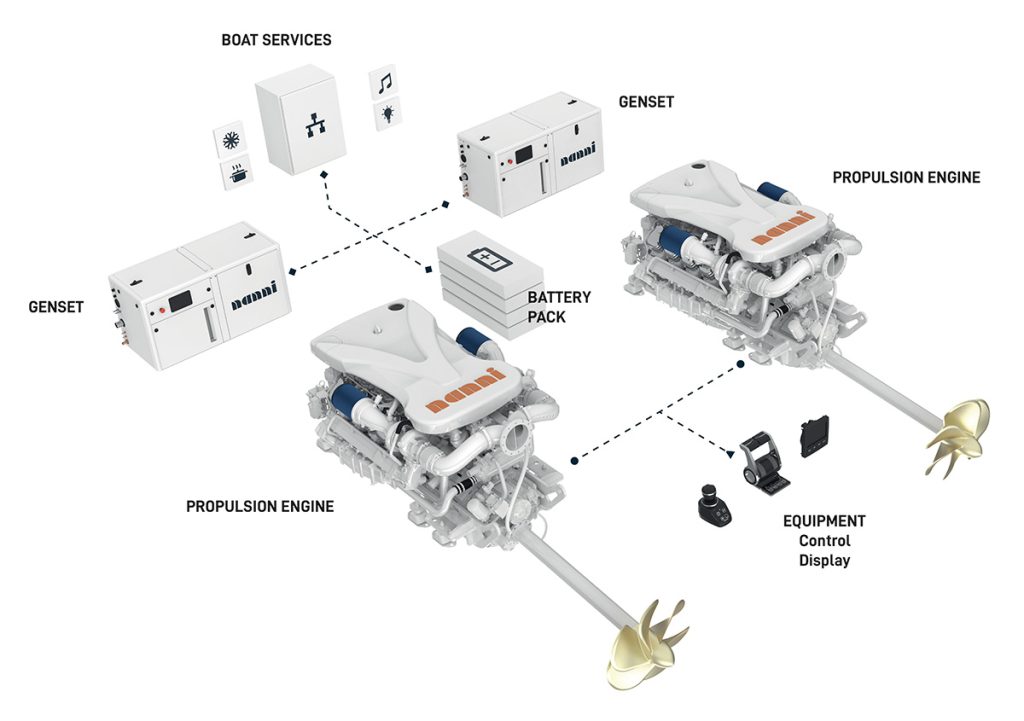
Gregorio Passani explains: “Our strategy is to diversify solutions, including those that we continually implement and those that have already been set up and are operational, from the use of alternative fuels to hydro-treated vegetable oil biofuels (HVO) that our engines can already work on. And then there is the methanol we have already used in the bulk carrier project in San Giorgio del Porto, and also in the yachting sector for Sanlorenzo, with propulsion by MAN and Nanni generators that both run on methanol, helping reduce emissions by 70 per cent. But we also have plenty of hybrid and full electric solutions, which are increasingly efficient thanks to the recent partnership with the French company EODev (Energy Observer Développement), which is an expert in developing technologies to produce zero-impact energy using an oxidation reduction process that converts the chemical energy of fuels like hydrogen or natural gas into electricity. Nanni combines a technological and propulsion package with the engine, generator, and technologies in a single block. At the same time, EODev produces and supplies hydrogen-fuel-cell-powered generators with portable battery packs. Nowadays, the integration is synergetic, because – within our marine solutions – we can also include their products, thus getting two engines or two Nanni generators, or two hydrogen fuel cell generators, integrated with battery packs and other components, in a system that is really a winner”.
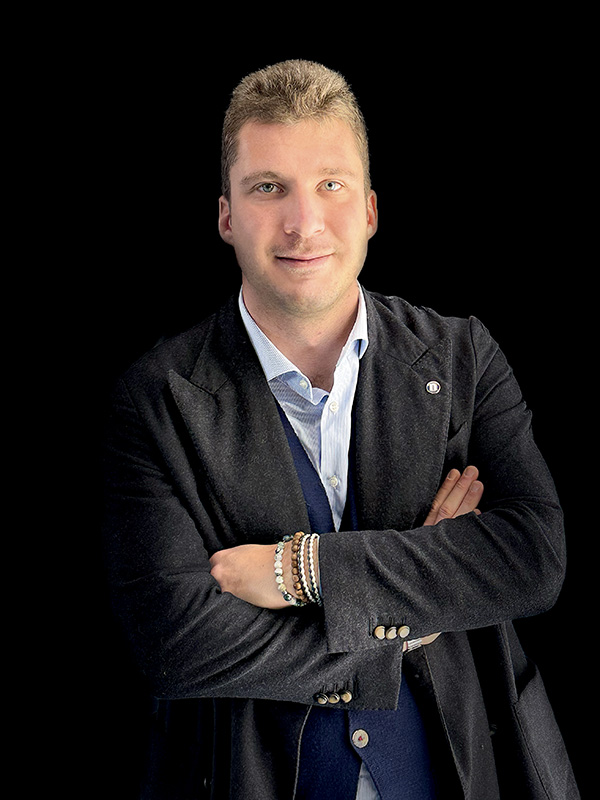
«What makes us different from the market is that we have created the most complete package possible for energy on board a boat, both in terms of how it moves and how it generates electricity».
Michele Insom, Marketing Director
Michele Insom emphasises: “This all occurs inside cabins that are extremely well soundproofed, where our soundless project has been designed for a market that aims both at reducing emissions and at ensuring comfort. It is not just an ecological issue, and we have worked a lot on reducing noise, which is the first thing when it comes to onboard comfort when a generator is turned on, mainly improving the air flow coming in and out, stopping sound bouncing around by using supports and materials in the way, like the sound-absorbing structure of the cabin walls, which rather than having the traditional foam, uses a composite of various metal strips to try to absorb sound – with results of between eight and ten fewer decibels compared to the market standard”.
Nanni marine generators mainly have three configurations. The soundless genset, explicitly designed for superyachts, has a noise level of 61.7 dB(A), just above the 50 dB/A) level considered pleasing to the human ear. This is available as an option on lower-power-rating units. Then there is the cabinless version for a more professional market, which doesn’t need soundproofing, and the cabin standard, which reaches the 70 decibels required as a market threshold.
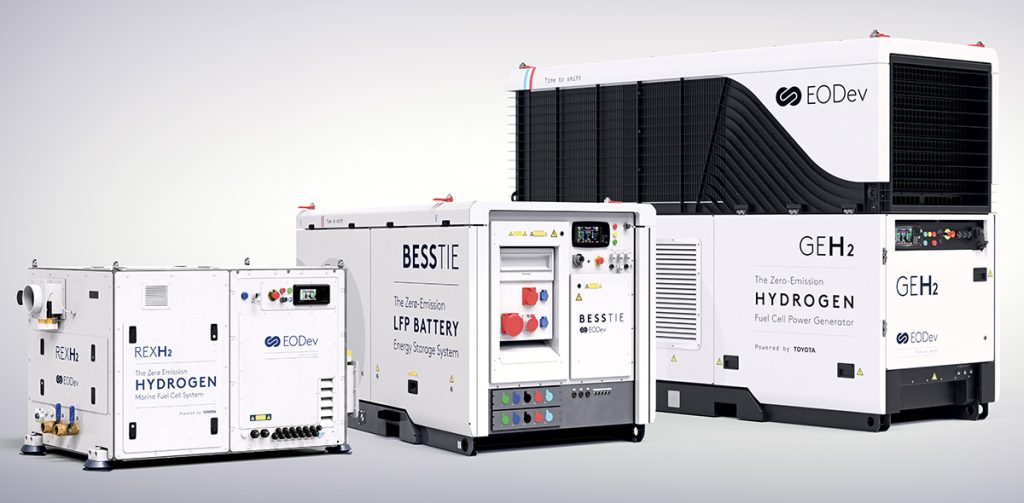
The Nanni strategy calls for a wide range of technologies, both renewable and otherwise, to reduce dependence on a single energy source, reduce emissions, and adapt to clients’ continually evolving needs. Michele Insom says: “We can use a lot of alternative fuels, which are very applicable in a market that needs machines that are continually working, compared to the electric or hybrid solutions, which are reserved for a more pleasure use for the simple reason that they are restricted in terms of hours because of safety, and battery life. For this reason, our electrification systems are equipped with parallel diesel generators to ensure a power supply during navigation when no charging point is available”.
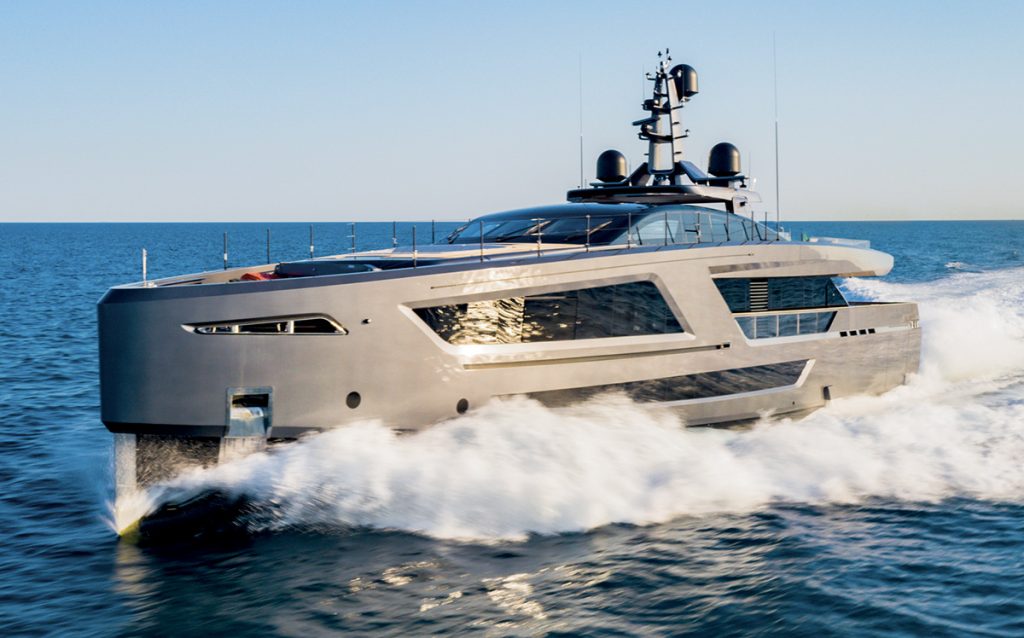
Nanni develops generator sets with a total output of up to 4,000 kilowatts, with up to 1 megawatt per generator, intended for large ships and with budgets starting at €2 million. This is an incredible achievement, as is the company’s turnover, which has almost doubled since Covid, from around €28 million to nearly €50 million.
Whereas a hydrogen cell needs a substantial amount of room, making it difficult for leisure use, a methanol tank requires 20% more volume than a diesel one, allowing a reduction in emissions without much increase in storage space. The new generation, represented by Gregorio Passani and Michele Insom, continues a path taken over thirty years ago by their mother, Amalia Festa. Gregorio Passani is General Manager and Chief Business Officer. At the same time, Michele Insom is Head of Spare Parts and Marketing Director while also handling the very important aftermarket, which deals with service, the post-sales network, digitalisation of the operations, parts orders and management of engines, up to technical documentation, to speed up the supply, and also to train personnel and customer assistance.
Opening image, photo by ©Guillaume Plisson.
(Nanni – Audacity and perseverance – Barchemagazine.com – Excerpted from Barche, January 2026)