Strength in numbers. That is why Nanni and ScandiNAOS AB have collaborated to develop a methanol-powered dual-fuel version of Nanni’s engines, based on John Deere technology.
This collaboration has proven successful, with tests indicating that the engine supports the sector’s energy transition and has enabled Nanni to develop its first high-speed generator set with methanol dual-fuel technology.
A collaboration born of a need for sustainable innovation
In response to the International Maritime Organisation (IMO) call for a significant reduction in air emissions, Nanni embarked on developing advanced dual-fuel technology. Through the Life Mystic project, Nanni has developed an innovative dual-fuel technology enabling engines to run on both diesel and methanol. A solution designed to operate with a fuel blend consisting of approximately 30% diesel and 70% methanol on an energy basis, in order to reduce diesel consumption and harmful emissions. This “dual-fuel” approach represents a major step forward in the maritime sector’s energy transition, offering a more sustainable alternative without compromising engine performance and reliability.
ScandiNAOS’s expertise in support of Nanni solutions
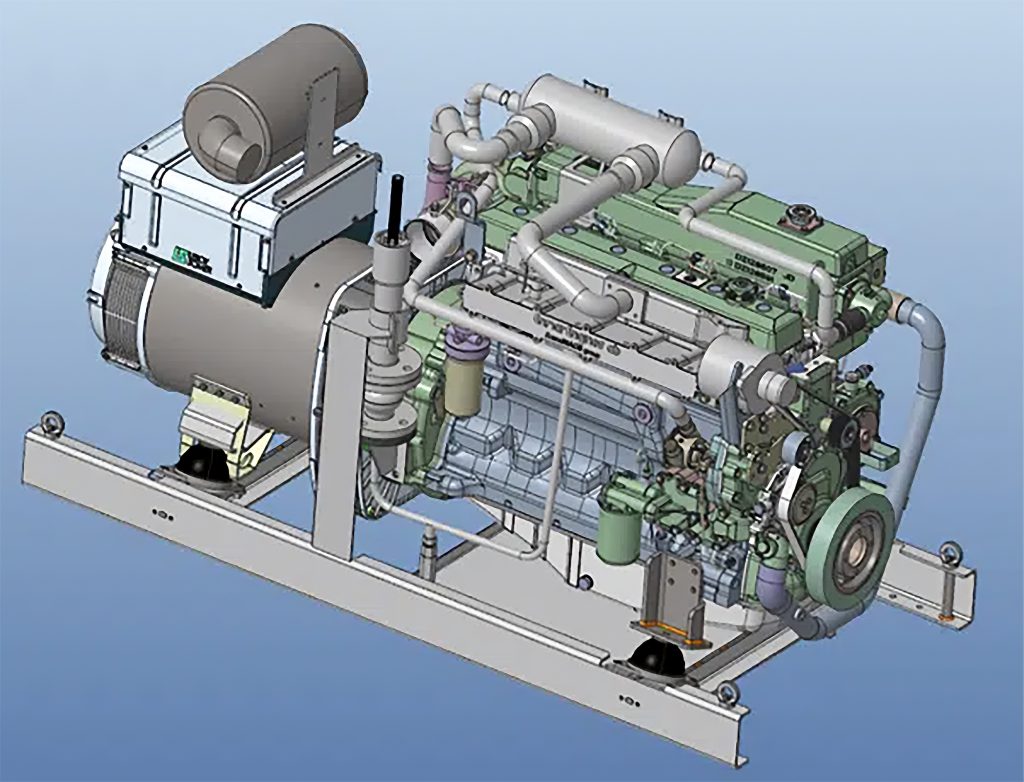
ScandiNAOS AB was commissioned by Nanni to develop a dual-fuel version of the 6-litre John Deere-based engine for use as a generator set. At the heart of this development is a dual-fuel injection kit that enables these Nanni engines to switch between methanol and diesel. When the methanol tank is empty, the engine automatically reverts to diesel without interrupting operation.
The conversion kit developed by ScandiNAOS AB includes a methanol control system and hardware modifications that enable methanol injection into the fuel system.
Using methanol marks a major step towards cleaner boating, reducing CO₂ emissions, fine particulate matter, and certain air pollutants traditionally associated with conventional marine fuels.
Successful test for the Nanni dual-fuel engine
The engine, converted to a methanol dual-fuel configuration, underwent testing. The test was conducted in accordance with IACS (International Association of Classification Societies) standards regarding progressive loading of engines and generator sets, in the presence of a representative from RINA (Registro Italiano Navale).
The tests delivered positive results
The transition between single-fuel and dual-fuel modes is smooth and seamless during operation. The proportion of energy derived from methanol ranges from 50% to 75%, which significantly reduces emissions while maintaining full power output in both diesel and dual-fuel modes. After conversion to methanol, the engine shows a dramatic reduction in key pollutants, with CO (carbon monoxide) and HC (hydrocarbon) emissions reduced by 95-99% and NOx (nitrogen oxides) emissions reduced by 65% across most load points. Particulate matter is also consistently lower, confirming significantly cleaner combustion.
These conclusive results confirm the strong potential of methanol dual-fuel technology. As the first Nanni high-speed dual-fuel engine, this innovation paves the way for a new generation of marine engines.
Beyond this technical advancement, the collaboration between Nanni and ScandiNAOS AB reflects a shared vision in which innovation goes hand in hand with transition.
(Innovation and transition – The first high-speed dual-fuel engine by Nanni – Barchemagazine.com – May 2026)