There are professionals that work with solid and concrete materials. And then there are others that choose the more elusive element of all: light. Carlo Alban, CEO of Rimani belongs to this category, but with a rare peculiarity: for him the light has never been an instictive or decorative act. It is a meticulous, measured and aware. A presence that does not dominate, but builds deep relationships between space, material and perception.
by Priscilla Baldesi
His career takes shape in Turin, at the end of 1970s, in a technical and industrial environment which soon teaches him the value of precision and responsibility. It is during years that Carlo Albano begins working with large-scale infrastructures a complex systems, from public lighting to industrial environments, and even extreme contexts such as the Mont Blanc tunnel. These experiences shape a solid methodology and instill a conviction that remains central to his work: light truly works only when it is designed for people.
In the 1980s, this vision found a new and surprising ground: the museum. With the founding of ILTI Luce, Carlo Albano brought technological experimentation to the heart of exhibition design. The project for the Egyptian Museum in Turin marked a historic moment: the introduction of fiber optics as a lighting solution opened up unprecedented possibilities, both for the conservation of artworks and for the very way they were presented. Light became discreet, respectful, almost invisible, yet decisive. A revolutionary approach that was later recognized by UNESCO as the world’s first museum application of this technology.

The same approach guided Carlo Albano in introducing new technologies, such as LED lighting, applied well in advance of its mass adoption, across a long series of internationally significant projects: from Palazzo Grassi to the Vatican Museums, from the Nefertari project to Milan’s Castello Sforzesco. When ILTI Luce became part of the Philips group in 2009, a highly successful industrial chapter came to a close, but his drive for research remained undiminished.
“In certain contexts, light must know how to take a step back,” Carlo Albano affirms. “Only then can it truly enhance what it illuminates”. A philosophy that anticipated, by decades, the contemporary debate on museum lighting and perceptual sustainability.

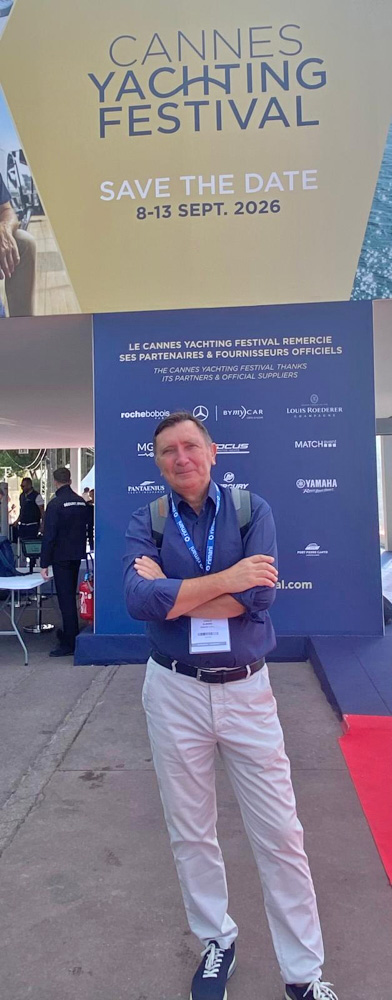
Carlo Albano
In 2015, Rimani was born—a design laboratory before it was a company. Here, light is conceived as a bespoke experience, shaped through careful listening to the spaces, their functions, and the people within them. Museums, architectural projects, retail spaces, healthcare environments, and horticultural lighting systems all become fields of application for a single principle: improving quality of life through comfortable, efficient, and sustainable light.
“In certain contexts, light must know how to take a step back”, Carlo Albano affirms. “Only then can it truly enhance what it illuminates”. A philosophy that anticipated, by decades, the contemporary debate on museum lighting and perceptual sustainability.


In recent years, this journey has naturally extended into the world of contemporary art, through collaboration with Angelino Artworks. A meeting of kindred visions, where craftsmanship, engineering, and advanced technology converge in the creation of bespoke artworks and design pieces. For Angelino Artworks, Rimani has designed dedicated lighting supports for major works, conceiving light as a structural part of the artwork itself, not merely an accessory.
“In our work, light is not an afterthought” explains Andrea Angelino, CEO of Angelino Artworks, “but an integral part of the project, on the same level as form and material. The collaboration with Carlo Albano Rimani stems from this shared vision: combining technical rigor, engineering processes, and design sensitivity to create works that truly function in space”.

Alongside professional activity, Rimani has sustained a commitment to education for over thirty-five years, teaching at the Politecnico di Torino and in museum exhibition design master’s programs, helping to train new generations of designers. A quiet but essential effort, reflecting the same attention to the future that runs through his entire career.
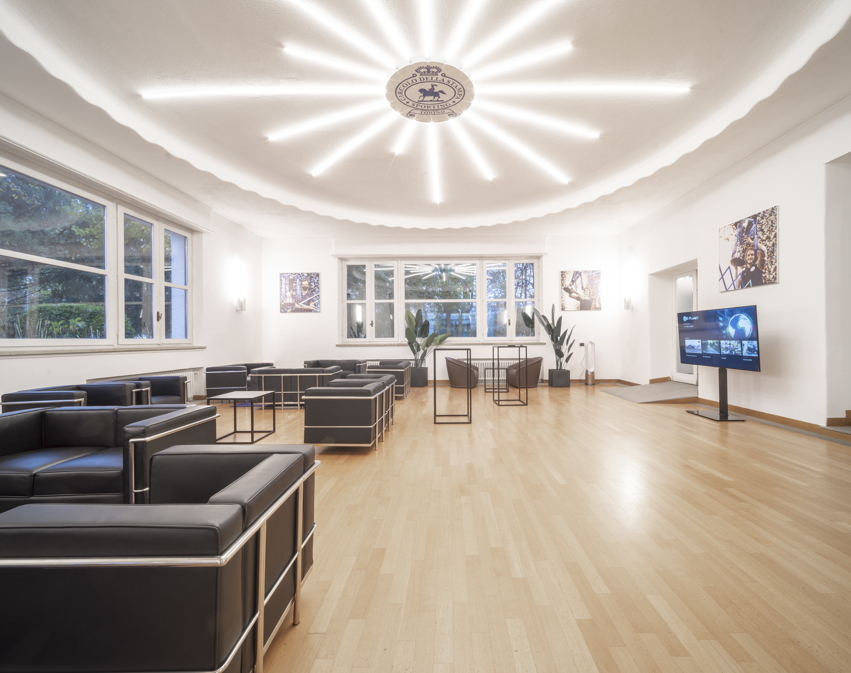
Looking back on his journey today, a rare consistency emerges: light as a tool for measurement, balance, and responsibility. Not an effect, but a choice. In an era dominated by visual excess and spectacle, Rimani’s work demonstrates that the most authentic innovation often arises from subtraction, precision, and the ability to design what, though invisible, profoundly shapes the way we experience space.
(Carlo Albano: Rimani, The Intelligence of Light – Barchemagazine.com – January 2026