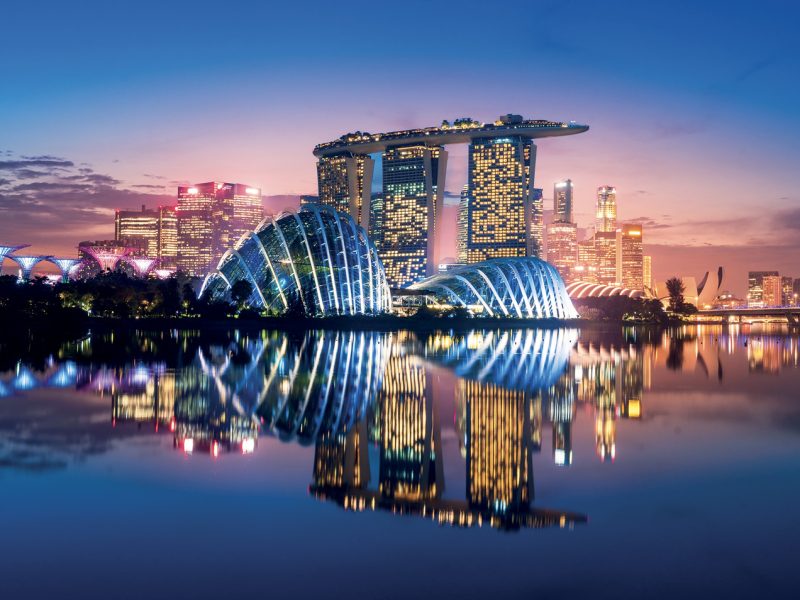
From a leading financial and technological centre to a strategic platform for refits and services dedicated to large recreational craft. This is the leading role that Singapore assumes in the Asia Pacific, determined to gain a prominent position in the global yachting network
by Olimpia De Casa – photo by BlueiProd
The Asian metropolis, which has one of the highest densities of millionaire families globally (a factor that is not insignificant in this specific context), is playing an increasingly important role in the global superyacht sector
thanks to the development of new infrastructure dedicated to the maintenance, repair, and refit of large vessels operating in Southeast Asia. Above all, it benefits from a network of specialised skills and stability that offers shipowners and captains the confidence of personalised service with proven reliability. It is on this basis that Singapore’s Superyachts Cluster is devising an action plan to boost its international competitiveness in the sector.
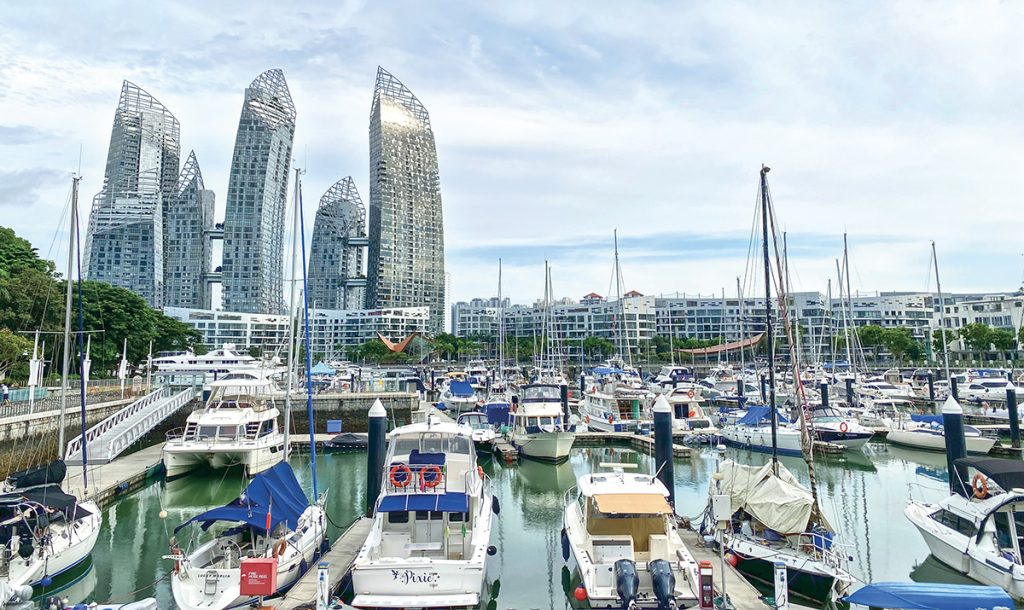
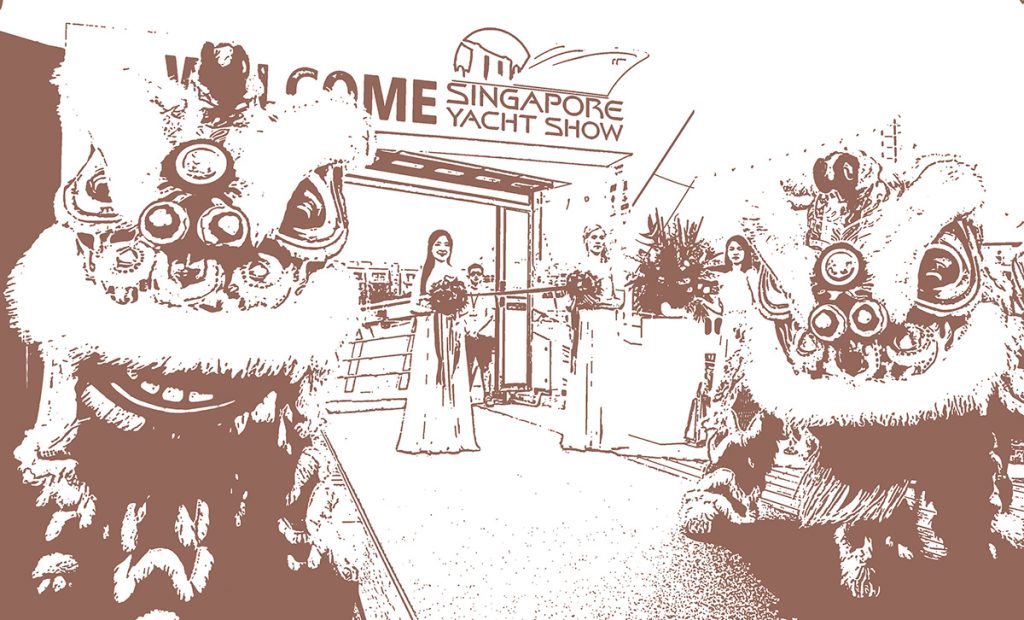
The 2026 edition of the Singapore Yachting Festival will be held from 23 to 26 April at ONE°15 Marina Sentosa Cove, with over 70 yachts and more than 200 brands in attendance.
Barche examined the framework and potential with lawyer Simone Centola following his appointment as Chair of the Superyachts Cluster of the Singapore Boating Industry Association (a full member of ICOMIA, in which Centola is the representative for the Superyachts Division and the Asia Working Group). The Cluster’s goal is clear: to assist the city-state in establishing itself as one of Asia’s leading hubs capable of providing high-value-added services dedicated to the superyacht sector. “Singapore offers proven expertise in repairs, maintenance, and marine engineering for sophisticated vessels, which can be applied to the superyacht industry (where orders at local shipyards are gradually increasing), supported by a first-class logistics system and legal certainty. These are three pillars of utmost importance for shipowners, captains, their consultants, and superyacht manufacturers, who are consistently seeking reliable partners”.
// «Singapore offers comprehensive construction and engineering expertise, top-tier logistics, and legal certainty. These are three pillars of vital importance for both shipowners and captains». Simone Centola //
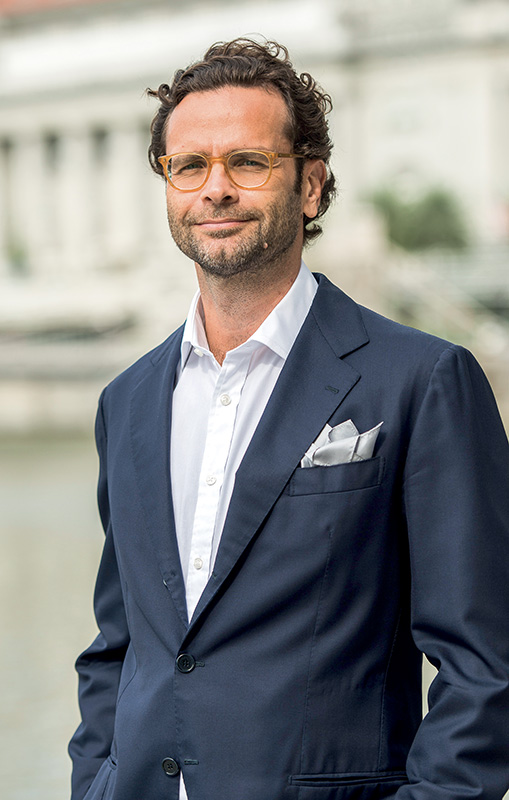
Simone Centola
Chair of the SBIA Superyachts Cluster and a General Committee Member of the Singapore Boating Industry Association, lawyer Simone Centola has 25 years of experience in London and Singapore (where he has practised since 2010) across the maritime, defence, technology, industry, and luxury sectors.
His professional expertise includes advising large yacht owners, shipyards, suppliers, and associations, with a focus on strategy, governance, transactions, contracts, and dispute resolution. The Superyachts Cluster’s mission is clear: to accelerate Singapore’s position as a leading centre for Asia, with a particular focus on repairs and maintenance, refits, and advanced services.
What is the background of the Superyachts Cluster? For decades, the United States and Europe have been the clear leaders in construction and after-sales services. Today, Asia is slowly emerging as a highly competitive region. Singapore, in particular, is seeing growth in the number of superyachts passing through, including those operating permanently in the area and those from the Pacific that typically explore the region for around six months to two years, mainly due to the services it provides. Although current geopolitical conditions have temporarily reduced the usual flow from the Mediterranean, the number of superyachts continues to grow. The expansion of the Asian fleet is driven by a new generation of owners living in this region. Being relatively young (30-50 years old), they prefer cruising destinations close to their families and businesses. International owners are attracted to the beauty of Asia’s many cruising spots, which are less crowded than the Mediterranean and the Caribbean, and often use superyachts for public relations. To support all this, the region requires new hubs with dependable services. Singapore is ready to offer this support.
What is its “calling card”? Singapore’s competitive edge extends beyond its shipyards and maritime services. The city-state is a hub for asset management and specialised professional services (with around 2,000 single-family offices, major banks, and international law firms), complementing its reputation for superyacht ownership. Its regulatory framework is secure, logistics are efficient, and visiting technical teams benefit from clear and reliable processes. These factors all contribute to an integrated ecosystem of yachting services.

The Singapore Yachting Festival is the leading event for the Southeast Asian yachting sector, showcasing superyachts, pleasure craft, water toys, and lifestyle brands, with an anticipated attendance of over 13,000 visitors. The programme’s events play a vital role in connecting key decision-makers, thereby strengthening the city-state’s strategic position in the global luxury yachting industry.
// Investments promoted by selected shipyards and suppliers, associated with major infrastructure developments, are enabling the company to capture an increasingly large share of the market. //
What are the key factors in developing an attractive operational base for the entire South-East Asia region? While Singapore cannot be described as a “nautical” tourist destination in the traditional sense, like Thailand or Indonesia, it is also true that it aims for a different objective: to serve as the operational and technical hub for superyachts in the region. Changi Airport remains one of Singapore’s main strengths. The speed of customs procedures and loading and unloading operations makes the transfer of crew members, spare parts and equipment more fluid, guaranteeing shipowners and their guests a secure network of international connections. Local shipyards are capable of providing complex engineering works, maintenance, repairs and refits, thanks in part to the support of experienced international subcontractors and suppliers who, like those in the design and technology sectors, can easily integrate their systems and proceed. The range of services is also strengthening and diversifying on the nearby island of Batam, Indonesia, where over a hundred shipyards operate, including international players. Added to this are the opportunities offered by long-term infrastructure plans, with the consolidation of container handling operations in the Tuas area gradually freeing up the central portion of the waterfront opposite the city’s financial centre, making it potentially usable for nautical tourism. The proposed Long Island coastal protection project, corresponding to 800 hectares of reclaimed land to the east, would also create new areas along the coast, parks and infrastructure for nautical tourism as part of a future 120-kilometre continuous coastline.
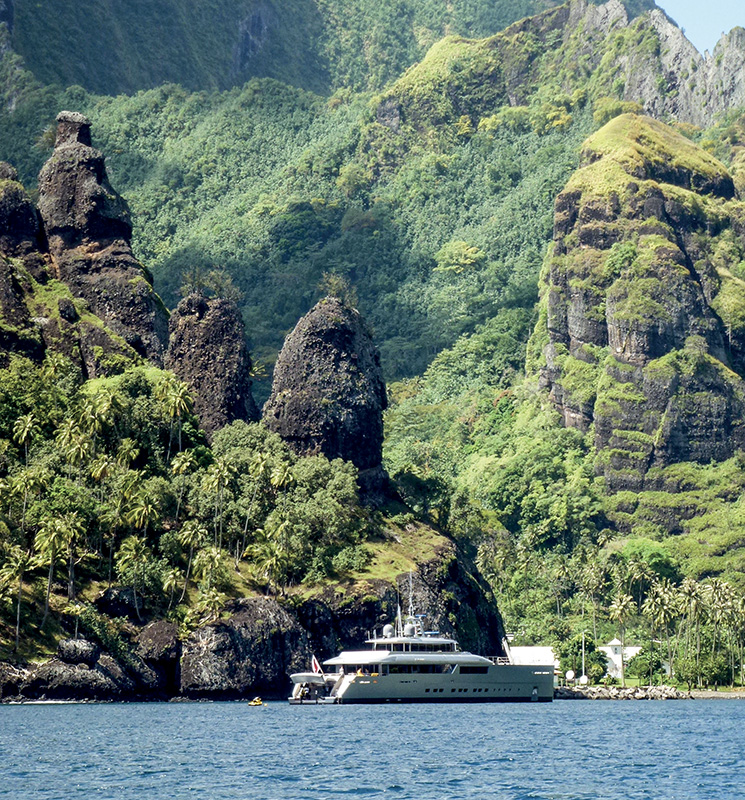
// Singapore’s competitive advantage extends beyond its shipyards. The city-state is a hub for asset management, legal advisory and specialised professional services, an environment that aligns well with superyacht ownership. //
How many superyachts are currently based in the Lion City? According to the website sgmarineguide.com, Singapore currently hosts between 30 and 40 superyachts ranging from 24 to 30 metres in length, with a further ten measuring over 40 metres, up to more than 80 metres. The most significant economic impact comes from the regular arrival of 50-100-metre superyachts: on average, four to five pleasure boats every month, staying between 30 and 90 days, with an estimated spending capacity of between $500,000 and $1,000,000 per vessel. Regarding the availability of berths, the same source mentions Raffles Marina, ONE°15 Marina, Keppel Bay and the Yacht Club of the Republic of Singapore; options for yachts over 90 metres at Keppel Island’s East Wharf and HarbourFront Cruise Centre (through agency mediation); eastern and western moorings for yachts that do not require a berth in the marina. Alongside the constant demand for berths and spaces in marinas, there is a growing interest in services more generally. Investments promoted by selected shipyards and suppliers, alongside major infrastructure developments, are enabling an increasing share of the market to be captured. The main economic benefits extend to maritime services, hospitality, retail and the cultural sector.
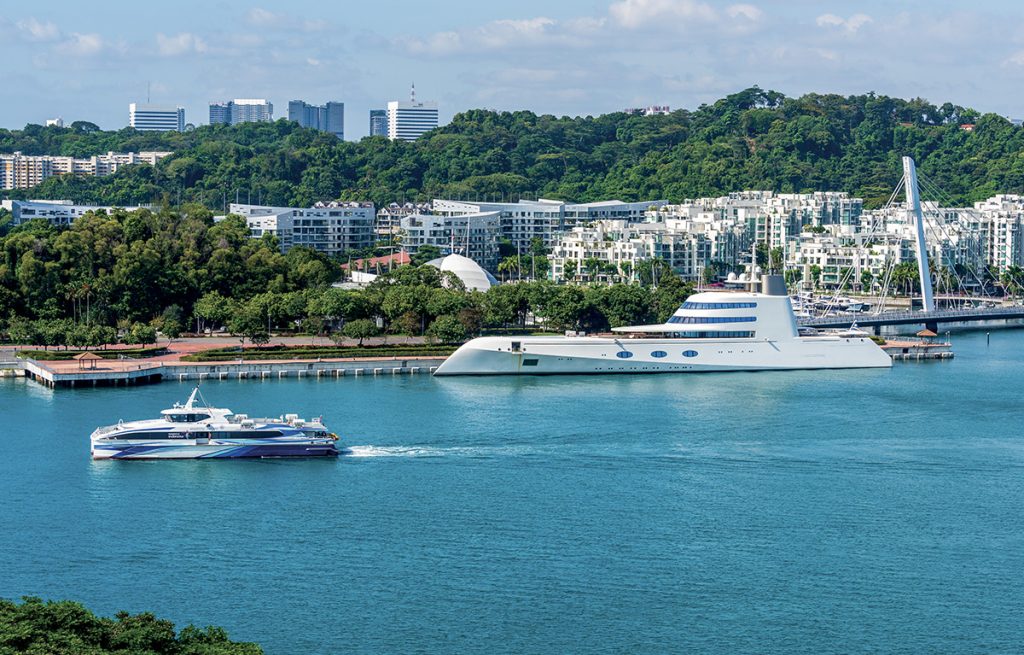
// Singapore offers proven expertise in repairs, maintenance, and marine engineering for sophisticated vessels, which can be applied to the superyacht industry. //

Breaking news
«The recent news that Richard Liu Qiangdong, founder of the giant JD.com, has entered the superyacht market with Sea Expandary marks an important step for the sector: 100% renewable energy yachts and $700 million in investments in China’s Greater Bay Area. There are already five orders for 72-metre superyachts. Liu has stated that his goal is to build a national production chain ecosystem to reduce dependence on imports, while positioning Sea Expandary in the export market to Europe and the United States, helping to catalyse a larger cluster of Chinese nautical brands. Singapore could also benefit from this development, consolidating its position as a regional centre for advanced services, focusing on its expertise, innovation and sustainability».
What is the aim of the Superyachts Cluster? To connect regional and international stakeholders through delegations, round tables, and technical exchanges. To enhance standards of sustainability, compliance, and innovation. To deliver tangible results that foster mutual trust between shipyards, shipowners, captains, and consultants. The potential Singapore offers to the superyacht sector has been discussed for years, but the new Cluster aims to accelerate its full realisation. The goal is long-term, focusing on involving local shipyards and suppliers and aligning activities with those of the most reputable international showcases and associations to bridge existing gaps and integrate Singapore more fully into the global superyacht network.
What cards are on the table? Singapore’s appeal lies in its stability and predictability. Superyacht projects are grounded in precision, a prerogative that encompasses customised processes, technical execution, and project management, all of which can be reliably maintained at scale for years to come. The goal is to bolster Singapore’s vital role as Asia’s centre of reference for services dedicated to large yachts and their owners, aligning with the highest global standards. As new-generation marinas and waterfront destinations emerge worldwide, Singapore is also well placed to capture an increasingly significant share of the high-end yachting tourism market and related services.

// The range of services is also expanding and diversifying on the neighbouring island of Batam, Indonesia, where over one hundred shipyards operate, including international players. //
What will be the key events for the Cluster in 2026? In mid-April, we will contribute to several targeted initiatives during the Singapore Yachting Festival, the largest gathering of industry professionals in the region, which will open the day after the Southeast Asia Yachting Conference, where we will present an overview, focusing particularly on maintenance, repair, and refit activities in the superyacht sector. We will invite qualified representatives to visit the main local shipyards. At the end of September, we will participate with a delegation at the Monaco Yacht Show to strengthen collaborations and contacts with key international players, given the importance and stature of the Monegasque event.
(Focus Singapore – Boating Steer East – Barchemagazine.com – Excerpted from Barche, April 2026)