The naval world needs to have different hybrid architectures designed to answer the infinite variability of vessels’ conditions and operational profiles: this was a key-point explained in our first FAQ dedicated to HYBRID world.
Hybrid ‘architects’ must then be flexible and open to advanced and high customization, based on vessel’s usage and needs.
Even though there are different opinions on definition, most agree on identifying as “hybrid” a propulsion system combining two or more energy sources to ensure the vessel’s movement.
Therefore, hybrid propulsion is an architecture merging the endothermic engine with an electro-chemical storage system (batteries) or combining a hydrogen fuel cell with super-capacitors.
There are two main hybrid systems macro-categories: serial hybrid and parallel hybrid propulsion. Have a look at the first FAQ to refresh on the differences between these two architectures (Click here for FAQ n.1)
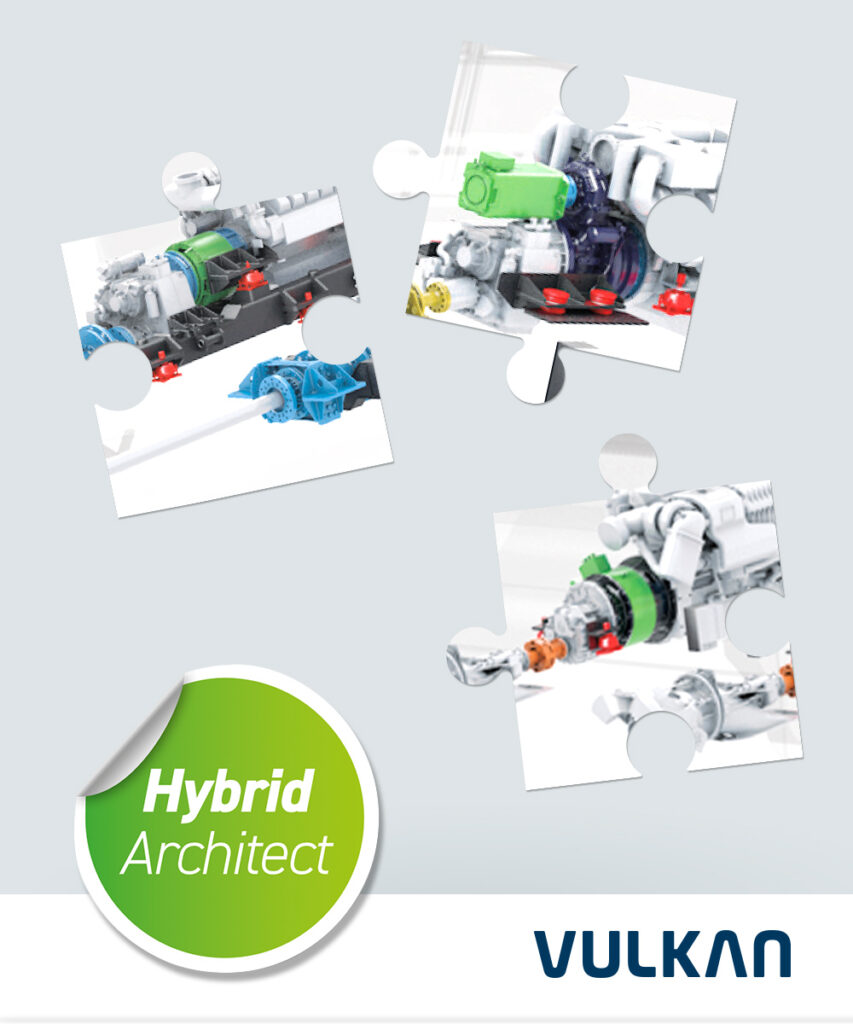
Being able to use two different macro-architectures already provide us an initial answer to our question: is there only one hybrid? What are characteristics, advantages, and disadvantages behind these two propulsions and why does the designer select and design one rather than another?
Every vessel is characterized by huge technical and operational differences: this has an impact onboard system which must be designed, planned, and sized specifically based on the individual application. This is especially true for ‘new’ propulsions.
The first and fundamental advantage of a hybrid system, common to all hybrid technical solutions, is to provide greater flexibility to the propulsion system: the primary power source (the diesel engine) is more independent from the user, the propeller (which in a conventional configuration act as a load or brake, somehow proportional to the speed), whether it is a propeller, a waterjet, or a pod. In a serial hybrid system, this flexibility is taken to the extreme: the endothermic engine is mechanically disconnected from the propeller, and it is used as a pure energy source, generating electrical power). The propulsion engine in is an electric motor managing the whole speed range with almost a constant and very high efficiency (normally exceeding 90%).
In un sistema ibrido seriale questa flessibilità è portata all’estremo: il motore endotermico viene meccanicamente scollegato dal propulsore per essere utilizzato come una pura fonte energetica (è un motore endotermico che genera potenza elettrica). Il motore propulsivo in questo caso sarà un motore elettrico in grado di gestire tutto il range di giri ad un’efficienza quasi costante e molto alta (normalmente superiore al 90%).
Being on board units having to manoeuvre a lot during daily operations, or where electrical loads are very high, great optimization of diesel engine use is possible using this configuration, resulting in a significant emissions and consumption reduction.
The parallel hybrid is the perfect solution for units requiring electric mode at low speeds and small electric motors and battery packs. The electric machine is somehow connected on the same shaft line of the endothermic engine through a system that is called PTO/PTI (Power Take Off / Power Take In). Depending on the navigation needs, the electric machine operates as a motor (electric mode sailing), disconnecting the diesel from the propulsion line by a clutch, or as a generator (diesel mode navigation), taking off part of the power to recharge batteries and to feed onboard electrical services.
Now the initial question should be clearer: depending on the vessel’s type (and not only!), the experts are able to study the best hybrid solution related with the application type. They are “tailors” who, depending on customer’s “shapes” and needs, create a unique, tailored suit.
Advantages and disadvantages as well as the best applications for one or the other system will be ‘the fabric’ for our next FAQ.
Matteo Zangrandi, Hybrid Architect Team Project Manager – Vulkan Italia
If you have questions and would like to discuss specific topics, contact us: [email protected]
Vulkan auscultates and supports
– FAQ n.1 What is a hybrid vessel?
– FAQ n.2 Is a yacht always COMFORTable?
– FAQ n.3 Does rubber get old?
– FAQ n.4 What does COMFORT means?
– FAQ n.5 Is there only 1 hybrid?
– FAQ n.5 BIS Is there only one hybrid?
– FAQ n.6 Batteries on a trip toward safety, autonomy and sustainability
– FAQ n.7. Are you yachting comfortably?
– FAQ n.8. Noise is keeping me awake: what can I do?
– FAQ n.9. To erase noise, you need rubber!
– FAQ n.10. If you don’t think about maintenance… your yacht will do it for you (when you least expect it!)
– FAQ n.11. Do you think of maintenance?
(Is there only 1 hybrid? – Barchemagazine.com – May 2024)