In previous FAQs, we clarified how different hybrid propulsion systems offer different operational approaches and can be adapted to various sailing needs.
Now, it’s time to face deeper and compare the two hybrid systems’ main categories: serial and parallel hybrid.

THE SERIAL HYBRID PROPULSION SYSTEM: WHERE AND HOW TO UTILIZE IT BEST?
The first advantage of a SERIAL HYBRID PROPULSION SYSTEM is offering significant flexibility to the propulsion system, optimizing the diesel engines’ performance, improving their efficiency. This flexibility is due to the complete separation between energy sources and users, allowing for more efficient energy management. Providing greater independence to the primary power source, the diesel engine, mechanically decoupling it from the propulsion line, also contributes to a higher level of COMFORT on board, significantly reducing NOISE AND VIBRATIONS.
However, adopting this type of propulsion has a considerable impact on the overall vessel cost: the more complex the system, the higher the level of design required to make it as complete and efficient as possible, and in line with the vessel’s needs and requirements.
The initial investment will thus be higher compared to traditional propulsion.
The challenge becomes even greater for our Hybrid Architects when discussing the implementation of a serial hybrid propulsion on an existing vessel.
In this case, they must carefully consider the existing layout, relative weights and sizes of the machinery, available spaces, and the technologies already in use.
On the other hand, retrofitting a traditional propulsion with a hybrid one is a brilliant example of applying circular economy principles, reusing everything possible already installed on board, integrating it into the new design, thus making it even more sustainable.
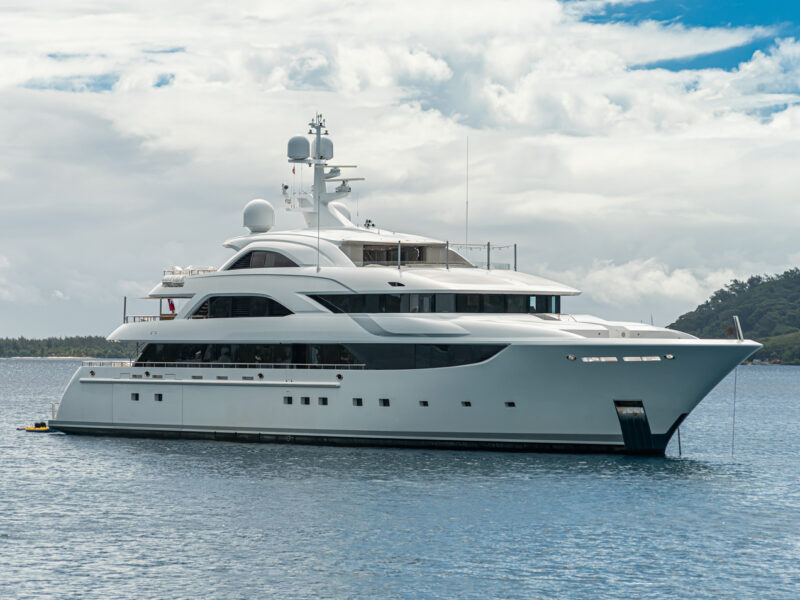
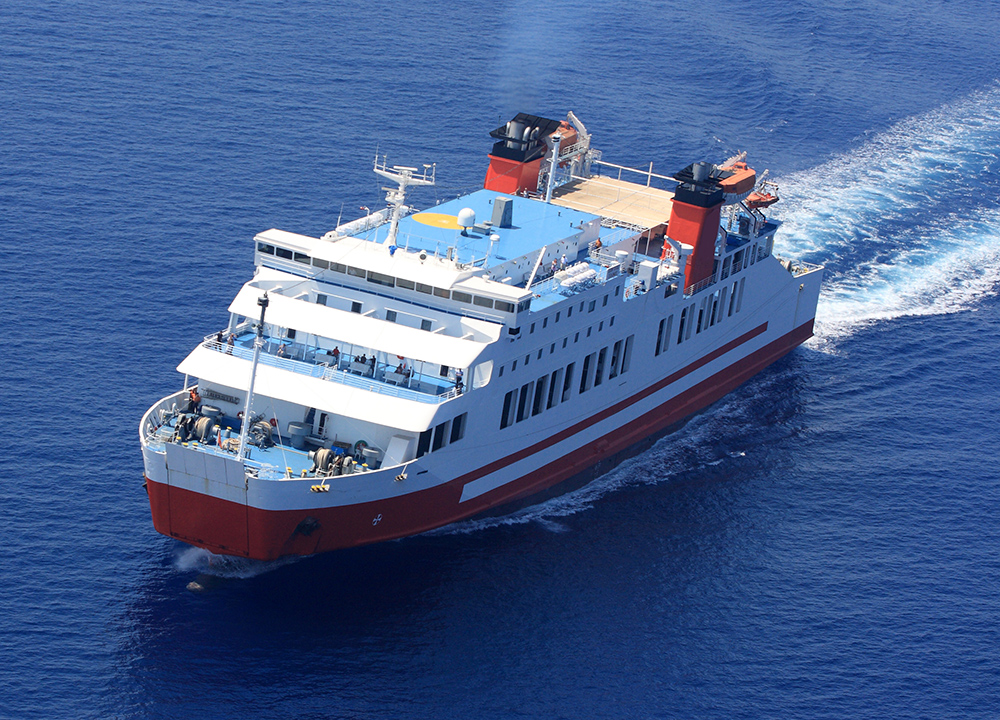
Imagine sailing on a vessel with a variable operational profile over limited time frames with frequent phases of acceleration and deceleration: large pleasure vessels (superyachts over 60 meters), passenger transport vessels (cruises), or workboats are the perfect example where serial hybrid propulsion is the best applicable solution.
Hybrid Architect by VULKAN division has field-tested these principles, most recently in a retrofit project of a vaporetto in operation since 1982 in the Venetian lagoon.
The situation changes (and significantly) when referring to medium-small units, where the available space is limited, annual operating hours rarely reach high values (5,000 hours), and COMFORT and relaxation are the user’s priorities.
THE PARALLEL HYBRID PROPULSION SYSTEM: VARIETY OF SOLUTIONS FOR DIFFERENT GOALS
In parallel hybrid propulsion systems (where the electric motor shares the same axis as diesel engine), both the in-line and parallel configurations (with the electric motor shaft being “secondary” to the propulsion shaft) show different characteristics and implications.
The IN-LINE CONFIGURATION offers evident advantages:
– Compactness and lightness are perfect for limited spaces;
– the robustness and reliability of the system ensure consistent performance over time;
– thanks to modularity, obtained through the standardization of hybrid components, and advanced electrical design safety, compliant with the highest industrial standards, an additional safety level is added;
– customization allows for tailor-made solutions, combining diesel engines of various powers with electric motors suitable for the specific needs of the project and customer;
– flexibility of the package makes it ideal for both pleasure and commercial vessels.
On the other hand, the PARALLEL CONFIGURATION (with “secondary shaft”) is characterized by greater flexibility in managing the reduction ratio between the electric machine and the propeller shaft, optimizing the propulsion system’s efficiency.
It has been tested by VULKAN on the BIIM, the Battello Ibrido Innovativo Modulare, the result of a Ligurian companies consortium, funded by the EUROPEAN REGIONAL DEVELOPMENT FUND 2014-2020 managed by FILSE – Liguria region, and now available to the Consorzio Navigazione Golfo dei Poeti of La Spezia.
Such a configuration will consequently have a greater overall weight, due to the use of an additional mechanical transmission, as well as an electric motor.
This affects both the vessel’s fuel consumption and requires more installation space.
Therefore, the choice of a specific hybrid propulsion system, in serial or parallel configuration, depends on specific needs, preferences, and operational conditions required by the owner, and thus also on the type of vessel.
Arranging a preliminary design and operational parameters study phase and analysis is crucial to determine the best possible technological solution in terms of performance, layout, and efficiency.

If you have questions and would like to discuss specific topics, contact us: [email protected]
Vulkan auscultates and supports
– FAQ n.1 What is a hybrid vessel?
– FAQ n.2 Is a yacht always COMFORTable?
– FAQ n.3 Does rubber get old?
– FAQ n.4 What does COMFORT means?
– FAQ n.5 Is there only 1 hybrid?
– FAQ n.5 BIS Is there only one hybrid?
– FAQ n.6 Batteries on a trip toward safety, autonomy and sustainability
– FAQ n.7. Are you yachting comfortably?
– FAQ n.8. Noise is keeping me awake: what can I do?
– FAQ n.9. To erase noise, you need rubber!
– FAQ n.10. If you don’t think about maintenance… your yacht will do it for you (when you least expect it!)
– FAQ n.11. Do you think of maintenance?
(Vulkan auscultates and supports, FAQ n.5 BIS – Is there only one hybrid? – Barchemagazine.com – June 2024)