Ensuring efficiency, safety, autonomy and sustainability during the navigation makes it essential to adopt ever-evolving technologies
Batteries are the key for a greener future in hybrid or electric propulsion systems. The are playing a crucial role to improve the vessel’s energy efficiency and to reduce pollutant emissions.

Why batteries are the hybrid systems heart?
Batteries convert chemical energy into electrical energy through one or more cells inside that store and transfer energy externally. There are different types of batteries, each with its peculiarities, that are able to manage specific needs in terms of size, design, operating temperatures and chemistry.
Which one should you install on board? Are they safe?
There are many batteries available on the market: lithium batteries are currently having a success moment compared to traditional and more well-known lead acid batteries. Then there are new salt batteries, that can operate at lower temperatures, non-toxic, recyclable and not subject to fire risk.
- Lead-acid batteries are economical and available in many sizes but require significant maintenance.
- Lithium batteries, particularly NMC (Nickel-Manganese-Cobalt), LFP (Lithium-Iron-Phosphate), and LTO (Lithium Titanate), are having exponential growth thanks to the electric mobility boom and their high energy density. These batteries are used to power auxiliary loads and commonly as propulsion batteries. Despite their high performance, they present some safety issues that need to be addressed (especially from a thermal perspective). Significant development margins promise further improvements in the future.
- Solid-state batteries could solve many lithium batteries current problems because they can have even higher energy density without being flammable. They have a more compact and flexible design, with significant advantages for heavy transport and the naval industry.
- Lithium-air batteries represent a potential revolution offering greater energy density.

Now the crucial question: are batteries safe?
The Battery Management Systems (BMS) can monitor and manage the battery pack autonomy and safety, controlling the voltages, temperatures and currents of each cell.
The BMS takes over the state of charge and the battery capacity, indicating its health status and preventing operating outside safety limits.
Fire detection systems, connected to a centralized alarm system, provide and immediate response that ensures onboard safety.
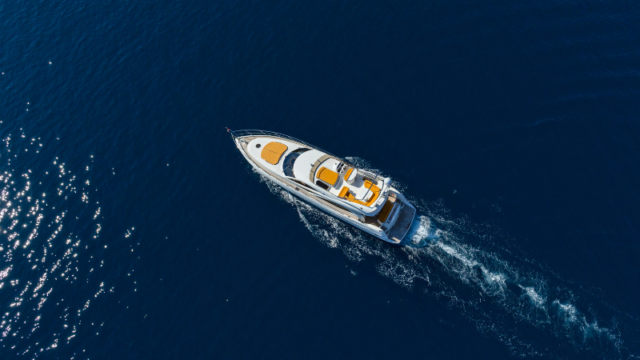
Despite fears and lack of trust, recent research and investments in the battery field demonstrate that more efficient, safe, reliable and sustainable navigation is possible. With safer, sustainable batteries that ensure greater autonomy for the vessel, the maritime navigation future has all the cards to become as promising, efficient, and ecological as the automotive sector.
If you have questions and would like to discuss specific topics, contact us: [email protected]
Vulkan auscultates and supports
– FAQ n.1 What is a hybrid vessel?
– FAQ n.2 Is a yacht always COMFORTable?
– FAQ n.3 Does rubber get old?
– FAQ n.4 What does COMFORT means?
– FAQ n.5 Is there only 1 hybrid?
– FAQ n.5 BIS Is there only one hybrid?
– FAQ n.6 Batteries on a trip toward safety, autonomy and sustainability
– FAQ n.7. Are you yachting comfortably?
– FAQ n.8. Noise is keeping me awake: what can I do?
– FAQ n.9. To erase noise, you need rubber!
– FAQ n.10. If you don’t think about maintenance… your yacht will do it for you (when you least expect it!)
– FAQ n.11. Do you think of maintenance?
(Vulkan auscultates and supports, FAQ n.6. Batteries on a trip toward safety, autonomy and sustainability – Barchemagazine.com – July 2024)