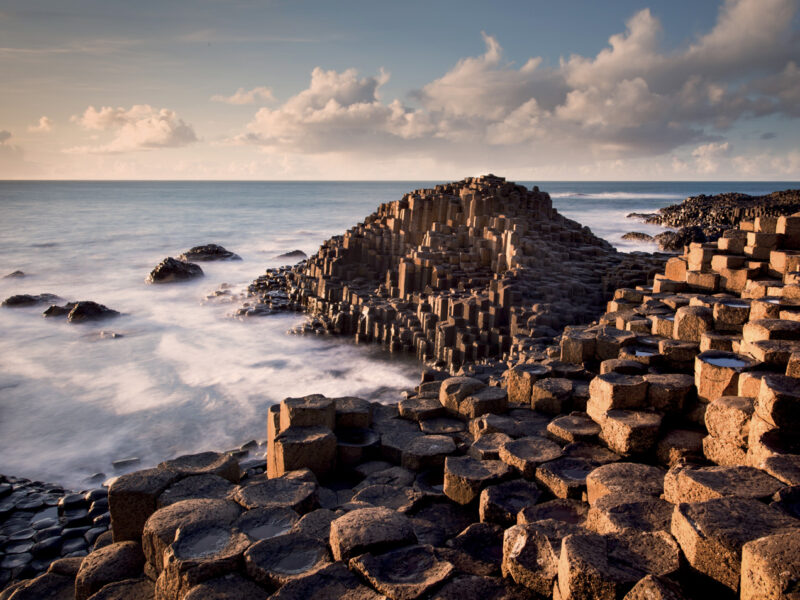
Many consider it the most majestic and solemn landscape on the island. It’s the Giant’s Causeway, a stretch of coast in the County of Antrim, 100 kilometres north of Belfast
by Clelia Pirazzini
Due to the geometry of the sometimes confusing and impressive entanglements, about 40,000 basalt columns with hexagonal bases and various prismatic shapes, 6 to 12 metres high, rise from the sea rocks, so perfect and harmonious that one could think they were man’s work. And here is the surprise: these strange rock formations were created by volcanic activity perhaps 60 million years ago. After the eruption, the lava flowed into the cold waters of the sea and immediately solidified, contracting and forming basaltic columns of different sizes depending on the speed of solidification.


Climbing higher, the landscape opens up to reveal a complete panorama of the coast, especially in the morning when the first rays of sunlight seem to break through the high pillars on the horizon.
The result was so unique and mysterious that Giant’s Causeway had already attracted the attention of scientists and curious minds in the past. 1693, it was mentioned in a document written by Sir Richard Bulkeley for the Royal Society. But this stunning and futuristic phenomenon has also given rise to many strange legends. The most popular one is undoubtedly the legend of the giant Fionn Mac Cumhaill, whose strength was so powerful that one day, the Scottish champion Benandonner challenged him to a duel. So Fionn built a trail on the inlet between Ireland and Scotland to reach him, collecting pieces of cliffs and carefully placing them on the ground to create an easy passage. But as he began to cross it and considered the imposing physical composition of his rival, he decided to turn back and seek refuge at home, where he disguised himself. When Benandonner came to his house for the duel, Fionn’s wife told him that her husband had gone out and that the person in the room was her son. Seeing that the son was so large, the Scottish champion figured that the father would be even more gigantic and threatening. Hence, he decided to retreat and destroy most of the extraordinary causeway.
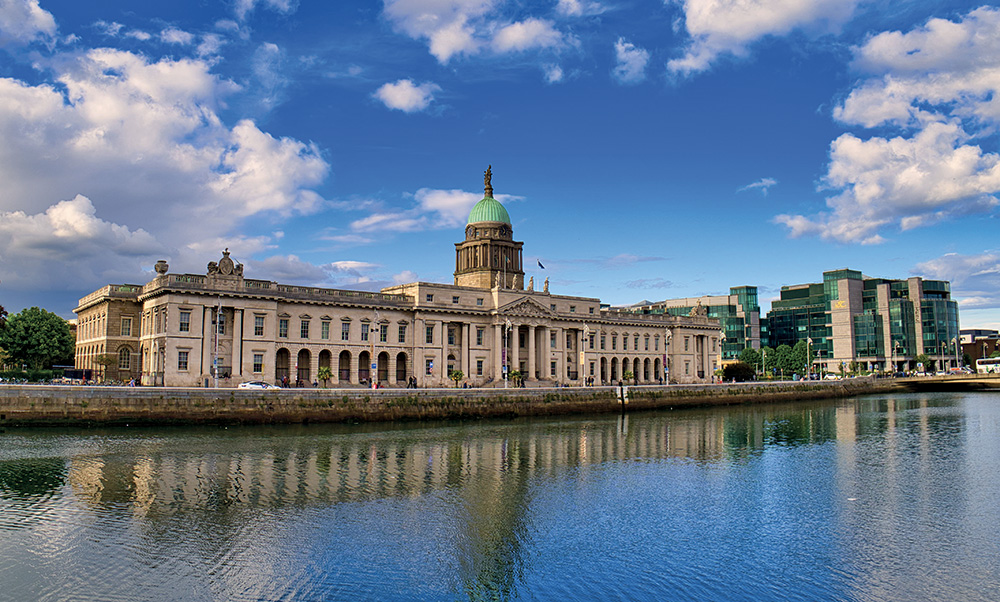

From the Renaissance-style City Hall to Titanic Belfast, Ireland’s most famous museum, Belfast is a city with many faces.
But there is another, more romantic, story about a giant who was in love and had built that causeway to reach Scotland, where his beloved lived. And many more stories like these. Regardless of the many legends, even today, the Giant’s causeway expresses the continuity and spiritual bond with nature, which amazes us with its strange shapes continuously revived by the eternal and elusive breath of the sea. In particular, if you descend on the cliff and walk on the rocky pavement, maybe jumping from one stone to the next, you can observe them to understand the perfection of these columns truly. They generally have a perfectly hexagonal base but can also be squared or pentagonal and up to 50 centimetres wide. Each one seems to have a different and unique shape. Like the one called the Giant Organ due to its striking resemblance to the musical instrument, other rocks look like the boots or eyes of these giants, as they preserve soft and bright nuances. They are so spectacular that the UNESCO declared them a World Heritage Site.
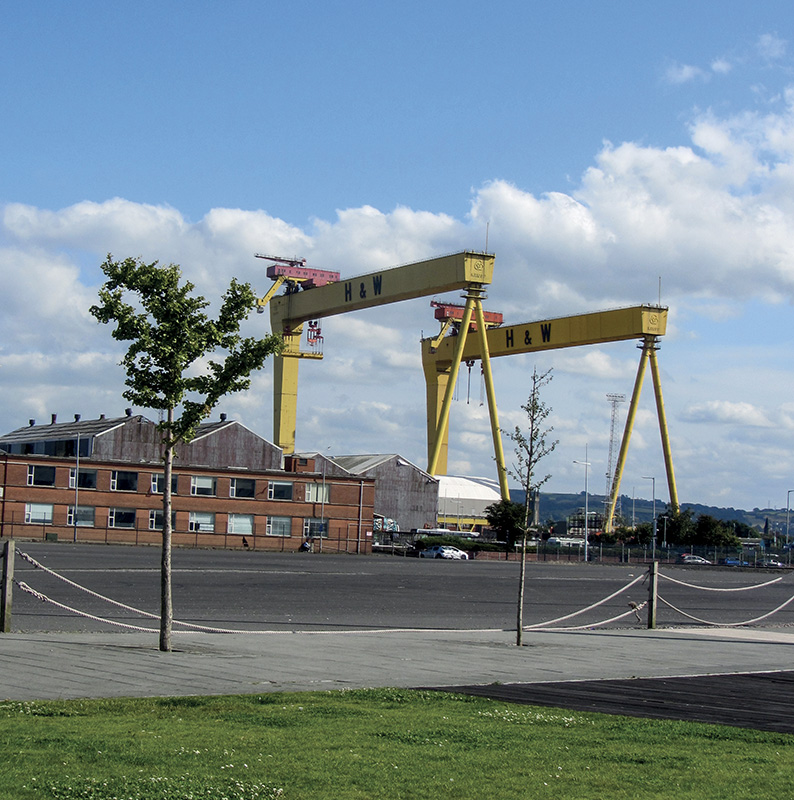
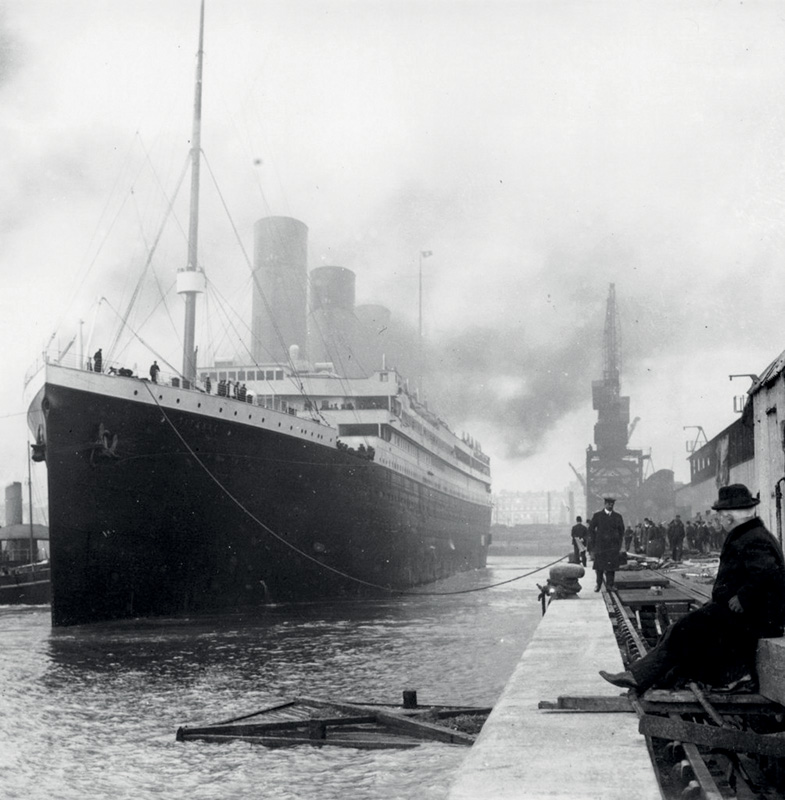
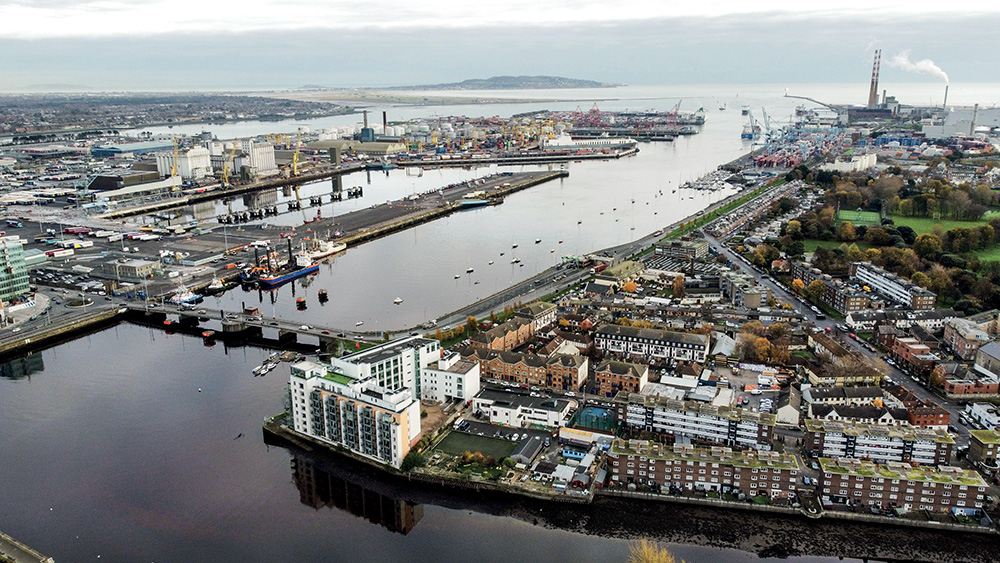
On the left, the two old cranes used to build the Titanic. The world’s most famous ocean liner sank on 15 April 1912.
This coastal area of Antrim also has other attractions of historical interest, such as the promontory where the ancient medieval castle of Dunluce stands overlooking the sea, which has been in ruins and abandoned since 1690 when part of the castle kitchen collapsed into the sea. The political seat of the Earls of Antrim was the scene of the bloody feud between the Mac Quillan and Mac Donnel clans. It was so gruesome that it gave rise to ghostly presences among the ruins, followed by many legends, like the legend about Lord Mac Quillan’s daughter, the sweet Maeve, who refused to marry the man her father had chosen for her because she was in love with another boy and was thus locked up in the manor’s tower. Her young lover came to free her and eloped with her over the cliffs, but the ever-rough sea caused them both to drown together in the nearby Mermaid’s Cave.
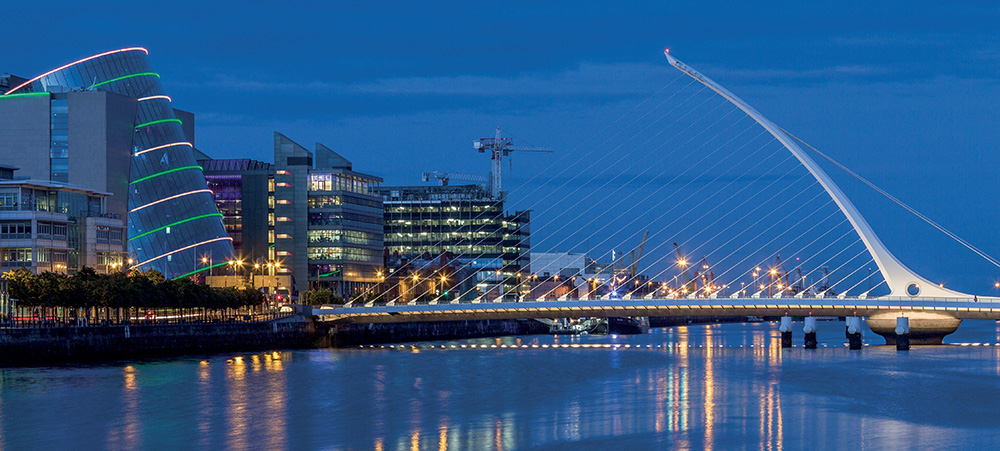
With an estimated population of 671,559, Belfast is the capital city.

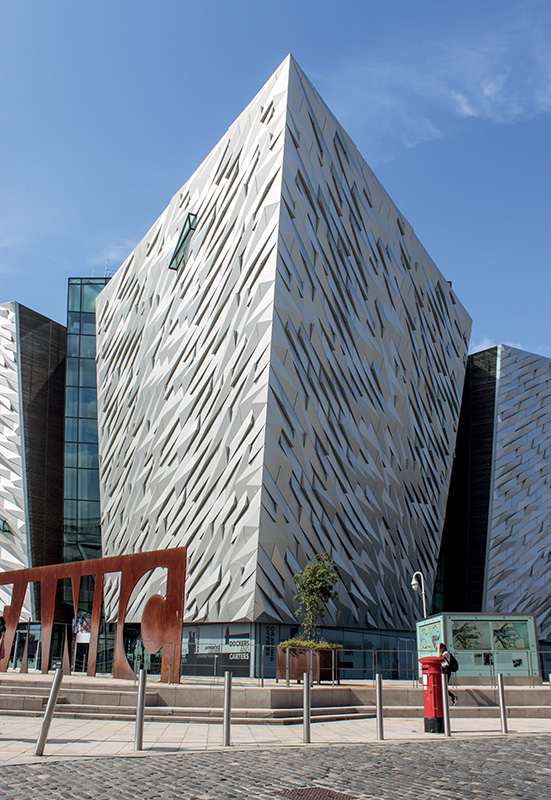
After acknowledging the beauty of this region suspended between nature, history, and legendary stories, it is an absolute must to visit Belfast, the capital of Northern Ireland, a city with a rich historical and urbanistic heritage with typical districts crossed by cobbled streets occasionally overlooked by red-brick buildings. Then, the magnificent City Hall was built in a Renaissance style. Still, it was also the typical district of the Murales, many of which reference the conflict between Republicans and Loyalists. But the jewel in the crown is undoubtedly the Titanic Quarter, which, among other things, hosts the most famous museum in Ireland: the Titanic Belfast, a place of the soul and memory. This is where you can find the large shipyard founded in 1861 by Sir Edward James Harland and Gustav Willhem Wolff, who worked tirelessly over many years building merchant ships, but above all, ocean liners, including the most tragically famous Titanic. As is well known, the latter sank on 15 April 1912, not because of a construction flaw but rather due to a horrible impact with an iceberg. The yard continued to work uninterruptedly, building six aircraft carriers, two cruisers, and other military units, also including tanks and vehicles of various kinds. But after the 1950s, as demand for passenger ships fell, the yard declined to the point where it will cease operations altogether in 2019. Today, the only reminder of this enormous enterprise are two extremely tall twin cranes with high-sounding names: Samson and Goliath. And, of course, the Titanic Museum, an aluminium-coated building shaped like a hull. Although no original items from the ship are present in the museum – which only exhibits replicas, descriptions and details about the events that took place on the Titanic – it is an actual flashback into this collective tragedy that takes you on a journey back in time, to face the dangers of the Nordic seas, and look into the heart of all human beings.


The ancient medieval castle of Dunluce rises on the promontory. Now it is in ruins and abandoned since 1690.
On the other hand, the Belfast harbour is fully operational and is a source of pride for maritime trade. It hosts more than 500 companies and is a port of call for merchant and passenger ships. For yachting and all activities connected to this industry, the leading marina is Bangor, on the Ards peninsula, just 19 kilometres from Belfast. A truly complete facility capable of accommodating a high number of yachts. From here, you can set out on thrilling fishing trips. There is no shortage of prey, especially from the northern seas, such as cod, which move in large shoals, wrasse, a type of large thrush that lives on the rocky seabed, and giant sole. Some even like to practice fishing sharks, particularly the ‘blue shark’, which satisfies fishermen due to its impressive fighting strength. But if the prey is not edible, once it is caught, it is thrown back into the sea. Certainly not the famous giant crabs of Bangor Bay, which are a typical dish in the local cuisine, together with monkfish in sesame crust. And if, during summer, you feel like taking a nice swim in all safety, this is the ideal place. Even Charles Dickens had shown his appreciation for it. When he came to Ireland to hold a series of conferences, he used to go to Ballyholme Beach in this region for a restoring swim. This is another reminder that in Northern Ireland the sea has always been the show’s star.
(Northern Ireland – Amidst nature, history, and legends – Barchemagazine.com – Excerpted from Barche, March 2025)