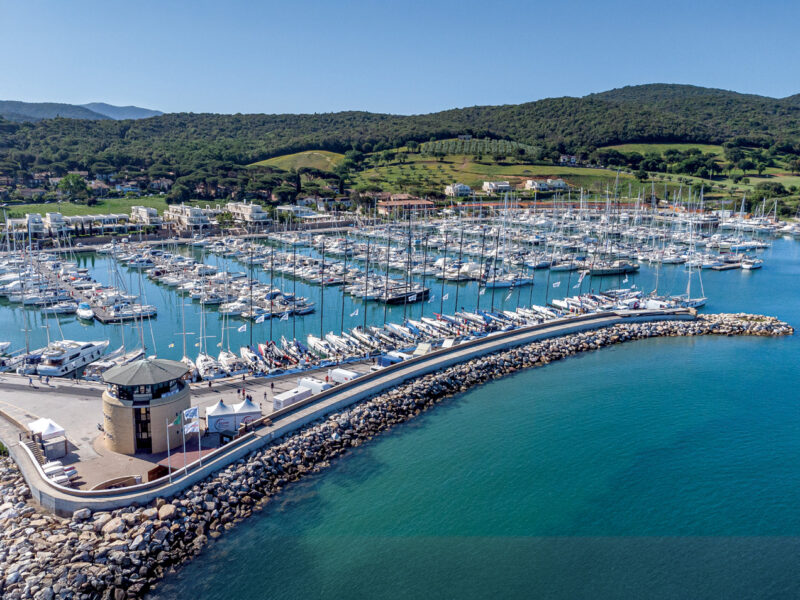
Tuscany is the homeland of mega yacht shipbuilding and has many kilometres of coastline, but it offers only a limited number of berths for larger boats
by Paolo Viola* and Niccolò Volpati
After Liguria, it is Tuscany’s turn. In the last issue, we analysed the situation from Ventimiglia to Bocca di Magra, while in this article, we shift our focus from Marina di Carrara to Argentario. Compared to Liguria, which has 260 kilometres of coastline, Tuscany has more. There are 290 on the mainland, and the islands of the Archipelago must be added. Despite this, the number of marinas and berths is lower: 17,701 berths in Tuscany against 21,290 in Liguria. One explanation could be that Tuscany does not have the backdrop of the busy cities in the industrial triangle, Genoa, Turin, and Milan. Nor, excluding Florence, does it have any excessively populated cities. But it is certainly in the centre of a portion of the sea that is popular among pleasure boaters and highly attractive for tourism. Furthermore, when you think of Tuscany, one of the first things that comes to mind is its shipbuilding. Viareggio and Livorno have always been the homeland of yacht-building, with a particular tendency towards larger boats. The figures, which also come from “La nautica in cifre” (The nautical industry in figures) by Confindustria Nautica, clearly explain this situation. In 2022, engine-driven yachts between 18 and 24 metres in length were 282 in total, just over half the number present between Ventimiglia and La Spezia. If you compare this to the number of sailboats, within the same length range, the situation is even more gruelling: just 65 in Tuscany and 1,068 in Liguria. More than half of the overall number of berths is dedicated to units of up to eight metres in length. A relatively widespread belief is that Tuscany only has berths for Tuscans. It is unclear what the reason behind this might be, but it almost seems that Tuscany fails to be attractive to shipowners who do not reside in the region. We refer to owners who moor their boat permanently and not to summer transit.
Tuscany comprises an archipelago of 7 islands and a coastline
from north to south-east, totalling almost 600km.
In our view, Tuscany is a land of contradictions. For instance, there was a race to purchase mainland villas or estates several years ago. Many VIPS and celebrities, often also in other countries, purchased a house in Tuscany, but the same is not true of berths, although they may be yacht owners. Without any intent of diminishing the charm of Tuscan towns and hills, we can say beyond any reasonable doubt that even the coast and the sea in Tuscany are no less beautiful. And yet, the numbers tell us that, with a few exceptions, yachts and mega yachts are not very attracted to Tuscan marinas.
Tuscany’s harbours
Marina di Carrara, Marina di Carrara, https://www.adspmarligureorientale.it/porto-di-marina-di-carrara/
Viareggio, Viareggio, https://viareggioporto2020.it
Pisa Porto Turistico, Marina di Pisa, www.portodipisa.it
Porto Mediceo, Livorno, https://www.portialtotirreno.it/i-porti/porto-di-livorno/
Marina Cala De’ Medici, Rosignano, www.marinacalademedici.it
Porto di Cecina, Marina di Cecina, www.portodicecina.it
Marina di San Vincenzo, San Vincenzo, www.marinadisanvincenzo.it
Marina di Capraia Isola, Isola di Capraia, www.portodicapraia.it
Marina di Salivoli, Piombino, www.marinadisalivoli.it
Marina di Scarlino, Scarlino, www.marinadiscarlino.com
Marina Punta Ala, Punta Ala, www.marinadipuntaala.com
Portoferraio, Isola d’Elba, https://www.portialtotirreno.it/i-porti/porto-di-portoferraio/, https://www.esaom.it
Cavo, Isola d’Elba, www.circolonauticocavo.it
Rio Marina, www.riomarinaservice.it
Marina Porto Azzurro, Isola d’Elba, www.marinaportoazzurro.com
Marciana Marina, Isola d’Elba, www.portodimarcianamarina.it
Marina di Grosseto, Marina di Grosseto, www.portodellamaremma.it
Talamone, Talamone, https://www.maremmare.it/porto-di-talamone.aspx
Porto Del Valle, Porto S. Stefano, http://www.portodelvalle.it
Giglio Porto, Isola del Giglio, https://www.giglioinfo.it/isola-del-giglio/info-viaggio/come-arrivare-al-giglio/in-barca/
Porto Ercole, Orbetello, www.marinadeipresidi.it
Marina Cala Galera, Orbetello, www.marinacalagalera.com
The news from Livorno is good because the new port under construction could become very attractive for yachts and
mega-yachts. The project was designed by architect Casamonti
of the Archea studio in Florence.


Along the 578 kilometres of Tuscan coastline, there is a well-developed system of ports, moorings, and berths. These facilities, together with activities related to the recreational boating industry, such as the construction of specialised boats, maintenance and renovation, and support services, form a significant part of the region’s maritime economy.
In Versilia, the first port you encounter is the Marina di Carrara, which was historically dedicated to exporting white marble from the Apuan Alps. However, this port has never been able to offer a well-equipped dock for boating tourism, although there have been countless projects and plans. Only at the mouth of the Versilia, in Cinquale, between Marina di Massa and Forte dei Marmi, are two facilities with well-organised berths but limited to motorboats, due to the low waters of the mouth – the so-called ‘bar’ (barra) – and road bridges that are not sufficiently high to let sailboat masts transit below them. The Versilia ends in Viareggio, which has a long maritime tradition, but, in addition to a modest part of the port dedicated to yachting, most of the docks are used by shipyards, which build the yachts that have made Italy a global leader in the industry.
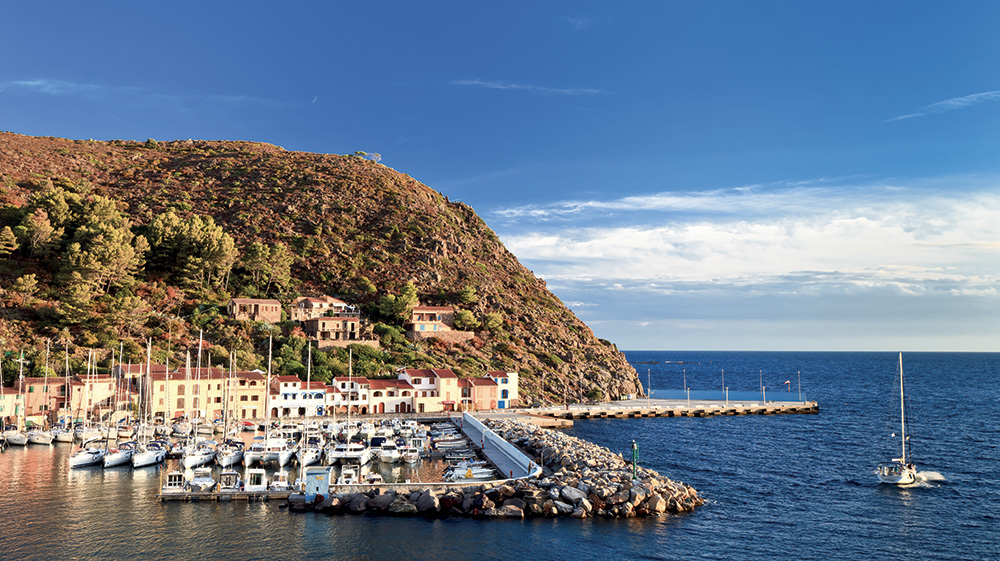
The archipelago’s islands form a natural bridge between the Tuscan coast, Sardinia, and Corsica. The stops along the way are highly evocative, with harbours at the foot of ancient fortified villages, unique flavours to discover, and nature to admire.
There are 65 infrastructures at the service of pleasure boating
in Tuscany, including eight marinas, 37 multipurpose ports and 20 mooring points. The total number of berths is 17,701.
Pisa’s Marina has a very tormented history both due to the conditions of its mouth on the southern bank of the Arno river – the northern one laps the estate of San Rossore, which is reserved for the President of the Italian Republic – and due to the somewhat contradictory management of the berths, which are partly in concession and partly privately owned. In addition, it is a marina almost entirely devoid of amenities. The problem of silting at the mouth of the Arno is substantial because it poses an obstacle to boats with a high draft.
Dredgings are another thorn in the flesh for Italy’s marinas. The regulations for performing them are stringent, and the costs are rather exorbitant. Not only are the procedures to obtain permits a quagmire, but disposing of the sludge is complicated, significantly affecting operational expenses. And this is perhaps one of the reasons why many marinas struggle to keep their ports ‘clean’ and their mouths always accessible, especially for mega yachts.


Docking in Tuscany means enjoying life in port, exploring the most famous art cities or lesser-known villages of great charm, and, of course, stocking up on typical local food and wine for excellent dinners on board.
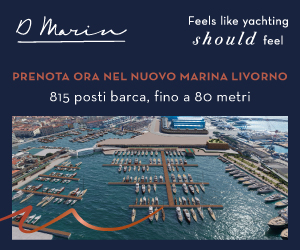
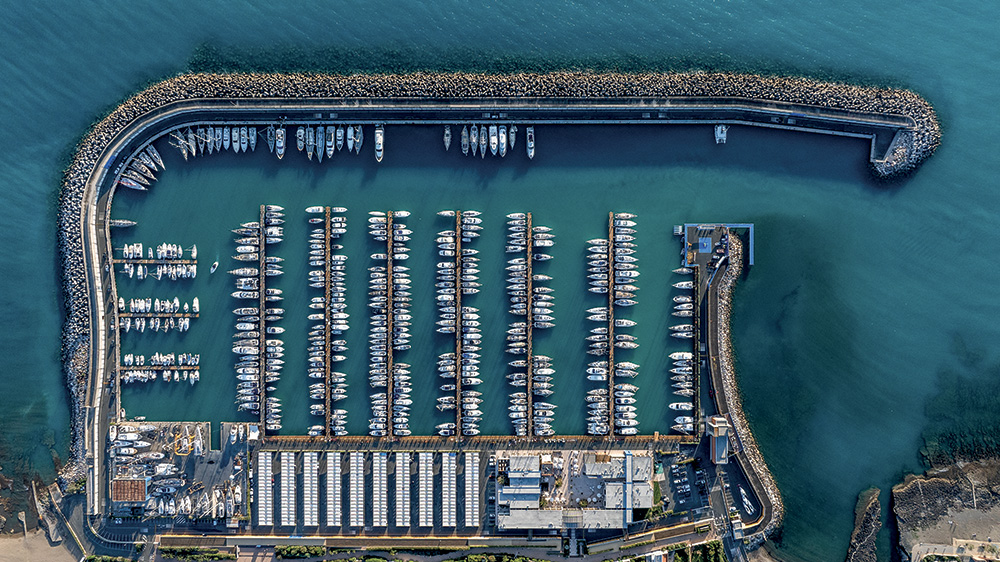
Livorno is a positive note in this scenario, because the new port currently under construction could become very attractive for yachts and mega yachts. The project was handled by architect Casamonti from the firm Archea in Florence, and the construction was the fruit of a collaboration between D-Marin and Azimut Benetti. Work began in January this year and will end in early 2027. The concession lasts 40 years, and 815 berths are planned, with some as long as 80 metres. Why should this be particularly appealing? First, because the project includes many services, such as several restaurants. Secondly, it does not stand as a separate space from the rest of the city, but as a continuous extension of it. Lastly, the port will be part of the D-Marin network. “Livorno’s marina will be part of a network of 25 D-Marin harbours in the Mediterranean – asserts Nicola Caffo, General Manager of D-Marin Italy – and a shipowner who decides to dock in Livorno permanently will be able to enjoy one week of mooring in the other marinas in the network”. In addition, the service includes an App where you can book your mooring, manage additional services, monitor the boat 24 hours a day, 7 days a week, thanks to smart sensors and manage onboard energy consumption from your smartphone. The stretch between Livorno and Argentario has a few well-equipped marinas: Marina Cala De’ Medici, Marina San Vincenzo, Marina di Salivoli, Punta Ala, Marina di Grosseto, and Talamone. Most of them, however, can accommodate boats up to 24 metres in length, with the only exceptions of Cala De’ Medici (36 metres), Cecina (27 metres), Scarlino (36 metres), and Punta Ala (28 metres). Lastly, the three marinas in Argentario are Porto Santo Stefano, Porto Ercole, and Cala Galera.
Porto Santo Stefano perfectly represents one of Tuscany’s many examples of contradictions. It is home to captains of yachts and pleasure boats, and yet on the docks, it is practically impossible to see a vessel of more than 30 metres in length. Pleasure boating has to coexist with the ferries leaving for the Island of Giglio, with shipbuilding, fishing, and military ships. But if appropriately organised, perhaps, the marina could even accommodate larger boats. It should be noted that a few hundred metres away, to the west of the port, a bay offers a good – albeit highly precarious – summer spot even for huge boats. The seabed is high, and with two not excessively long piers, you could obtain a valuable and top-quality marina for super and maxi-yachts. In Porto Ercole, the anomaly is a concession for managing the docks that the Municipality has recently assigned to itself. It is a concession of 50 years, and usually, for such an extended period, you would need to carry out the construction work. At least this is the case with private individuals who submit a marina project and apply for a multi-year concession. It is also hard to imagine what regulation might allow a local authority to assign itself the management of piers for fifty years, without the need to perform any special works.
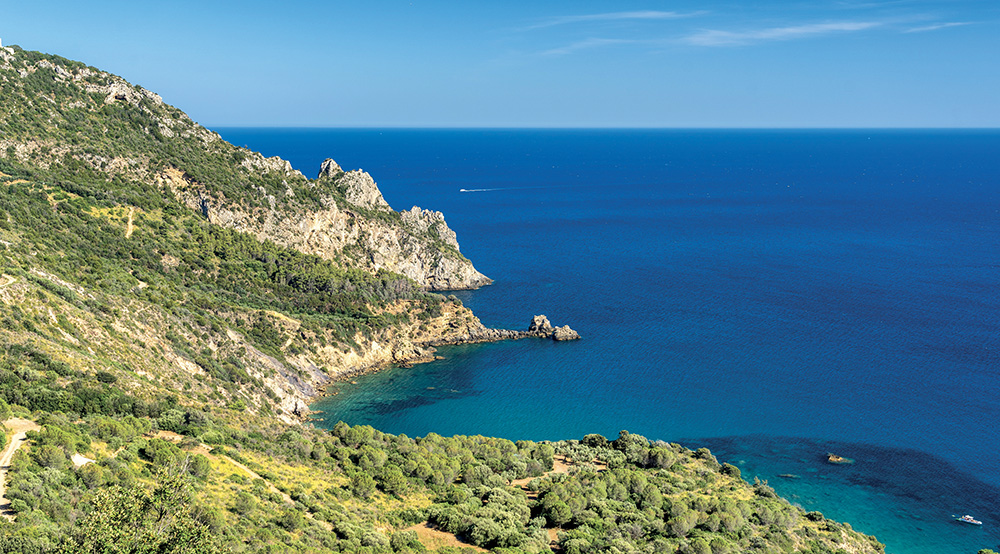
As you sail along the coast, the bow glides past the Mediterranean scrub, stretching out to touch the beaches or clinging to the rocks surrounding and sheltering unspoilt bays where you can drop anchor for a swim.
The regulatory issue is certainly not only a Tuscan problem. In many cases, confusion reigns, but the Tuscan regional laws about ports never distinguished themselves for their clarity. In 2005, for instance, the law attributed all the powers to the Region without referencing Italian Presidential Decree DPR 509, the regulation that streamlined the procedure for state concessions and established that a Conference of Services needed to be summoned to proceed. And to what purpose? All the bodies involved should sit around the same table to evaluate a project for the construction or adaptation of a marina. And after the law from 2005, a second regional law was approved in Tuscany in 2014. In this new text, a reference was made to DPR 509, but it was not about procedures. In short, we have said it often enough. We believe it would be necessary to standardise and coordinate all procedures involved in constructing and adapting existing marinas. The paradox is that on one stretch of coast, a specific method is compulsory, while only a few miles away, another procedure applies. But this is not just a matter of a lack of national laws. “In 2012, Angelo Zerilli, captain and consultant for marinas, tells us that an excellent law on ‘tourist districts’ was passed by the Italian Parliament. This law provides that a central district examines all requests and forwards them to the competent Regions. It is a law that attempts to coordinate and standardise procedures. However, unfortunately, this law was never applied, neither in Tuscany nor elsewhere”. In Tuscany, there is a lack of an overall vision that exceeds individual interests for the benefit of nautical tourism. There is a clear and, in some respects, natural contrast.
«An excellent law on tourist districts was passed in 2012. This law allows a central district to examine all applications and then forward them to the relevant regional authorities. It is a law that tries to coordinate and standardise procedures, but unfortunately, it has never been implemented in Tuscany or elsewhere». Angelo Zerilli, ship commander
The existing facilities have no interest in generating other potentially competing facilities, but this means that an area cannot be fully developed and does not exploit its full potential to become attractive. One example is Portoferraio all’Elba, a bay that could be reorganised to increase the number of available berths, but the holders of the concessions hardly favour this process. Thus, Portoferraio still has hangars that date back to the Second World War. Instead of designing and perhaps building a more modern structure that can meet the needs of pleasure crafts, both smaller boats and mega yachts, In Tuscany, unlike Liguria, no storm surges have destroyed the marinas and caused massive environmental damage, like in Rapallo in 2018, but that does not mean it has been immune to emergencies. The shipwreck of the Costa Concordia on the Island of Giglio in 2012 and, the year before, in 2011, the spill of 200 toxic drums from the Priolo Gargallo refinery in the province of Syracuse, which were being transported by a cargo ship, represented actual environmental disasters in a region known for the protection of its highly precious environment.
To conclude our overview of marinas in Tuscany, we must not forget the marinas of the islands in the Archipelago. They all have at least one landing place for connections with the mainland. Naturally, marinas tend to expand and get organised to accommodate pleasure crafts as tourism develops on each isle. On the islands, there are different scenarios: from Elba, which, in addition to Portoferraio, has the marinas of Marciana Marina, Marina di Campo, Porto Azzurro, Rio Marina, and Cavo, which, however, are not enough, considering the number of buoy fields scattered along its coast. Also, at Giglio and Capraia, there are ports and landings, while in Giannutri, a protected area, mooring is very limited. Montecristo and Pianosa can only be accessed on reservation and with the vessels of the Park Authority. Even Gorgona, since it is still a prison, is practically inaccessible. It would be desirable to have greater coordination between all bodies and associations, both in the Archipelago and on the mainland, to develop an efficient network for the benefit of coordinated tourism, which respects environmental protection, but still allows guests to enjoy the marvellous landscapes that these islands can offer.

* Paolo Viola
Paolo Viola (Naples, 1936) is an engineer and urban planner specialising in harbour design, head of the “Marina & Waterfront” area at WiP Architetti s.r.l., ranked among the top 100 architecture and design firms in Italy. He founded the Master’s programme on “Sustainable planning and design of harbour areas” at the Università Federico II° in Naples and is the author of the book “Porti turistici, approccio multidisciplinare per una strategia progettuale integrata” (Marinas, a multidisciplinary approach for an integrated design strategy – Flaccovio, 2010).
(Focus Harbours – Toscana, 2nd chapter – Barchemagazine.com – Excerpted from Barche, July 2025)