Let’s look at the benefits of registering in the Italian International and Commercial Yachts Registry. Part two
by Federico Santini* – photo by Jeff Brown/Breed Media
In this issue we take up the subject of the Italian International Register with reference to commercial yachts, analysing the relevant tax and social security incentives and benefits that such registration entails according to the rules provided for in Law No. 172 of 8 July 2003. The legislator has reserved a favourable tax regime for IRES (Corporate Income Tax) and IRAP (Regional Income Tax) purposes in relation to income from the use of yachts entered in the International Registry. For IRES purposes, income deriving from the use of yachts entered in the International Registry, which includes commercial chartering, must be determined on the basis of the ordinary rules contained in Title II, Chapter II, of the Income Tax Consolidation Act, but contributes to the formation of taxable income for IRES purposes to the limited extent of 20 per cent. As a corollary of this partial income tax relief regime, any tax losses realised in the exercise of the activity in question are relevant to the limited extent of 20 per cent. The exemption in question also applies to any capital gain realised through the future sale of the yacht, provided that the same has remained registered in the International Registry, prior to the sale, for an uninterrupted period of at least three years.

FOR IRAP PURPOSES, THE PORTION OF THE NET PRODUCTION VALUE ATTRIBUTABLE TO THE USE OF YACHTS LISTED IN THE INTERNATIONAL REGISTRY IS DEDUCTED FROM THE RELEVANT TAX BASE
AND, THUS, EXCLUDED FROM TAXATION.
For IRAP purposes, the portion of the net production value attributable to the use of yachts registered in the International Registry is deducted from the relevant tax base and, thus, excluded from taxation. The portion of net production value that can be deducted is determined by making reference to the positive and negative components relevant for IRAP purposes and specifically referable to the activity carried out through the use of yachts registered in the International Registry. So, if the production value of the shipowning company is made up exclusively of the chartering of the yacht, the company will be entirely excluded from IRAP taxation. Shipowning companies chartering yachts entered in the International Registry are also entitled to a tax credit equal to the IRPEF due on income from employment and self-employment paid to crew members on board these yachts, to be used as set-off when paying withholding taxes on such income. This tax credit, by express provision of the same law, does not contribute to the formation of the employer’s business income.
We also wish to mention that yachts registered in the International Registry are by definition vessels used for a commercial activity and, therefore, provided they are actually used for navigation on the high seas, the VAT non-taxable regime pursuant to Article 8-bis of Presidential Decree 633/1972 applies for the transfer, lease and charter operations (but only if the charterer is a VAT taxable person who uses the yacht for commercial purposes), the purchase of equipment, engines, components and spare parts, the purchase of goods intended for onboard equipment, supplies intended for refuelling, including bunkering and the serving of food and drinks on board, the purchase of services relating to such yachts, including the use of dry docks as well as relating to construction, maintenance, repair, modification, transformation, setting up and furnishing, and finally demolition.
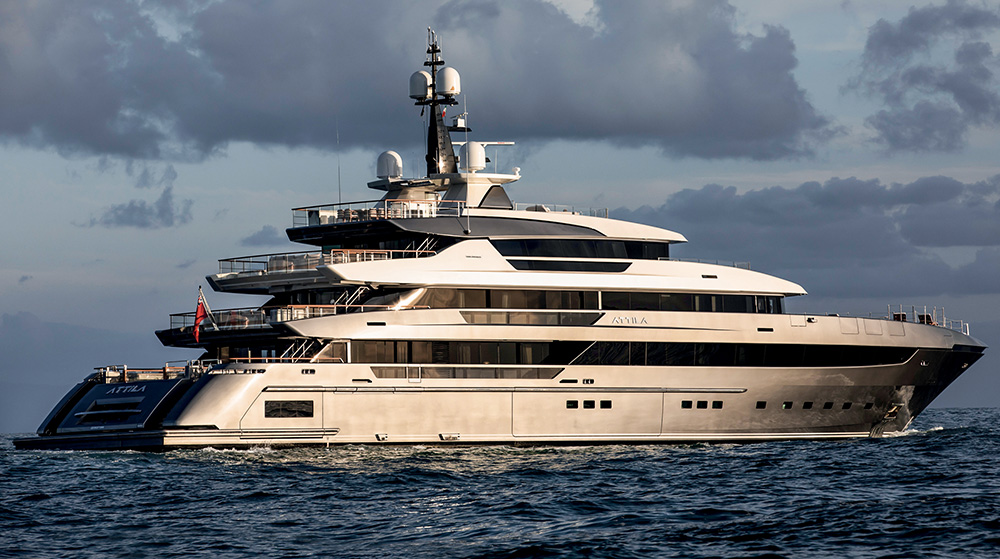
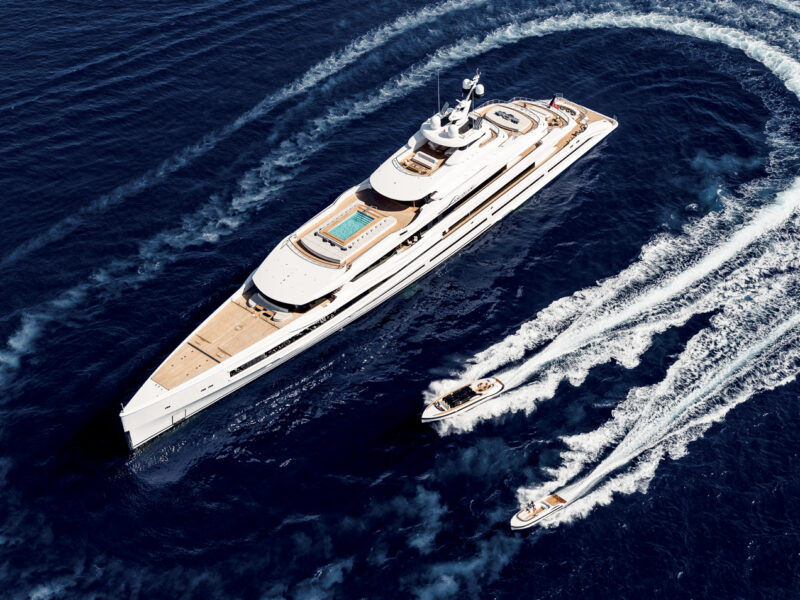
photo by ©Guillaume Plisson.
Shipowning companies chartering yachts registered in the International Registry are entitled to a tax credit equal to the IRPEF due on income from employment and self-employment paid to crew members on board such yachts, to be used as compensation for the payment of withholding taxes on such income.
However, as mentioned above, in order for the non-taxable VAT regime to be applicable, the actual use of the yacht on the high seas must be assessed, i.e. whether the yacht makes more than 70 per cent of voyages (excluding those for technical reasons) with routes that exceed the 12-mile limit measured from the baselines established by international maritime law. In addition to the above-mentioned tax benefits, Italian legislation provides, as mentioned above, for specific tax relief for companies owning yachts entered into the Italian International Registry, in relation to Italian and EU personnel meeting the requirements for being listed in the Italian seafarers’ registry. These reliefs concern both the social security and welfare charges directly borne by the company and the part that the same companies pay on behalf of the employee. However, it should be noted that, while initially the relief was provided in full, and was, therefore, a real exemption, starting in 2020 the aforementioned benefits are granted within the limit of 44.32 per cent.

As is evident, that tax and social security benefits granted to companies owning commercial yachts listed in the Italian International Registry are extremely significant and should be such as to make this registry extremely attractive. Nevertheless, during these 20 years, only a few yachts have been entered in the International Registry and most of these have since abandoned it. In the next issue, we will try to identify the possible causes of this lack of competitiveness and the possible remedies to make the Registry effectively attractive at national and international level.
(The Italian International Registry – Barchemagazine.com – October 2023)