Face-to-face with Giorgio M. Cassetta to talk about design, function, safety, aesthetics and quality of life on board
by Olimpia De Casa
Seeking beauty is a bit like seeking truth, where the concept of truth cannot simply be reduced to what “satisfies” and therefore comforts, and where the idea of beauty should go beyond the generic “what I like”. This is where we start recounting an interesting dialogue that exceeded expectations. This is because the interlocutor could argue his thoughts further than usual, meaning he exceeded the expectations of those usually accustomed to “standard answers”.
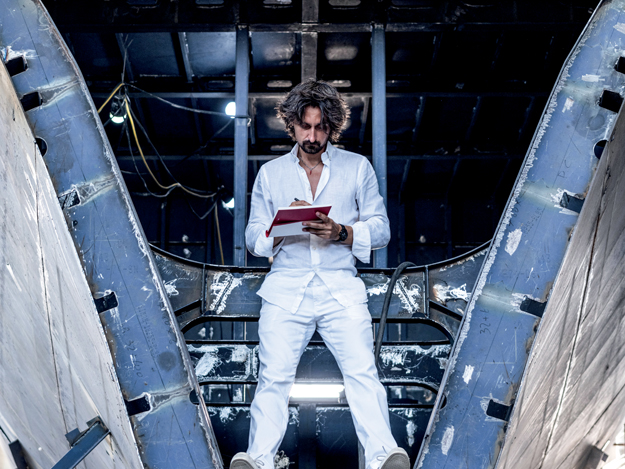
The image that Giorgio Maria Cassetta, born in 1983, conveys of himself is as intense and complex, in the fullest and richest sense of the term, as one can imagine. Midway between the “mad scientist” and the undaunted knight who has made a virtue of restlessness, he is a unique creative. This latter vein which also transpires in specific outfit details (see the “different” cufflinks worn under a tailored suit at the launch of Juno’s 7, Benetti’s first Class 44M, for which he was responsible for the exterior and interior), is always interspersed, like a centre of gravity, with a rigorous and precise approach and dialectic that suggests excellent knowledge, order and discipline.
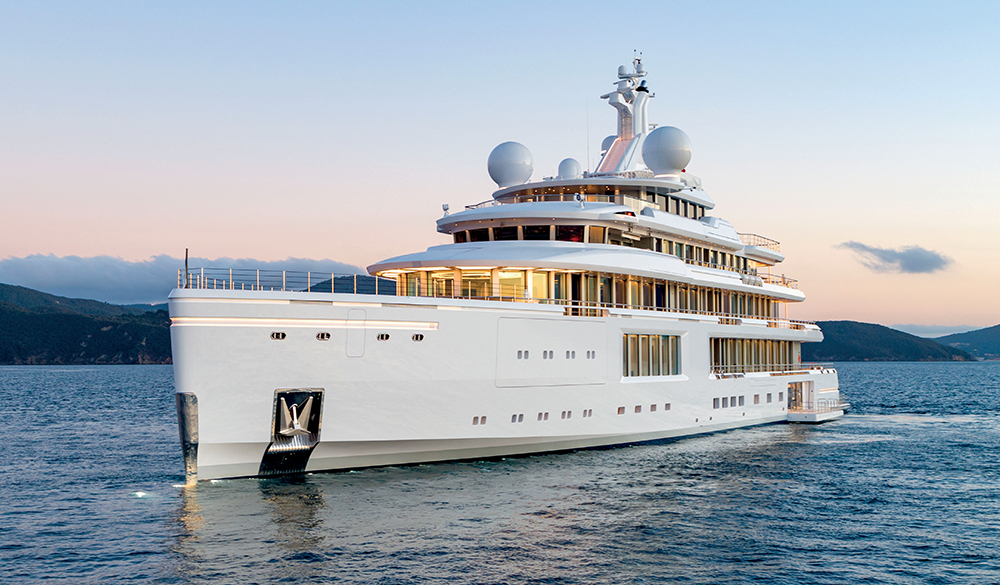
Benetti Luminosity – photo by Nico Fulciniti.
With a length of 110 metres, it is probably the most technologically complex boat ever built in terms of innovation and technological integration. It is a truly remarkable peak and the pride of Italian yachting.
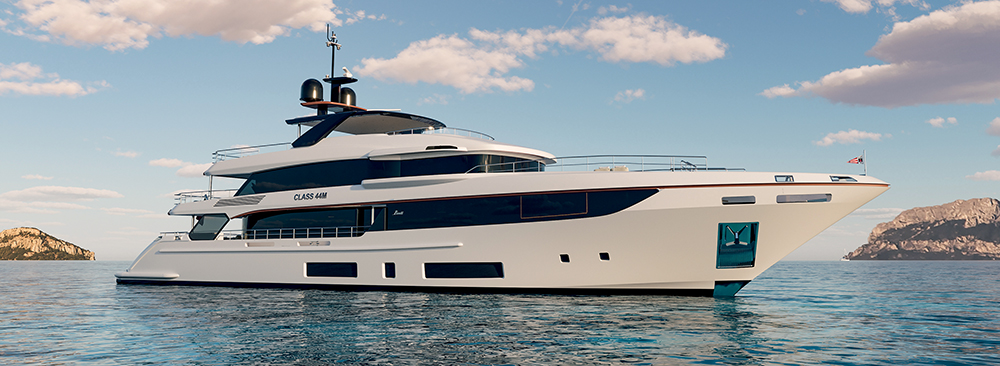


Rendering Benetti Class 44M.
Benetti
Giorgio M. Cassetta and Benetti have been working together for 24 years. “Our studio has had two main strands of collaboration: on the semi-series fibreglass boats, for which we have supervised the actual production for the years 2010-2020, i.e. the Delfino 95, the Mediterraneo 116, the Diamond 145, and on the fully customised boats over 500 tonnes, for which we have built or are building ten units over 60 metres”.

Benetti Metis – credits Jeff Brown.

Benetti Spectre

«Innovation is when you can throw your heart over the hurdle and decide that an efficient way is not necessarily to achieve something out of the ordinary».


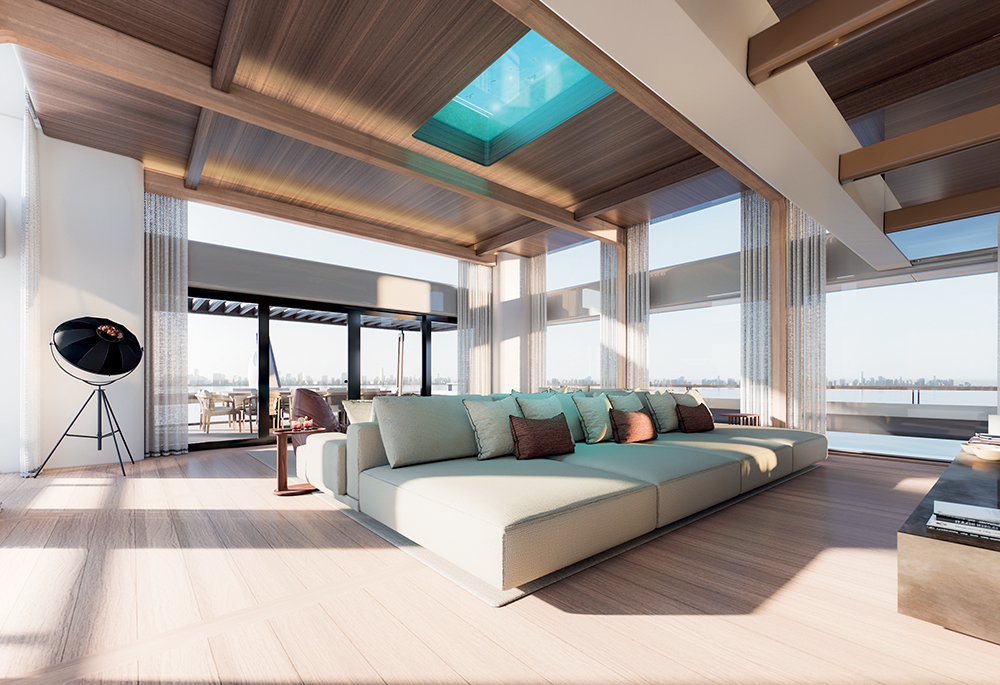
Benetti B.Loft 65M.
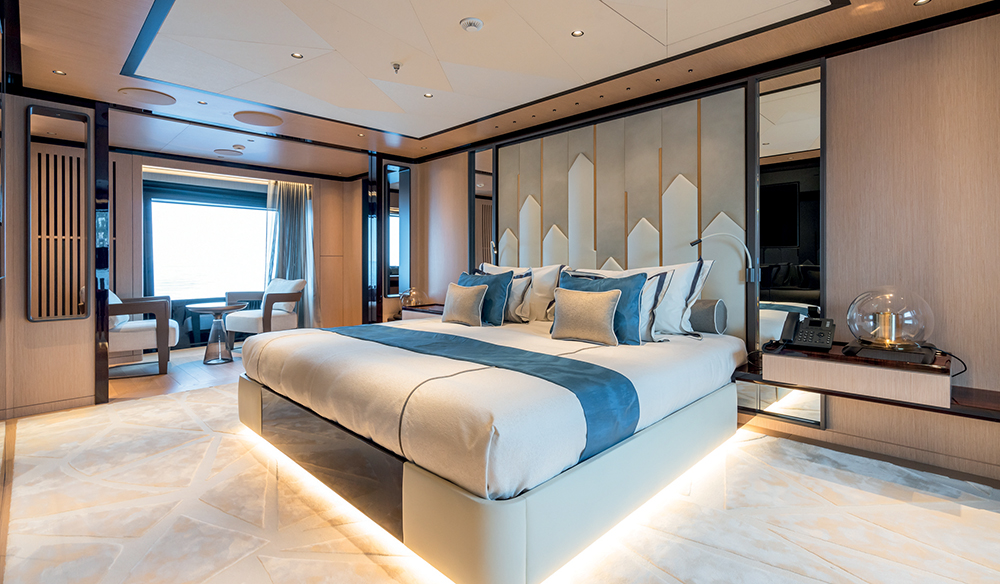
The Benetti B.Loft brings contemporary living on board a mega yacht. The Cabana Club characterises it on the lower deck. The beach club offers a 270° view with folding wings to extend the space further. B.Loft combines the volume of a villa with the lightness of a loft, where the interiors reach a height of around four metres. At the same time, the exterior spaces, some of which can be converted into interiors, guarantee extreme flexibility and customisation.

CdM Tremenda


CdM Raw
Cantiere delle Marche
He has designed four yachts for the Cantiere delle Marche: the one-off 45-metre Tremenda (exterior design), the Deep Blue 155 (interior design), the RJ 100 (interior design) and the RAW 102 (exterior and interior design), designed to convey the powerful and commanding look that an explorer must have, without giving up the fun side.
His passion for the sea comes from afar but not from his heritage: “I started drawing boats when I was two years old and never stopped. I loved them, just as I have always loved the sea. I am a Sunday sailor; I love medium-small boats, where I don’t need a crew and am more in contact with the sea. This is where I return to the natural state, to the ‘wild’ life that empties your mind and helps you get back in touch with reality”.
He spends the other days of the week at work, travelling the world and in the studio he founded in Rome in 2015, two years after setting up on his own and after working on a series of essential jobs, first with Zuccon International Project and then with Andrea Vallicelli. Today, he leads a growing team of seventeen people. After graduating with honours in Industrial Design from the Sapienza University of Rome, Cassetta also gained some academic experience, having undertaken research work for some time at the Gabriele d’Annunzio University of Pescara. An experience from which he gained the propensity to share, an aspect that he continues to pursue with conviction in the studio, together with the other designers.
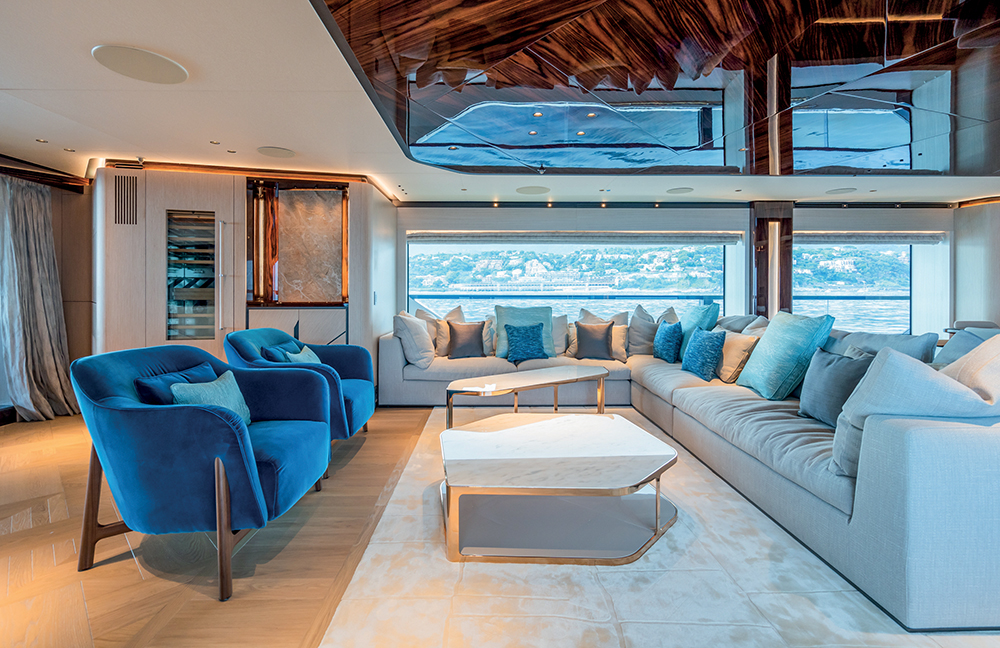
Tankoa 54 Grey – photo by Julien Hubert TWW Yachts.
Tankoa Yachts
Giorgio M. Cassetta has signed three different projects for the shipyard run by siblings Eva and Guido Orsi: the interior of the Grey, the fifth in the highly successful S501 series; the exterior and interior of the T450 Go; and the new Explorer version of the 45-metre boat, which is currently under construction.


Tankoa T450 C111.
«In terms of aesthetics, the challenge we set ourselves and try to meet daily is to create objects whose balance of volumes, proportions, voids and solids and decorative elements is as natural and pleasing to the eye as possible, even pushing us towards unconventional shapes».
What does innovating mean to you? Granted that today, the term, a bit like timeless or holistic, is perhaps among the most hackneyed and “dangerously” used, innovation, for me, has a precise meaning from a biological perspective even before design. Let me explain myself. We are biological machines programmed for self-preservation and, consequently, energy saving too. This means that our brain, accustomed to using neural pathways that have already been acquired, is driven to act through automated mechanisms that are based on harnessing experience from the moment we are born. Real innovation occurs when you decide not to use established paths and try to create new ones by forcing your mind towards something that is not biologically conventional. Innovation occurs when you choose to go off the beaten track, and this happens both biologically and within an organisation, within a company, when you abandon the absolute paradigm of efficiency: energy efficiency, on the one hand, and economic efficiency, on the other. Innovation occurs when you succeed in throwing your heart over the hurdle and deciding that an efficient path does not necessarily lead to an out-of-the-ordinary result. Moreover, this does not automatically turn out to be inefficient. It is simply outside the realm of predictability.
Among the many projects developed over the years by Cassetta’s firm for private clients and builders, such as Benetti, Venture Yachts, Tankoa Yachts, Cantiere delle Marche and Advanced Yachts, to mention but a few, there is one, the Cigarette Tirranna (spelt just like that with two “r”s), stemming from an extraordinary instance of intersecting paths.

«I started drawing boats when I was two years old and never stopped. I loved them, just as I have always loved the sea. I am a Sunday sailor; I love medium-small boats, where I don’t need a crew and am more in contact with the sea».
What does it mean to design and subsequently develop a successful product in terms of safety and functionality? Safety at sea is an essential component, especially considering that average yacht users – I am referring to guests but to some extent also to crews – are not sailors who are used to going out in three-metre waves, people who have to make a living from the sea, but instead people who go on board as naively as they would enter a luxury hotel. Hence, all the more reason why the boat must immediately foster an image that guarantees safety. I find the onboard escape and movement routes fundamental, which must be carefully thought out and developed to make it possible to reach the areas for abandoning the ship, for example. Otherwise, they will be rendered useless. If I decide to put an electric sliding door on a key safety route, I have to anticipate that if the ship is at a particular angle, it will probably not be possible to open that door. Talking about functionality means identifying the quality of life on board and distinguishing a yacht from any other type of vessel. Planning, even stylistic planning, starts with “how it works”, this applies to every deck, space, worktop, sink, set of drawers, etc. For each object, we establish the order of priority of functions and, from there, decide how to achieve it.

Cigarette Tirranna – photo by Tom Leigh.
Tirranna
«Equipped with six Mercury Verado outboards delivering 2,400 horsepower, Tirranna was designed to offer the ultimate luxury, including Poltrona Frau upholstery. The result was a Bugatti of the sea that, at 70 miles per hour, remained rigid and so well fitted out that it was impossible to hear the banging of the electric cables in the corrugations. I mention this detail to illustrate the level of care that went into the design and construction. It was a fantastic experience that led to developing two more models and ended with the shipyard sale».
What does producing a good design mean for your studio? Over and beyond the romanticism that can be attached to the concept of beauty, when I was a teenager, I was very fond of John Keats (he recites, strictly in English, the last lines of the Ode on a Grecian Urn: “Beauty is truth, truth beauty” – that is all. Ye know on earth, and all ye need to know, ed.), indeed, according to human perception there is no such thing as universal beauty. Perhaps the only one, the one that all world civilisations recognise as such, is the beauty of natural things, of animals, of landscapes… Reasoning on the concept of “I like it” goes in the opposite direction and is risky insofar as it is a product of cultural conditioning. If designers start thinking about what their customers like at the time, they will necessarily produce a design that will be at least five years old by the time it hits the market. Moreover, it would be topical and linked to the observer’s birth and upbringing. Indeed, we are all unconsciously conditioned by the context in which we have lived, and it is normal for a specific type of architecture, decoration and imagery to be more familiar and pleasing than others that are far away and distant from us. As far as aesthetics are concerned, the challenge that we set ourselves in our small and limited cases and try to overcome daily is to create objects, even pushing ourselves towards unconventional shapes whose balance of volumes, proportions, voids, solids and decorative elements is as natural and easy on the eye as possible. This, together with the habit of thinking at least a decade ahead, is in some way a guarantee that the aesthetics will retain their appeal over time. Attending a launch is always a painful experience because I see something born in my head at least five years earlier.
(Giorgio M. Cassetta – Beauty is truth, truth beauty – Barchemagazine.com – Excerpted from Barche, February 2025)