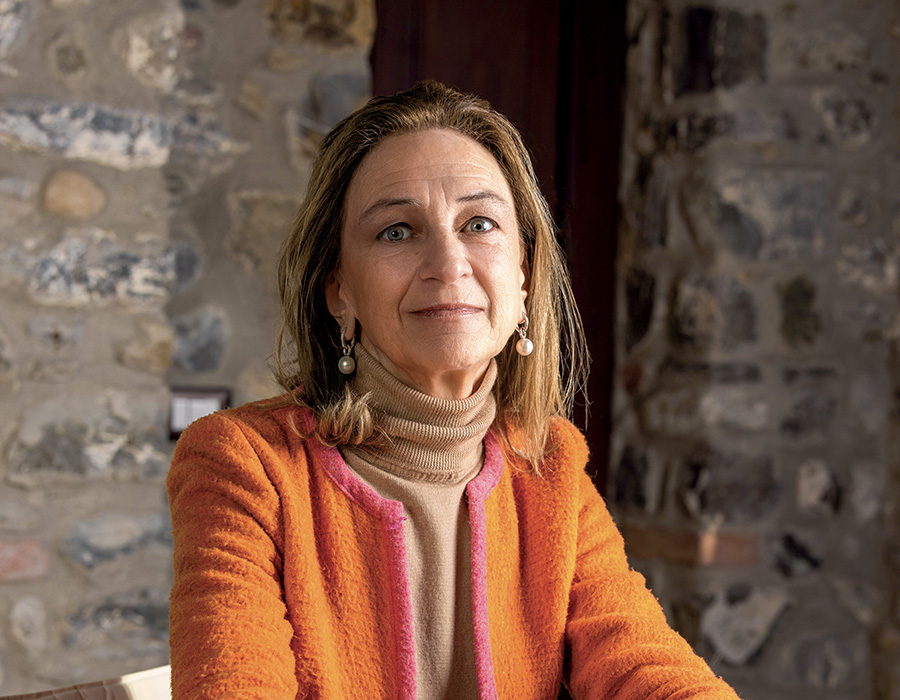
Fulvio De Simoni has always made rigour the hallmark of his work. Ethics, balance and beauty are not the result of coincidence but indispensable elements of every designer’s baggage
by Olimpia De Casa – photo by Giovanni Malgarini
As with any important appointment, the eve of the event inevitably brings with it a load of expectations, curiosity and anxiety. My first interview with Fulvio De Simoni, more than many others, confirmed the rule of expectation. Perhaps it is because the designer has a reputation for not being an easy person to get along with, maybe it is because of the depth of his nautical culture, or perhaps it is because of his predisposition to express his thoughts without mincing words; the fact is that the planned meeting caused me a certain apprehension. The compactness of the enormous gate that delimited the private space that would have welcomed me only added to the feeling of hesitation and awe that had become a cumbersome presence. I decide to get rid of it quickly. As soon as I crossed the threshold, I set off on foot along the gravel path, inebriated by the scents of the forest and the landscape that gradually unfolded before me.

Pershing 9X

Fulvio De Simoni has a historic collaboration with Pershing, the shipyard for which he and his team have designed all the boats except the GTX80. Starting in 1985 with the design of the 45-footer, over 2,000 units have been launched. In 2000, the 88 was featured on the cover of the world’s leading magazines, with over 50 publications.
Fulvio De Simoni, his wife Isabella, his collaborators, and a sea of images and objects that testify to the taste for Beauty (the capital letter is not superfluous) have accompanied a career full of achievements and successes. A job that began in 1972 and has not only brought satisfaction and fame to its creator but has also been able to set many milestones in the chronicle and grammar of yacht design, as well as in the narrative and debate surrounding a professional activity that began at a time when the profession of yacht designer was still largely unwritten.

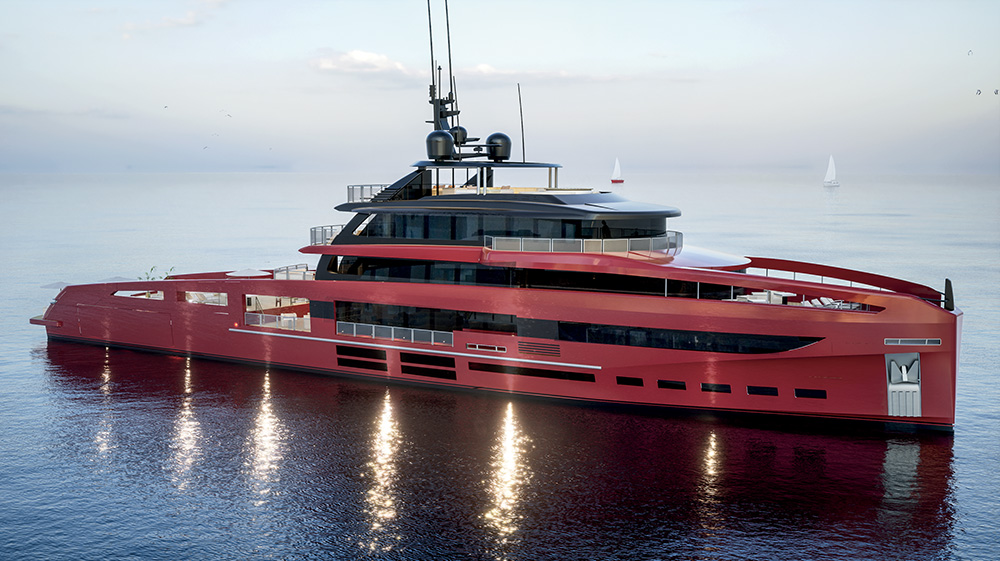
Pershing 170
Designed by Fulvio De Simoni, the Pershing 170 is a 51.8-metre superyacht. It will be the largest in this series and built in aluminium at the Ferretti Group’s Ancona shipyard.


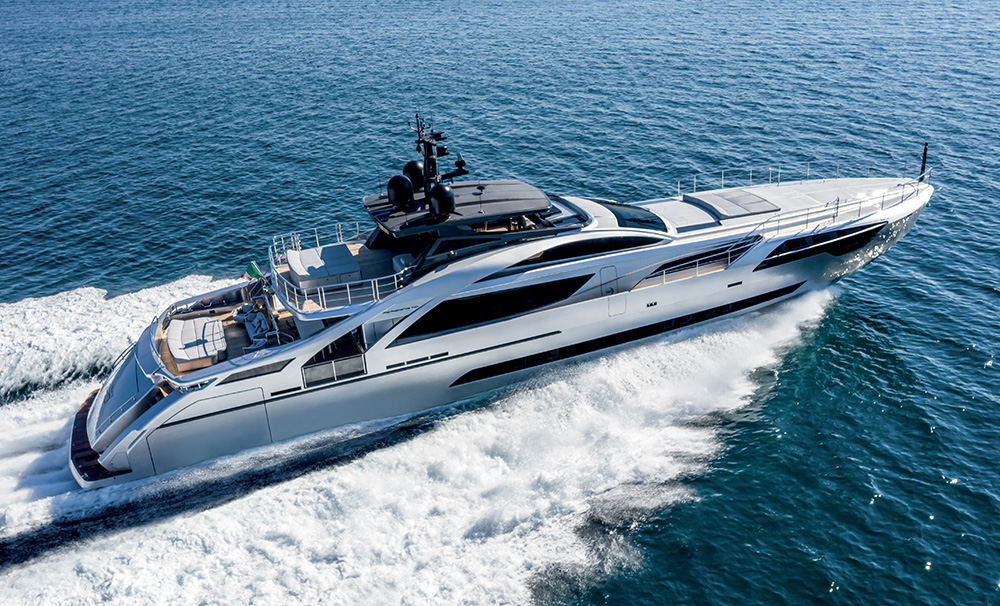


Pershing
“It all started in the Cinque Terre, where I grew up, when a friend, knowing of my passion for boats, urged me to go to Milan to chat with his cousin, a designer with a studio that had started up. That’s how I met Alberto Mercati, who suggested I stay and work with him. It was a daydream: I was still studying and had the chance to work with one of the few realities already in the vanguard. Then, in 1977, I founded Yankee Delta with Massimo Gregori, another studio collaborator. We worked together until 1983, when I became the sole owner of Italprojects, a company specialising in developing high-tech projects in the industrial naval sector, which is still active today. Then, in 2015, to involve my closest collaborators, we founded Fulvio De Simoni Yacht Design, in which Enrico (Lotti), Cristiano (Tonarelli), Giuditta (Napoli), Francesco (Ferrari) and my wife are partners”. The team’s skills allow the studio to express itself in every aspect of the project, with a natural and growing specialisation in exterior and interior design, but with the technical skills acquired over many years of activity behind it, enabling it to tackle each new job autonomously and creatively.
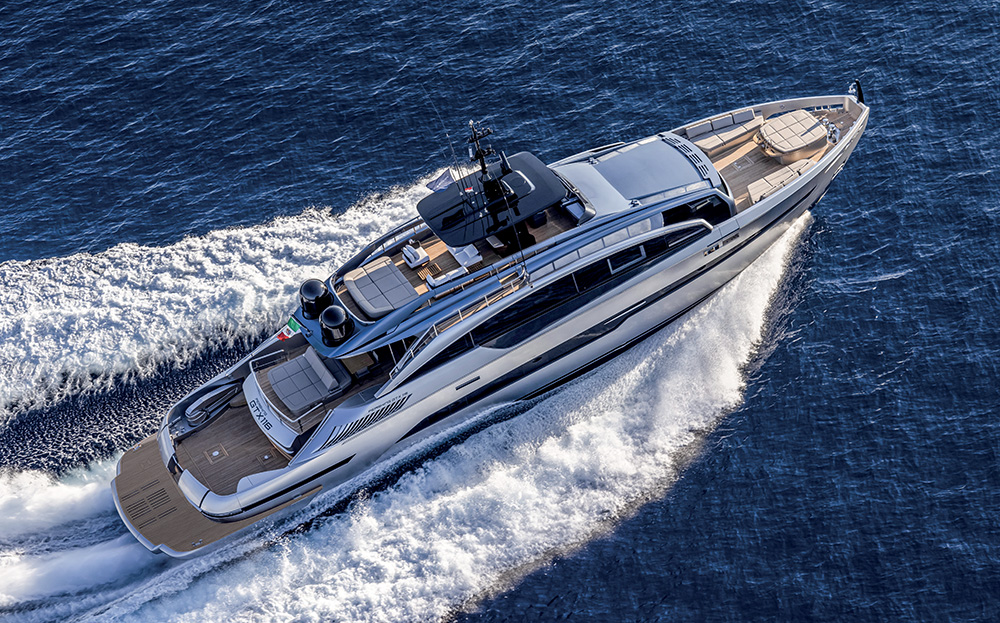
Pershing GTX116
The Pershing GTX116 is a sports yacht where every weight on board is optimised for high performance. She has a top speed of 34 knots and a cruising speed of 29 knots and is equipped with a triple water-jet propulsion system combined with three MAN V12 2000 engines producing 2,000 hp.
“I was involved in every aspect of the project for at least 30 years”, explains Fulvio De Simoni. “This was because a professional studio needed to offer a complete service, including, for example, the design of hulls and systems. Then, with the continuation of the business and the ever-increasing specialisation that is needed in the work, we dedicated ourselves mainly to the conception of the boat, the cutting of the interiors, the design of the superstructures, the general architecture, preferring to leave the in-depth study of the issues to the technicians and engineers. This is also because the construction sites with which we collaborate, which used to be ‘our responsibility’ as far as design is concerned, have also become larger and more structured, with decidedly important in-house technical studies. Suffice it to say that the Ferretti Group’s superyacht shipyard in Ancona, which builds the Pershing 140, employs around fifty highly specialised professionals. I remember that at one point, we were confronted with a technician dedicated exclusively to studying interference (EMI, ed) and, therefore, the correct installation on board the various antennas. In other words, it was time to take a step back and intelligently leave room for each professional to contribute. In this way, each new vessel becomes a participatory vehicle for various complementary contributions, improving design and construction quality”.
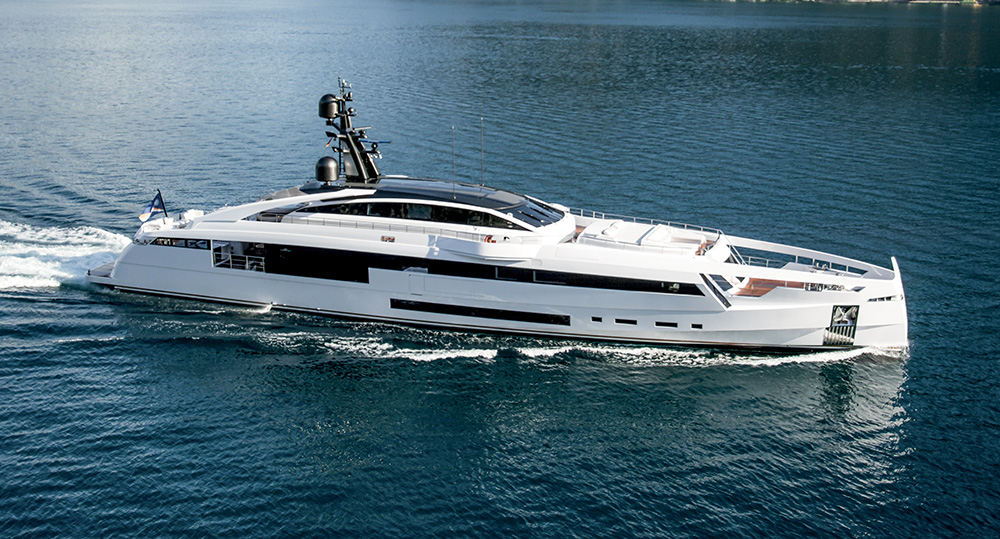
Rossinavi Aurora


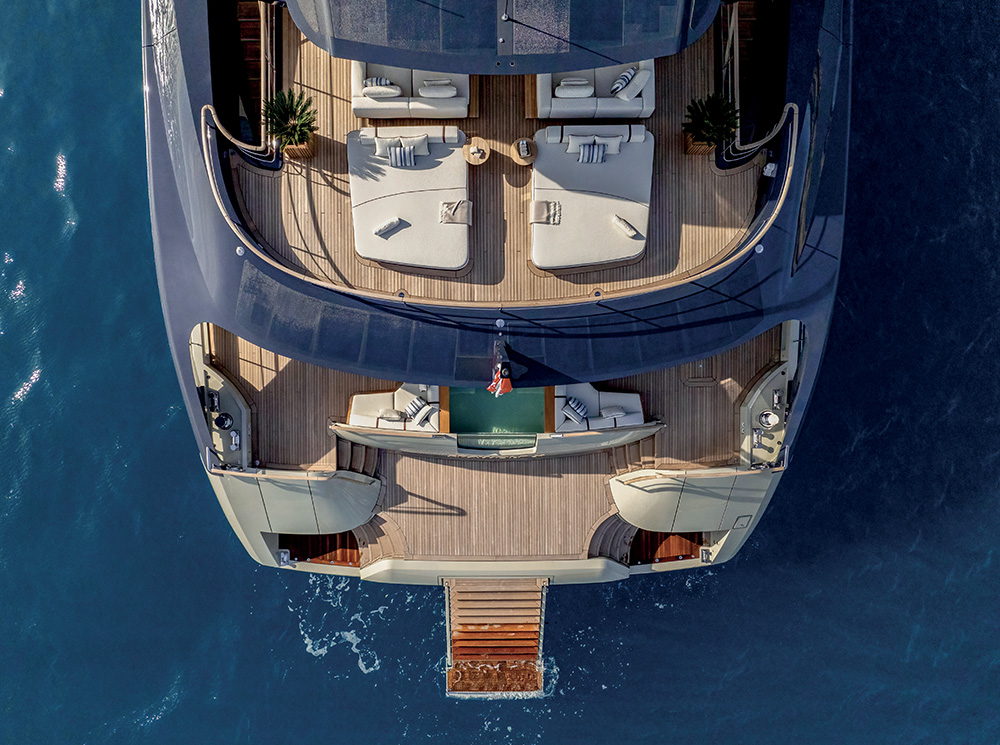


Rossinavi
Fulvio De Simoni designed the Nolimits range, which consists of five explorer yachts from 30 to 63 meters for Rossinavi. The 50-meter Bel1, the 49-meter Franklie, the 50-meter Aurora and the Seawolf, a catamaran with a length of 42.75 meters and a maximum beam of 13.75 meters, characterised by hybrid propulsion and ample outdoor space, among which a 100 m2 saloon and lunching area, five guest cabins and four crew cabins.
Do we essentially live and work in a very different world from the one you started in? Undoubtedly. The times are long gone when Norberto and Alessandro Ferretti would come to Milan – the first studio where I started my career alongside Alberto, who had already worked at Riva and had significant experience in the field – and say: ‘We thought we’d come to see you because we’re car dealers from Bologna, but we want to build boats…’. The relationship with the builders has also changed radically: when I liked boating, there was a direct, continuous and therefore profitable comparison with those who built the boats. Nowadays, the big boatyards think they can do it all themselves, delegating to a whole series of people who, in a top-down organisation, always seem to have to go around someone else. The result? You never know whether the objection they put to you is pro-domo propria or pro-domo in general. If you don’t have a direct dialogue with the person concerned, the relationship becomes colder, based only on numbers, and I don’t like that. I don’t like dealing with people who give you the example of someone who has managed to build a boat with an extra two square metres of flybridge. I think it is no longer critical who builds boats well but who achieves an inevitable turnover.


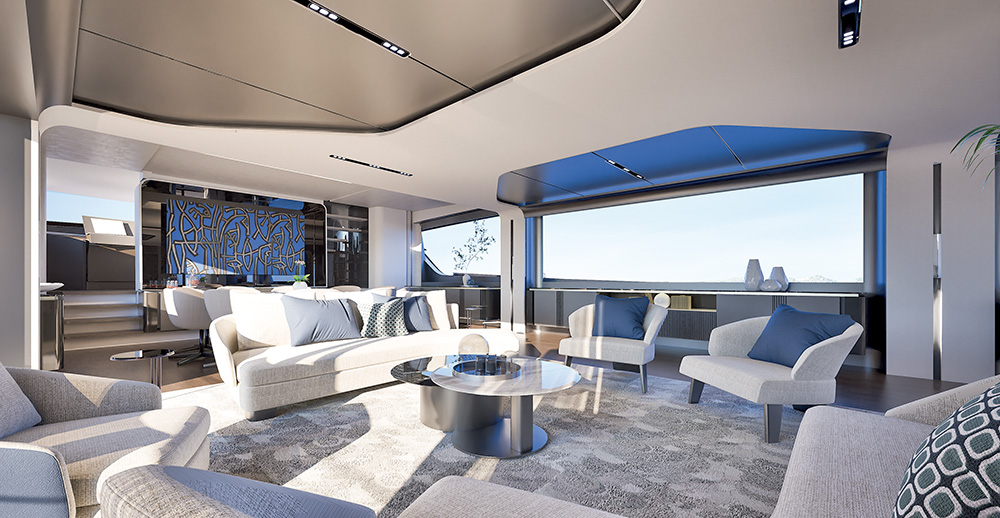

Isa Yachts
Architect De Simoni has designed the new Viper 100 and 130 models for Isa Yachts by Palumbo Superyacht. The Viper 130 has a composite hull and superstructure with carbon reinforcements. It is a planning boat powered by three MAN engines of 2,200 hp each with a top speed of 33 knots.
What are the key features of the ‘perfect’ or at least ‘right’ boat? Let’s start with the basics: most boats launched today could be described as ‘mudskippers’. That is to say, they have to be filled with everything, they have an ever-increasing volume, the spaces inside, outside and underneath are becoming increasingly important, and they have bows that, instead of sliding, fight with the water and do all sorts of things. First of all, the boat must not be a ‘mudder’. It has to be different from the ones they make now. This is also true of some of the ones they commission from us: they are the designs they have made, having had this kind of input.


Antonini Navi
Fulvio De Simoni has developed several projects for Antonini Navi, ranging from 35 to 70 metres. The brand is the brainchild of Aldo Manna, who was the first to recognise the untapped potential of the Marina di Pertusola site and the entrepreneurial strength of the Antonini Group.
How did this scenario come about? Boatbuilders have a bad habit of comparing the square metres of interiors, cabins, bathrooms, and salons to show that they always offer more than others. The first to do so, obviously unprepared, have ruined the medium-sized boat sector. The struggle to enlarge is soon done: it swells, enlarges, and rises. The result is boats that have become unidentifiable, shapeless objects. In other words, cubes designed by people who do not know how to draw, for whom the only important thing is that they have a vertical bow, a vertical stern, vertical sides, a flat roof, everything as big as possible, as long as it is ‘modern’, like the Range Rovers from which they have also removed the handles. OK for ‘modern’, but everything should work and have logic. Instead we see boats that sail badly because the weights are not where they should be and the volumes are larger than the waterline. So, to answer the question, to make a ‘proper’ boat, it must be far from all this, with completely different proportions and correct. In a sailboat, which is undoubtedly more beautiful, it would never occur to anyone to add two or three storeys to create more space. This is because they are used for different purposes. Motor yachts are increasingly becoming sailing hotels, so much so that there is even talk of how much hotel electricity there is on board, not to mention the plethora of interior designers who have flocked to the nautical world on the pretext of explaining the progressive future to us ‘poor people’ who design boats.
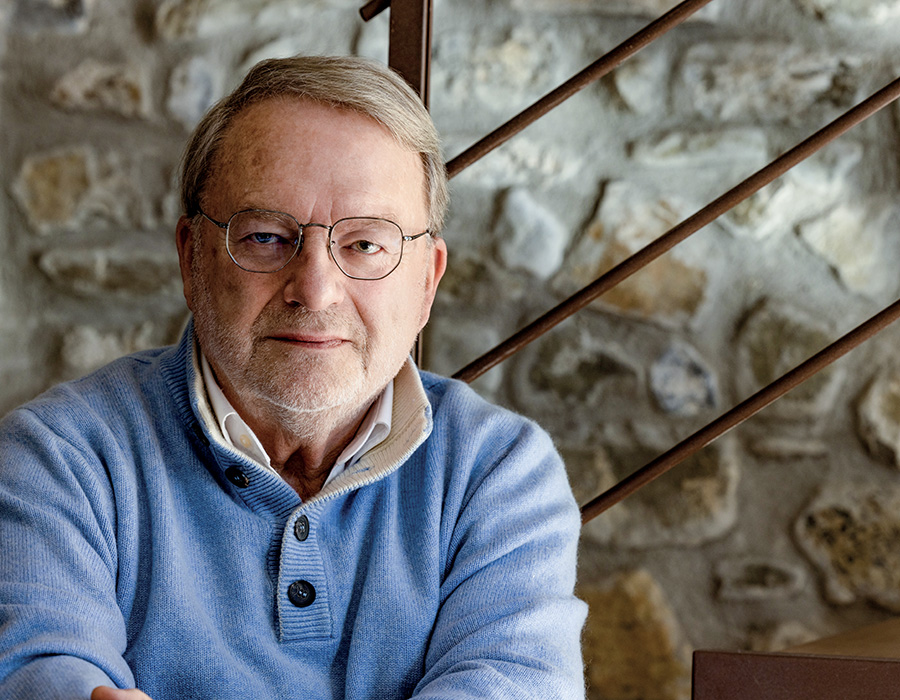
Fulvio De Simoni,
founder and CEO of
Fulvio De Simoni Yacht Design
Isabella De Simoni

Enrico Lotti, designer and partner

Cristiano Tonarelli, designer and partner

Ozan Copur, designer

Giuditta Napoli, designer and partner

Francesco Ferrari, designer
So far, everything you think a boat should not be. On the other hand, what are the right things to tick off from your point of view? Hulls that do not move too much water when they run glide well are fast because they are not heavy and do not contain ten thousand metres of cable because there are not a hundred thousand devils to open and close. Again, let’s take a step back and avoid abusing the ability of these hulls to hold ‘things’ on top so that they become less and less safe because the centre of the hull and all the measurements you take on board are constantly being pulled. Every time we build a new boat, we check everything with the engineer, who tells us right on time: It needs to be twenty centimetres or half a metre wider. Which, conveniently, we had already done. But he widens it anyway. This is because there is so much weight on it, so much volume, that you reduce the watertight zones and, in short, safety.

Austin Parker 100.
In partnership with Pininfarina, Fulvio De Simoni has designed several 77, 88 and 100-foot models for Austin Parker Yachts, an Italian yachting brand with commercial headquarters in Liguria and a production yard in Pisa, which was acquired last year by Turkish entrepreneur Baris Nalcaci.

Filippetti F100.
Fulvio De Simoni has designed a range of 80, 90 and 100-foot mega yachts for Filippetti Yachts. The first example of the new Flybridge 100 model was launched last year at the Marina dei Cesari in Fano. At 30.40 metres, the yacht is the largest in the entire Filippetti Flybridge range.
In short, I understand you like your job less than you used to. That’s the way it is. Everything moves so fast; everyone has an image of everything around them on their smartphone and copies everything. So, with computers, you end up levelling and flattening a lot. It is also true that you cannot aim to invent something every day: it is not easy or always useful. It is one thing to be able to indulge the desire to do something new and realise it. It is another to invest money in a novelty that, as such, may not necessarily be successful. In this second case, taking a step back or moving cautiously might make more sense. Let us say that the first person who decides to invest a lot in something new, something different, should perhaps be able and know how to wait. The most eye-catching example I have seen in my career is the simultaneous creation of the Pershing 115 and a yacht of the same size by another brand. Over time, it is fair to say that this yacht, with its highly innovative design, had a significant influence on everything that yachting would produce in the years to come. As far as subsequent development was concerned, my boat did not move much. A dozen were delivered, but only one was sold after many years. You must know how to interpret the moment and what you can and can’t do. Otherwise, you end up being a genius and an unruly person who takes pleasure and satisfaction in having designed a great novelty but creates problems for others.


«Each new vessel becomes a participatory vehicle for various complementary contributions, improving design and construction quality».
What does innovation mean to Fulvio De Simoni? To sit down in front of a blank sheet of paper and try to come up with an idea, not caring if someone else has already thought of it. Only in this world can you consider yourself free of conditioning, clean and free to proceed. That is why, as a matter of principle, I never board boats designed by colleagues. The world is so vast and full of insights and points of observation that you don’t need to go in and see how others have done it. You would, among other things, run the not-insignificant risk of receiving an imprint that might condition you, even unintentionally, to do such a thing. In design, you succeed in innovating when, without having to go and look at what is outside of you, you can offer the beholder’s gaze something unseen and, therefore, completely authentic, without having wonderment as an end in itself. Astonishment is épater le bourgeois; it is not necessary.
Enchantment, on the other hand, is good for the heart. And so, after spending a few hours in Fulvio De Simoni’s company, I will say goodbye to him, convinced that it is not true that he has a complex character, but rather the ability to distinguish at a distance what is beautiful and ‘good’ from what his eye does not perceive as such, to express his thoughts with determined honesty and frankness, and to avoid compromises and conventions that are harmful to his character and others. The journey to the exit is made by taking advantage of Giovanni’s passage. We stroll to enjoy a second time the scents and the views that do not fail to give us an unexpected still, that of a deer peeping through the rows of vines, adding a final memory of true beauty to a splendid day that has been enjoyed inexhaustibly.
(Fulvio De Simoni – Accuracy and Beauty – Barchemagazine.com – Excerpted from Barche, March 2025)