In over forty years in the business, the Jakopin brothers, founders of Slovenia’s J&J Design firm, have created successful projects based on the exploration of efficiency, ideal shapes and functionality
by Sacha Giannini – photo by Andrea Muscatello
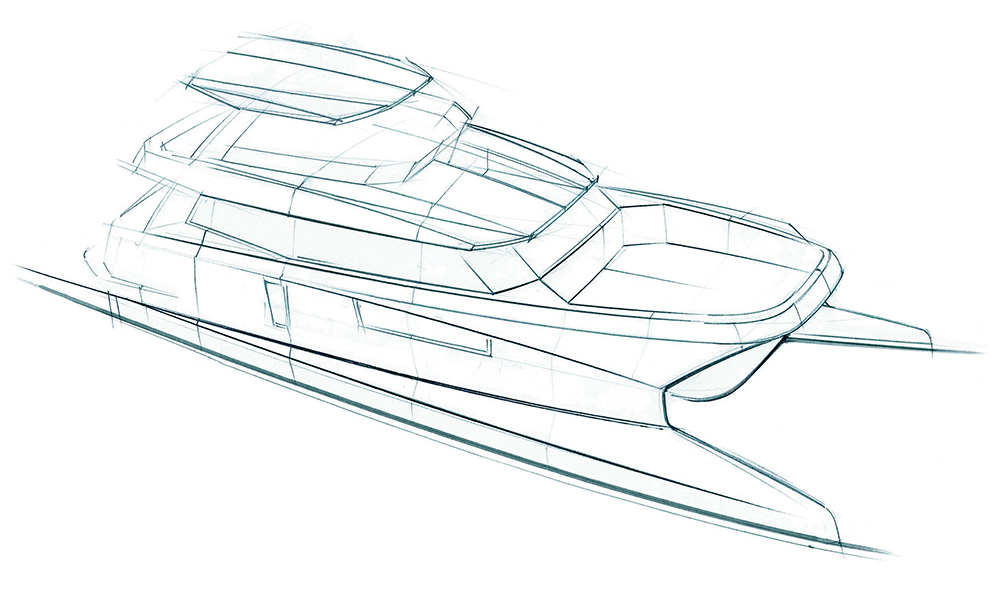
Every “creative journey” that J&J Design undertakes always begins with dynamic sketches, which exist suspended in a dimension that remains emotive and mysterious. This is a vital step in abstraction, aesthetic and functional exploration, perfection, and transition, establishing the fundamental bases of the project. They are the conceptual and graphic outlines of a journey of suggestions that can compress information, potential and solutions into just a few lines.

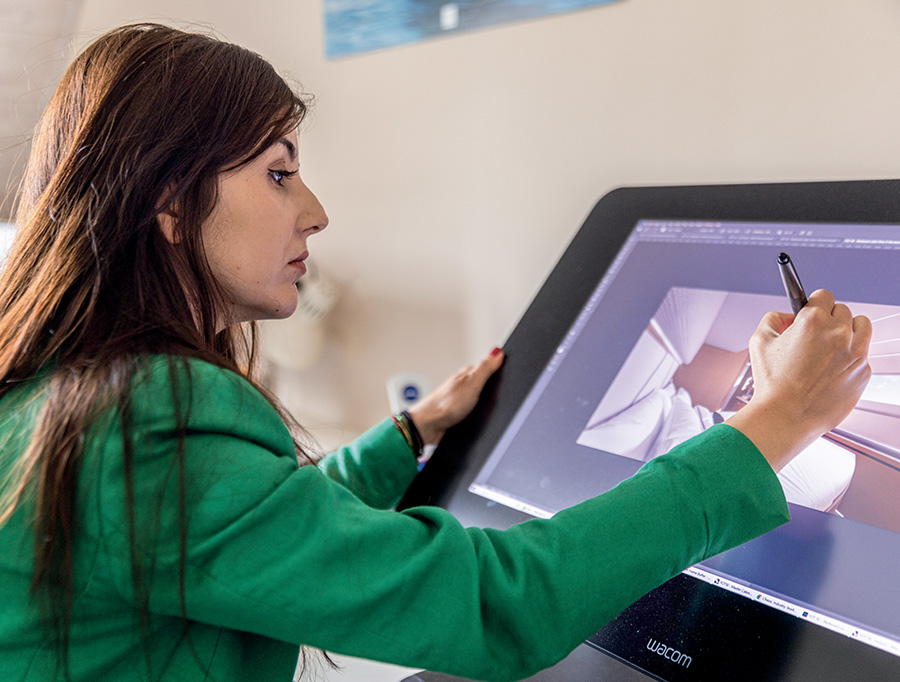
While recognising that drawing by hand is an essential emotional component in the creation process, the J&J studio also finds the use of modelling programmes necessary, with the integration of computational fluid dynamics (CFD) and finite element method (FEM) models. It is at the virtual design stage and during extensive tank and field testing of prototypes (ETFT) that their innovation begins to take shape, through simulations that can bring together lines, structures, and functions. However, it is impossible to design boats that evoke emotions if you don’t have a clear understanding of what you are developing will be used for, and you don’t feel any passion for it. And no computer or app can teach that.

«Today, what is most easily sold is comfort, or as the Americans prefer to call it, convenience, which appears less selfish… A comfort that is increasingly in demand, which once given cannot be taken away…». Jernej Jakopin
In over forty years of work, the Jakopin brothers who founded Slovenia’s J&J Design, have been able to harmonise frequencies, and the arrhythmias and eurythmics of the contemporary world through a design vocabulary and an abacus of raw materials that can link into tradition and innovation in several environments, from technologies to exploration of advanced composites up to design itself. Being able to listen and bring empathy, as well as a collective vision, from a range of skilled people has always driven their view of a boat that is genuinely able to take to sea. This is a boat that is not just quick but also resilient, comfortable, and one that can suit everybody. Dialogue, discussion, and culture have contributed to the excellence of performance and style, as well as precision and creativity, in a complementary dualism between biological and geometrical laws that govern their design projects. These laws follow physiological, psychological, and structural parallels with the worlds of medicine and architecture.


J&J’s work benefits everyone. They interpret their roles from a highly technological perspective, achieving results that make all the intended goals possible, as well as highly desirable and beautiful. Today, J&J is an internationally renowned centre of expertise in composites and hybrid technology for recreational boats.
Japec, born in 1951 and with a medical background in cardiological research, and Jernej, born in 1957 and formerly working in residential construction, share a family passion for the sea and boats, as well as a standard approach that looks to the future. They have the desire to deliver a perspective and hope, through continuous improvement, and have effectively opened up the way to innovative boats for international clients who appreciate the details and are also able to look beyond the horizon.

Slovenia, homeland of the Jakopin family, has been a crossroads of cultures that spreads traditions, a “multinational” country that is open to knowledge and languages. This has enabled the Jakopin DNA to more easily accept the influence of different cultures’ spirits and true natures, by developing universal solutions for international boats that transcend the limits of production and domestic tastes. As when in the 1970s, the Volkswagen Golf effectively opened up the frontiers to worldwide car exports, by sealing in the performance levels, practicality and low fuel consumption of national champions like France’s 2cv, Italy’s Fiat 600, and Germany’s Beetle, in 1983 J&J revolutionised yachting with the Elan 31 and opened itself up to the culture and habits of boat owners in a way that made everybody happy. Using simple solutions and details, they made themselves liked by the French, Italians, Germans and other Europeans as well as Americans and Australians, and destroyed the idea that a boat had to be polarised within a monoculture.

The Greenline 33 H was not designed to appeal to emotions or to be a commercial product; it had to offer a rational reason for purchase. It became one of the first hybrid motorboats to feature diesel, electric, and solar propulsion. Offering zero-emission, silent navigation and a constant 110/230 V AC power supply for services, it was also convenient, easy to use and environmentally friendly – all at reasonable, competitive prices.
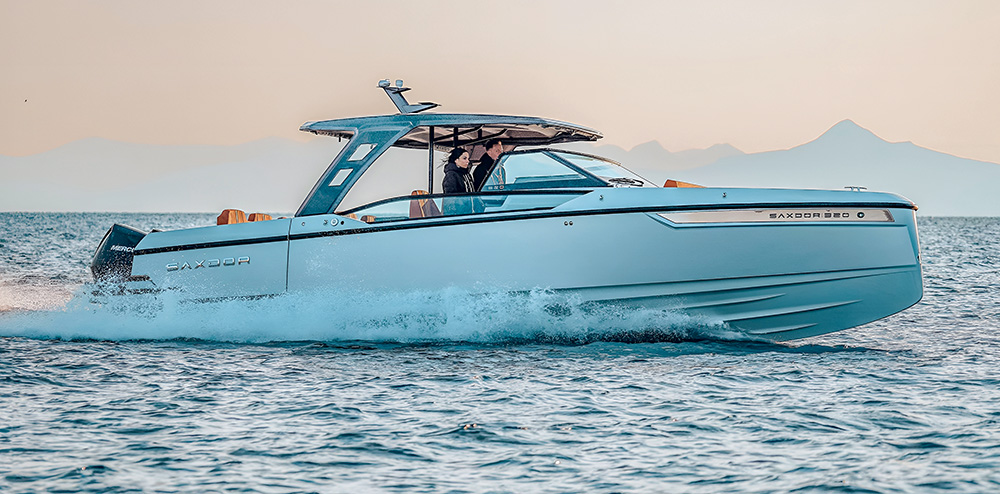


With courage and pioneering effort, they have strongly supported the development of new environmental and performance standards. Their design reflects the narrative promised by the boats, as well as their real functionality. They embody the idea of the future, which is increasingly tangible and less distant, while also evoking something beyond themselves and the present moment.
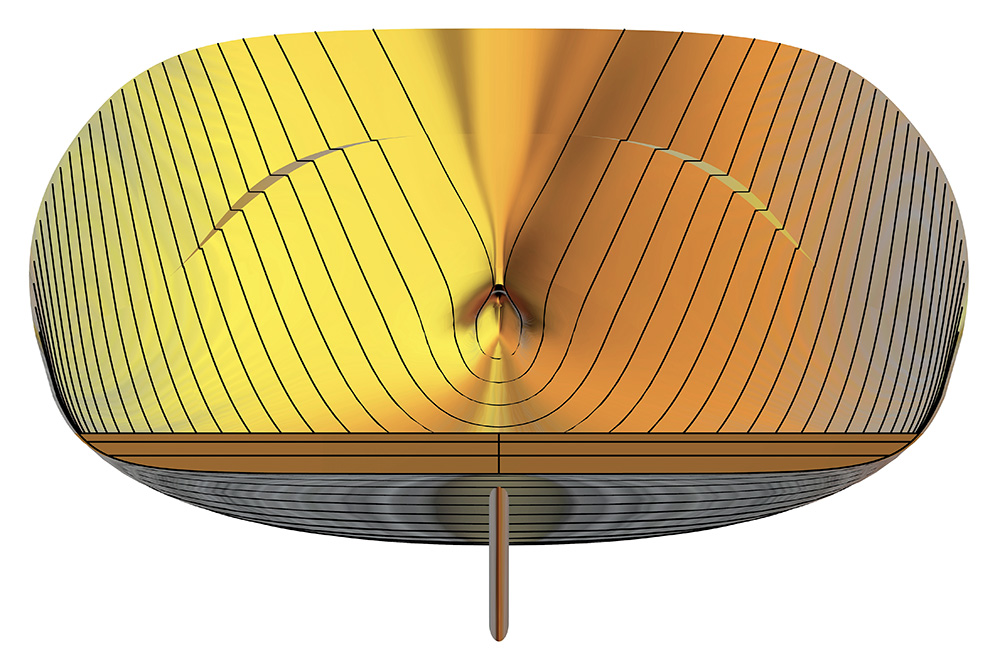
By adopting the lessons of anthroposophy and the eurythmic work of connections and archetypal laws of contemporary language, Japec and Jernej Jakopin recognise that they have to resolve the compromise between function, construction and beauty, and between body and spirit, so that it becomes a tension of forms and spaces that puts people at the focal point of a fourth dimension – time – so that they can live in harmony with the boat and the surrounding environment. Their boats have been successful and have spanned time with their biomimetic hulls, drawing inspiration from nature’s best ideas. They are crafts that were born to travel through two very different fluids – air and water – and to mark the daring of the triumph of technology and innovation, in which beauty reflects the environment that becomes a place for all experiences and the foundation for every advance.


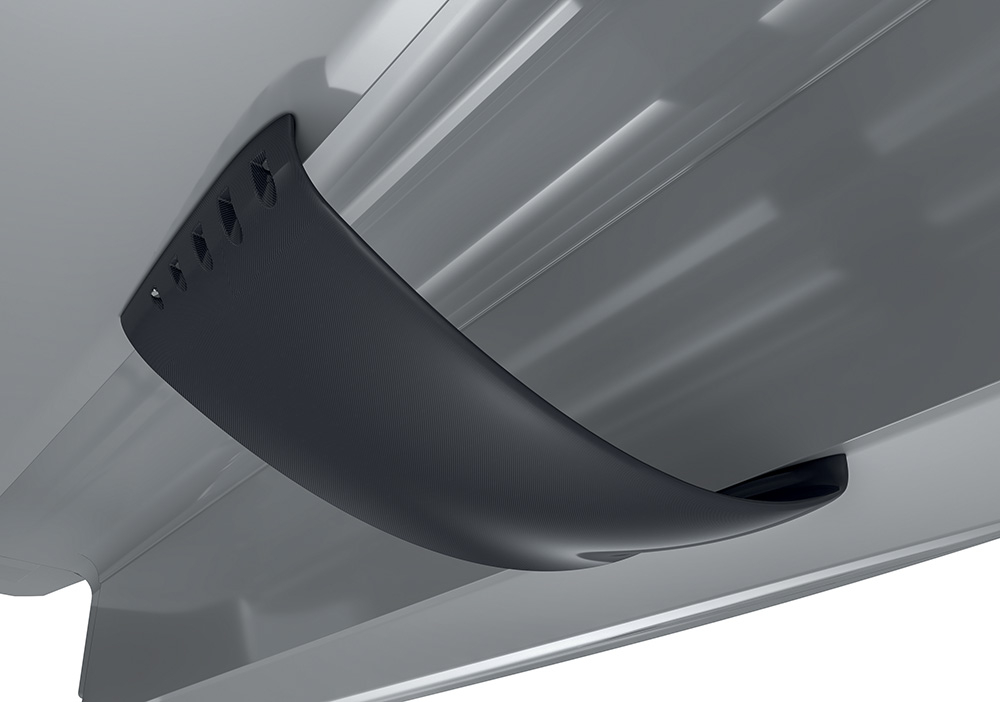
The Icon is a fully electric foiling boat. In collaboration with Christoph Ballin, Tobias Hoffritz and BMW, the team provided the design and engineering, as well as the models, moulds and test boat construction. They also conducted a study on composite technology, using vacuum-infused vinyl ester/carbon for the hull and a combination of carbon/epoxy resin and stainless steel for the appendages. BMW Designworks designed the superstructure and interiors.
J&J’s work primarily conveys a desire to “work” for everyone. They view their role as mainly technological, which means that all goals can be achieved and can even become highly desirable and beautiful. They use an approach to design that communicates the functions it serves, but also informs on how it does so, and provides (within traditional solutions) details that are enlivened by a strong technological element and innovative materials. This means that the details become a democratic expression of excellence in which functionality, cutting-edge design and tradition create the mould for models that will be appreciated everywhere.

The Bénéteau ICC 70, an Island Cruising Concept, is a boat that sails at over four knots using only solar energy.
«Nowadays, the physical and mental effort required to go to sea seems almost forbidden. As a doctor and freediver, I believe that avoiding this kind of activity is detrimental to both the body and the spirit. You age earlier because you never get the chance to train properly. Boats should promote an active lifestyle and help people of the middle class live long, rich lives, rather than encouraging physical and mental immobility!». Japec Jakopin
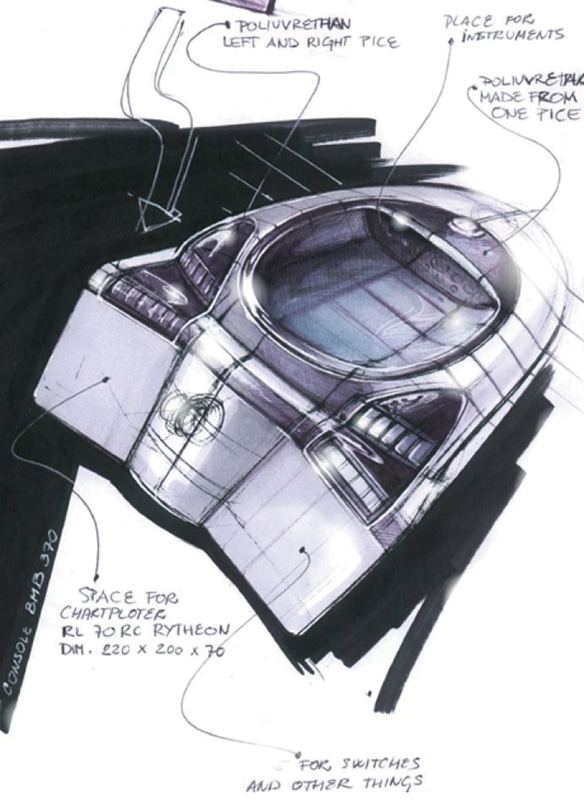
The details of individual projects are drawn by hand and are used to create 3D models.
Their “journey” is a testament to overcoming adversity and an example of the ability to look beyond cultural, geographical and political boundaries. Marked by successes, encounters and historical events, it saw and experienced the progressive dissolution of Yugoslavia and Slovenian independence, the war in the Balkans, and the 10-day war in Ljubljana. It left behind the great nautical crisis of 2008, fierce new competitors, and around 75,000 items bearing the ‘J&J’ signature. These include concept designs, preliminary designs, and naval architecture and engineering.
J&J has now become an international focal point for knowledge of composites and hybrid technologies used in yachting, mastering techniques ranging from the mixed use of epoxy resins and carbon fibre to solar-powered zero-emission projects. These projects include the superyacht Green Explorer for Rossinavi and the nine-metre tender Elektra. They have also run projects for Dufour, GibSea, Grand Soleil, and Sunbeam, and designed nearly all of the Bavaria range from 1992 to 2008, serving as exclusive suppliers of concepts, design projects, and engineering for 87 models. The 44 and the 49 are especially memorable boats that gained universal acclaim. The partnership was restarted in 2016 with the development of a new flybridge motoryacht, the Bavaria R40.

GL45 Coupe.
A lot of what they have created for a whole range of yards have achieved iconic status in the yachting world, examples being the Sun Odyssey 51 (1988) and the 45.1 (1994) for Jeanneau, the 44 (1990) for Sunbeam, the 46.3 (1996) for Cantiere del Pardo or the 39 (1997) for Etap. The carbon fibre sailing performance cruisers, such as those featured in Shipman (2014), together with the powered semi-planing Skagen (2007) series, are in-house projects that draw heavily on the motor-yachting tradition and also drive innovation in the sailing world. Boosted by what they had achieved with Shipman, in 2008, they decided to produce a concept that could utilise comfort, simplicity, performance, and price to win over a new generation of weekend yachtspeople. In October of that year, despite the trial launch occurring at the beginning of an unprecedented crisis in the sector, the Greenline Hybrid 33 sold 550 units in 28 countries over just a few years.
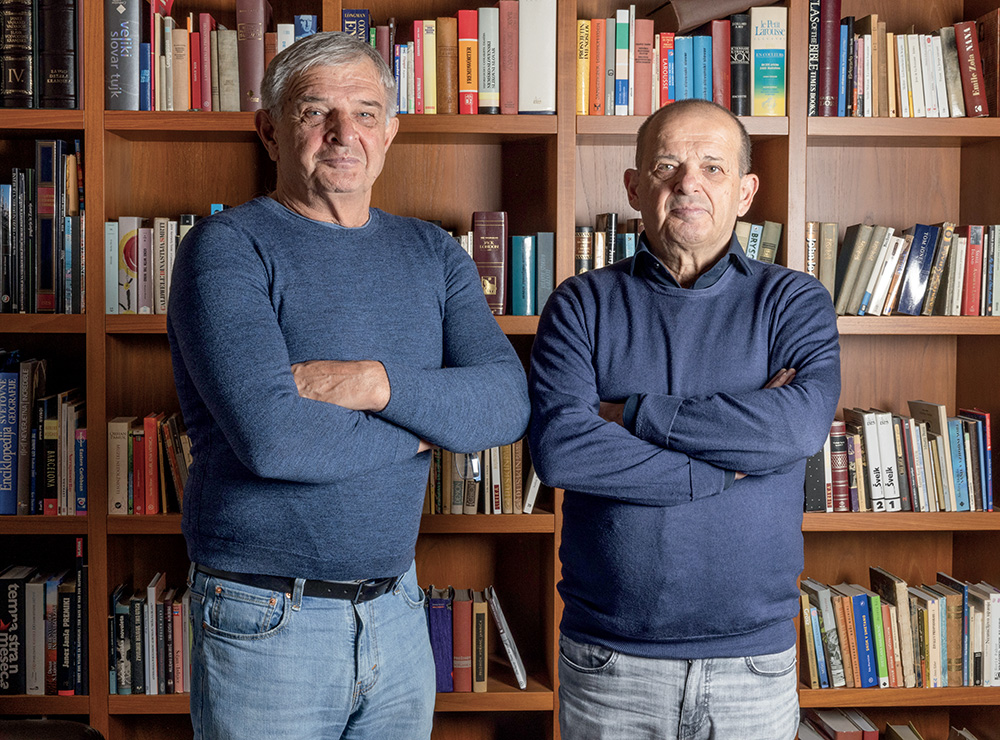
They opened the J&J yacht design studio in 1983 and began designing hulls for third parties, such as the Elan 31. More than 900 units of this model were built in just a few years, followed by the 33 and 43. In 1989, they established Seaway Technologies, a company with the capability to combine all the necessary engineering, architectural and IT skills to ensure a comprehensive boat development process, from design and prototyping to final moulds. Having received almost 130 international awards and completed over 400 projects for around 70 boat builders from at least 30 countries, the studio is now one of the best-known and most respected in the world. Its clients include some of the leading shipbuilders, such as Aquila, Bénéteau, Catana, Fairline, Hanse/Fjord, Iconic Marine, Donzi, Fountaine Pajot, and Sunseeker.

The J&J Design studio has inspired generations and new avant-gardes by balancing aesthetic beauty with functional prowess, in many cases improving the experience of navigation and comfort according to the “KISS” (Keep It Simple, Stupid) principle of leaving “things simple”.
They work in Slovenia in Ljubljana (design department) while at Bled they develop models, moulds and prototypes. They are probably the only firm known worldwide for providing production-line yards with a comprehensive development process for a boat, from concept to design, encompassing both internal and external aspects, as well as naval architecture, engineering, and series testing. Ever adaptable, they are fans of electric mobility and advanced composite materials, having recently worked with BMW and TYDE to create The Icon. The best way to make yachting more ecological is through exploiting solar power, the work that J&J recently carried out alongside Bénéteau, with the engineering design and creation of models, moulds, and the testing and checking of the first two Island Cruising Concept boats – an essential confirmation of sustained work in design for responsible and sustainable yachting. The “monomaran” Island Cruising is a holiday boat with a hybrid hull, something of a minotaur, featuring a monohull bow section but a stern part divided into two by a tunnel. It has 4 kW of power supplied by solar panels on the hardtop, which drive the boat using two 10 kW Fischer Panda pods, delivering a top speed of 8.5 knots. A generator set provides around 300 nautical miles of range with a full tank, even without using solar power. The deck covers thirty square metres, an impressive area for a boat of just 14 metres in length, and this can be further extended with two side platforms that open out from the cockpit. With a draught of just 85 centimetres, you can get close to the shore nearly everywhere. It is a revolution in both style and use that Bénéteau is seeking to introduce as a new mode of powered coastal travel.
(J&J Design, a creative journey – Barchemagazine.com – Excerpted from Barche, August 2025)