What can we expect in the near future? There are various ways to interpret the situation and determine the correct answer. Everyone has a duty to contribute their ideas with the utmost transparency and serenity
by Francesco Michienzi
In recent weeks, I have read numerous comments on the current economic climate and the future of the Italian boating industry. During the holiday period, I read Francesco Guccini’s book: La legge del Bar e altre irresistibili leggi dell’essere (The Law of the Bar and other irresistible laws of being). I found it an ideal way to weigh up the opinions of many elusive experts and reflect on what has and hasn’t changed in recent years. The bar from over half a century ago was a world with its own rigid laws, values and questionable morality. It was a place where people drank, discussed and played cards or billiards. A diverse and colourful male crowd gathered there – a world that was not so different from, but parallel to, the big outside world that surrounded and encompassed it. This world no longer exists because everything has changed: card games, football, travel and politics. The author’s unmistakable irony remains, aimed not only at journalists but also at Italian popular lackeys who have been seduced by the US. His writing is full of paradox and humour.
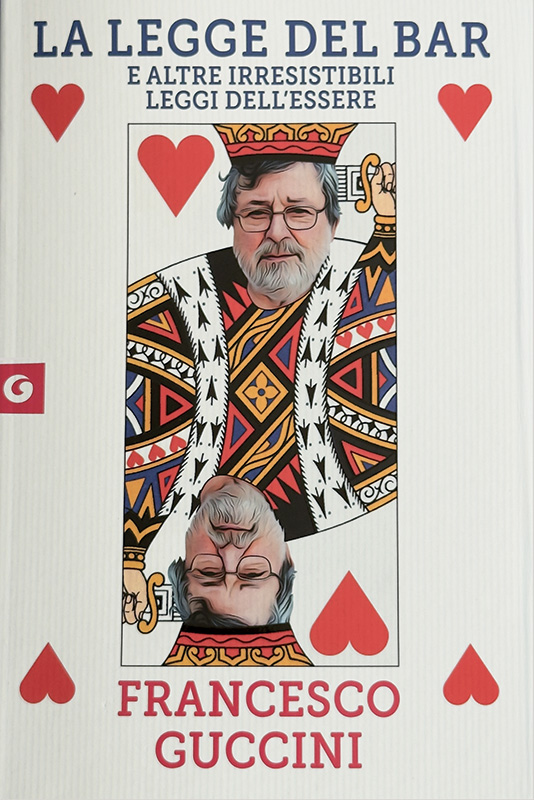

Francesco Guccini’s book is ideal for making a realistic assessment of the thinking of many phantom experts and reevaluating the changes that have occurred in recent years, as well as those that have remained unchanged.
This is a light yet profound read, in which illusions, hopes, and truths overlap to better prepare us for this autumn, which is set to be dominated by the most important boat shows. It is here that the first real answers to the question of what the market will look like in the short and medium term will emerge, answers that lie outside the logic of the Bar. We are undoubtedly facing a change of scenery that might even be frightening, but if we look back, perhaps we can be confident in our ability to rise to new challenges. We overcome Tangentopoli in the 1990s, the collapse of the Twin Towers in the 2000s, the failure of American investment banks in 2009, and the 2020 Covid-19 pandemic.
However, we are still grappling with the wars in Ukraine and the Middle East, as well as new trade tariffs whose rates are constantly changing. The events mentioned above have taught most nautical industries several vital lessons. Firstly, they have recognised the importance of resilience and of being prepared to deal with sudden economic and political changes. They have also learned to diversify their markets and avoid relying on a single source of income. They have also recognised the importance of being flexible and ready to adapt quickly to new circumstances. Italian nautical industries have recognised the importance of investing in innovative, sustainable technologies to remain competitive in the global market. However, they have yet to learn that collaboration and solidarity are essential for dealing with crises. Finding standard solutions through cooperation and mutual support is vital for success in challenging times.


The Italian shipbuilding industry has made a significant leap forward precisely during the three decades marked by various crises. The production facilities built in Italy are of such high quality that they are the envy of the world.
In Italy, there are real excellences in shipbuilding, but competition among individuals still prevails. An attitude that favours foreign competitors who perpetuate and spread the idea that they are better than us. Fortunately, the data shows that we are the world’s leading boat industry for vessels over 24 metres in length, accounting for more than 40 per cent of deliveries. Superyachts in Northern Europe are priced up to 50 per cent higher, but shipowners are willing to pay this premium because they believe it offers real added value. Italian shipbuilding has made a quantum leap forward precisely during the three decades marked by various crises. The production facilities built in our country are of an exceptional standard.
We have all the resources we need: the best ideas, technologies, designers, technicians, craftsmen and skilled workers. We can quickly and effectively find simple, bureaucracy-free solutions and respond to shipowner requests for changes to their projects swiftly. Italian shipyards’ technical offices do not employ hundreds of engineers, architects and designers to define every last detail before construction begins. Intelligence, good organisation and experience are the genuine keys to success. I would be interested in reading about mergers between Italian companies aimed at enhancing their global competitiveness. Unfortunately, some companies operate on the borderline, tarnishing the entire sector’s reputation. Although they are a minority, they often cause more damage than all the others combined. We must therefore be vigilant and aware of what they can do.

My final thought is for our legislators, who often claim they are ready to find effective solutions to better address the difficulties faced by businesses. The last twelve months have seen sales of boats and dinghies under ten metres almost drop to zero. You know the reasons; they are the most varied, and I will spare you the list. In such situations, extraordinary solutions must be sought that can give an immediate impetus with targeted measures. Why not increase the power limit for outboard engines used for propulsion from 40 to 60 horsepower? Alternatively, why not increase the length limit for boat certification to 12 metres? A decree could be issued to allocate underused areas of commercial ports for the mooring of large pleasure yachts. These are existing structures that could be adapted with minimal financial investment. We have been discussing this for 30 years, yet nothing has happened. They may seem like ideas from a Bar, but they would be free to implement, and I am convinced that they would bring immediate benefits to the sector.
Piero Formenti, the president of Confindustria Nautica, was elected at a particularly complex time. Only by working together and acting consistently can all key players respond appropriately, defend, and develop the Italian nautical sector.

The programme of the new President of Confindustria Nautica (the Italian Marine Industry Association) includes enhancing the entire marine industry through more cohesive and effective representation; promoting business culture; supporting Italian manufacturing quality; lobbying at a national and European level to defend the sector’s interests; strengthening the Genoa International Boat Show; disseminating maritime culture, including through educational programmes for young people; and supporting employment policies, particularly for small shipyards and young people. While I agree with all of these points, I believe they form part of a medium- to long-term programme for the development and enhancement of the entire system. This is why I believe immediate measures are needed to invigorate the weak domestic market.
(“The Law of the Bar” – Barchemagazine.com – Excerpted from Barche, October 2025)