The global boating industry is experiencing significant change. New strategies are needed to make the right choices at this time. We will contribute to the general debate by expanding our publishing portfolio. After acquiring Barche and Gente di Mare, we have now bought the historic magazine Vela e Motore
by Francesco Michienzi
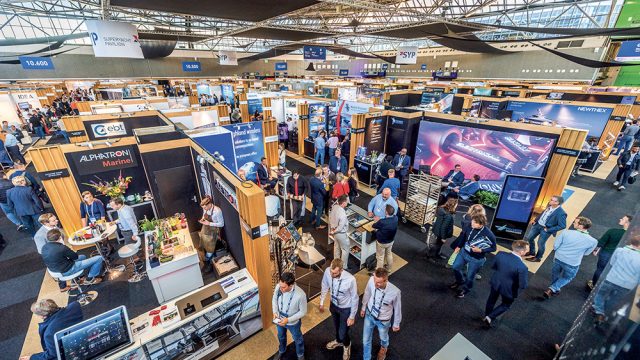
The Amsterdam Mets was an excellent opportunity to better understand the economic situation of Italian companies in the nautical sector. After the strong post-COVID rebound (high demand, boom in second-hand sales, and accumulated orders), the sector has entered a more mature, selective phase: more moderate growth and greater pressure on margins. However, the sector remains strategic and competitive globally.
Italy is a leader in superyachts, high-end motorboats and maxi-ribs, and maintains a high export capacity. Not to mention components, which were represented in Amsterdam by around 100 companies of undisputed excellence, which, for no apparent reason, were not awarded any prizes. Fortunately, the market recognises the value of our products. Demand for the luxury and custom segment remains strong; some high-end shipyards’ order books are long. However, the strong export orientation in the key markets of the US, Europe and the Mediterranean is in a phase of reflection, awaiting macroeconomic scenarios to find a new balance after the end of wars and tariff policies.
At the Mets in Amsterdam, the Italian nautical components industry was represented by around one hundred companies of undisputed excellence, which, for no apparent reason, were not awarded any prizes.
Although investments in innovation, materials, design, sustainability, electrification, hybrids and composite materials should create new growth opportunities, we have no certainty about the medium-term outlook. Among the critical factors are raw material costs, which, despite easing from the peaks seen in 2022, remain high compared to the pre-pandemic period and continue to affect margins. Furthermore, rising interest rates have made credit more expensive for businesses and end customers, dampening demand in the entry-level and financed purchase segments.
As always, Mets has brought a load of news, not just products but also new management situations: managers leaving, managers arriving, new corporate structures, in an endless game of Risk that shows there’s a shortage of qualified personnel in the Italian nautical industry.
We must not forget that the shortage of skilled labour and technical expertise is a structural problem for many small and medium-sized Italian shipyards. Progress must also be made to improve the operational efficiency of after-sales, refit, charter management and digital services to offset the pressure on new sales margins. To this end, greater emphasis should be placed on staff technical training. As always, Mets has brought a lot of news, not just products but also new management situations: managers leaving, managers arriving, new corporate structures, in an endless game of Risk that shows there’s a shortage of qualified personnel in the Italian nautical industry. This is another factor to be considered. Then there are the borderline cases, which we have written about many times and which often rig the game. The chickens are coming home to roost, and no accounting or lexical tricks will save them from oblivion. The hope is that these will remain isolated cases and will not drag us into a decline that must be avoided at all costs. And then there are pure acts of love: for history, for culture, for journalism, for boating as a whole.
Vela e Motore, now in its 104th year, is Europe’s oldest nautical magazine. We acquired it for its immense historical, cultural, journalistic and editorial value. We will bring it back to newsstands in late spring.
Buying the historic magazine Vela e Motore was a pure act of love for me. Leaving it to its grim fate would have been an unforgivable crime. It would have been like erasing a hundred years of Italian and international boating history. To build the future, it is essential to know the history. Boats, men, shipyards and regattas, which have marked the destiny of many of us, were the protagonists of those pages. We thought long and hard about what to do, how to do it and when to do it. No doubts, no uncertainties. Just a lot of determination in the belief that there was room for a magazine that talked about sailing in our style.
I want to mention that in 1994, Mondo Barca magazine, where I was editorial coordinator, suddenly closed down. It was the Tangentopoli scandal, which caused untold damage to the Italian boating industry. I was so bitter that I decided to change sectors. But after only a month of working for a magazine about food processing machinery, Antonio Vettese, then editor of Vela e Motore, called me and asked me to do tests for his magazine. If it hadn’t been for this coincidence, my professional career might have been very different today. For this, I am grateful to him, as I am to Alberto Mariotti, the last editor-in-chief of the magazine before it closed. With great sacrifice, skill and passion, Alberto had restored Vela e Motore to its former glory. The commitment I want to make to all enthusiasts, readers and operators is to work with my entire team, with commitment and dedication, to live up to these hundred years of nautical and publishing history. As the true genius Fabio Buzzi always said, talent without hard work is not enough to succeed. You will see it again in late spring.
(Act of love – Barchemagazine.com – Excerpted from Barche, January 2026)