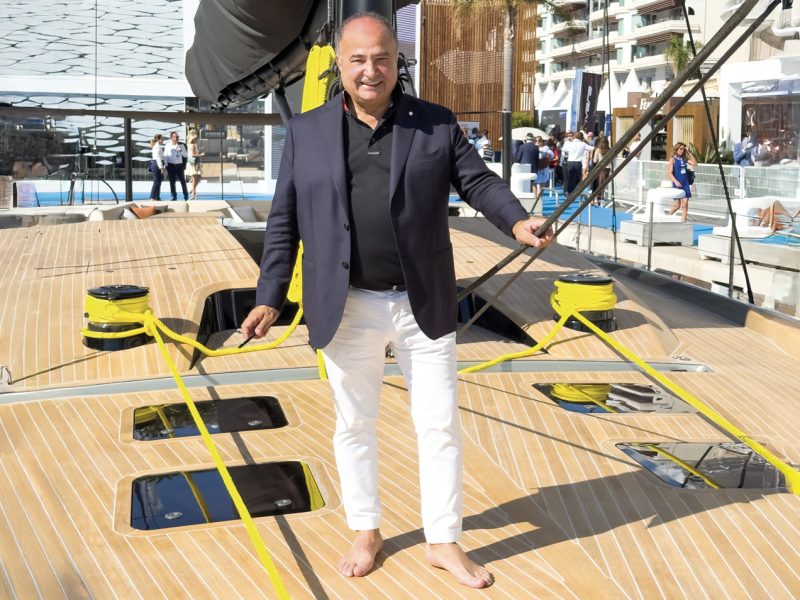
They are the men of the Rossi family, owners of the port of the same name in Catania, which was destroyed by Cyclone Harry’s violent action
by Francesco Michienzi
Reading Igor De Blasio’s book, the manager and current president of Terna, prompted reflection on those who govern us and are responsible for addressing the small and large problems of our existence. Starting from the key themes of the book, The Leadership of Trust. Trusting Yourself, Others and Life, it is clear that good leadership is built on competence, consistency, transparency, responsibility, and relationships of trust with citizens. Unfortunately, the reality we live in is often far removed from these values. It is inevitable to draw a clear parallel with many aspects of public administration in Italy. I am thinking of our friends in Porto Rossi, Catania, who suffered extensive damage from a violent storm surge linked to Cyclone Harry. The connecting road no longer exists; there are around 250 boats destroyed, sunk or piled up on the coast, and serious damage to infrastructure, making the scene resemble that of a post-tsunami disaster.


Igor De Biasio, manager and current president of Terna, is the author of the book entitled La leadership della fiducia. Fidarsi di sé, degli altri e della vita (The Leadership of Trust: Trusting Yourself, Others and Life). His reflections encourage us to think about those who govern us and who are responsible for solving the small and large problems of our existence.
The president of the Arpad concessionaires’ association, Giovanni Grasso, said: “The Rossis had brought all the boats ashore. But with waves as high as 20 metres, there is nothing to be done. If we consider that a pontoon for 10 boats costs €25,000 plus VAT, that alone will cost over half a million, plus transport, labour and other costs”. The damage is likely to amount to many millions. Quick and decisive decisions are necessary, but statements made to comfort in the early hours of a disaster are insufficient to inspire confidence.
In his book, De Biasio emphasises that trust is built through repeated actions, measurable results, and honest communication. However, in many cases, short-term thinking dominates due to electoral gains, clientelism, and sensationalist communication. This results in fragile trust: each broken promise further diminishes the credibility of institutions. Leadership rooted in trust requires long-term planning and investment in prevention. In Italy, infrastructure maintenance, land-use planning, and risk strategies are often underfunded or hindered by bureaucratic procedures.

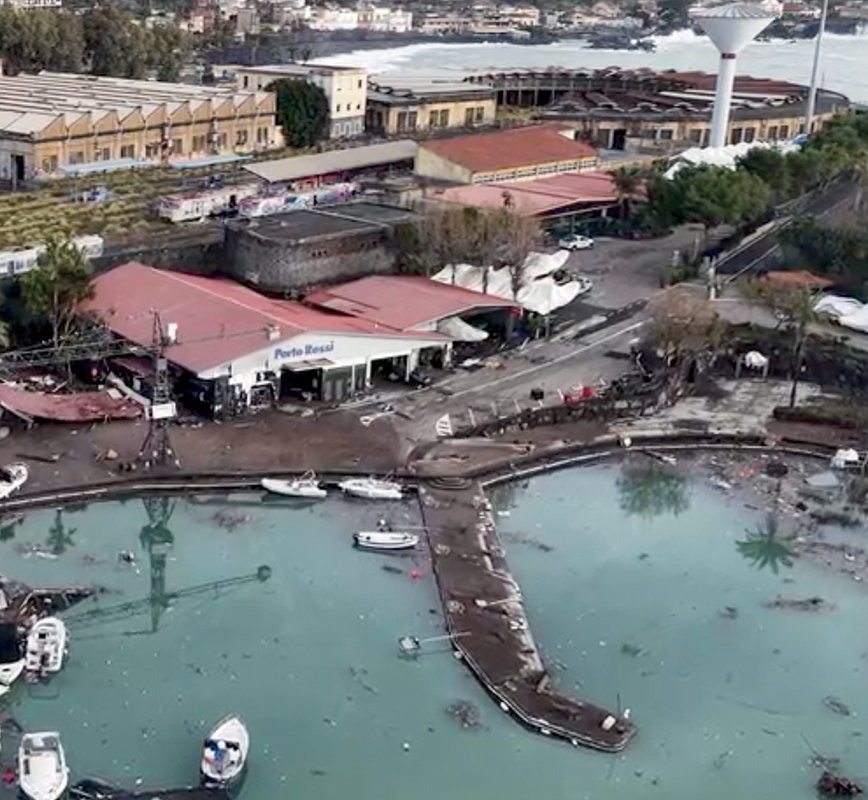

Between January 20 and 21, 2026, Porto Rossi in Catania experienced extensive damage caused by a violent storm surge associated with Cyclone Harry’s passage. The connecting road was destroyed, multiple boats were sunk or stranded on the coast, and infrastructure suffered severe damage, creating a scene reminiscent of a post-tsunami disaster.
This results in greater damage when extreme events occur: the case of Porto Rossi in Catania exemplifies what happens when prevention, maintenance, and institutional responsibility are absent. Once again, we see numerous politicians visiting the disaster site, making statements and immediate promises of decisive solutions. However, these promises are often not fulfilled or remain vague about timing and funding sources. This behaviour responds to the need for visibility and consensus rather than a results-focused approach: it creates a media spectacle in the short term but erodes trust in the long run. Promises are not kept due to a lack of effectively allocated resources. Plans are vague and lack a timetable. Technical skills are insufficient.

Most of those who govern us are involved in surreal debates about former general Vannacci leaving Matteo Salvini’s party to go it alone. A more authoritative and courageous press would be desirable, capable of monitoring the actions of those who govern us.
The fragmentation of skills among institutions, the absence of independent controls, and the lack of participation by the local community are all factors that De Biasio would identify as breaks in the chain of trust between leaders and citizens. Trust-based leadership is not just a theoretical idea; it is a practical approach to preventing events like the Porto Rossi disaster from becoming another spectacle of superficial promises and broken commitments. If public leaders embraced the principles of competence, consistency, and responsibility advocated by De Biasio, responses to disasters would be more efficient and public trust could be restored.
The Rossi family, owners of the marina of the same name in Catania, has issued a message full of pride, typical of hardworking and daring individuals: “We write these words with our hands still dirty with mud. We are devastated, but we are not defeated and we never will be. We wish to address the public and, in particular, our customers and shipowners, to share, with transparency and respect, what we are going through. The Rossi marina has suffered very serious damage. It is deeply painful to see a place that is not only an infrastructure for us, but also a community and a place that belongs to all of us, being hit. However, it is important to state this clearly: even though it has been severely damaged, the marina is not destroyed. With determination and a sense of responsibility, we will do everything in our power to rebuild, restore, and revive the Rossi Marina, aiming to make it even more beautiful than before. We stand with all citizens who have suffered damage to their businesses and property, and we send them our warmest regards and solidarity, however small”.
It would be incumbent upon institutions to rigorously and urgently study possible solutions. But let us not delude ourselves: most of those who govern us are engaged in surreal debates about former General Vannacci, who is leaving Matteo Salvini’s party to go it alone, a rare example of the loyalty and trust typical of men with great idealistic values. For weeks, television talk shows have been focusing on these party squabbles, and when they have nothing better to tell us, they fuel envy, as in the case of the young entrepreneur Leonardo Maria Del Vecchio, guilty of having a personal fortune of around €7 billion, instead of thanking him for staying in Italy to do business. This somewhat vulgar way of reporting news does not help to develop a critical awareness that guides citizens towards informed decisions. We are victims of a media overload that leaves us bewildered. Television news programmes serve the interests of the powerful and their repetitive daily statements. Aside from a few rare and commendable exceptions, it would be beneficial to have news and analysis on specific issues, on industrial policies, on the state of society as a whole, on the future that awaits us, and on all that is good in our country. This is why the book Leadership of Trust. Trusting Yourself, Others and Life is a valuable tool for finding your way and making the best choices in this complex world.
(Daring men – Barchemagazine.com – Excerpted from Barche, March 2026)