The boat as a metaphor for life. We are nearing the probable end of a business venture that is difficult to comment on. We are supporting hundreds of people who risk losing their jobs
by Francesco Michienzi
In his weekly column Ultimo banco in Corriere della Sera, Alessandro d’Avenia wrote that art has the capacity to open up the space-time of belonging, a challenging experience for the ego, which often views others as tools or obstacles, and reveals that we are instead ‘in the same boat’ in the journey of life.
The ‘boat’ serves as a metaphor for that level of reality in which everything is interconnected and shared—a level we have lost the word for: spirit. Today, ‘spiritual’ is often used to describe those who are distant from material concerns, when in fact it signifies the opposite: being united with everything and everyone. If we aim to expand the idea of a boat as a powerful and versatile metaphor for life, a few images would be enough to illustrate choices, relationships, risks, and growth. Consider the various elements that make up this picture in these images. The captain is responsible for the boat, but for it to sail properly, the entire crew’s contribution is essential; one seldom sails alone.
// Life is not measured by the calmness of the sea, but by the ability to navigate, adjust sails, select the route, and share the journey with those around us. //
Relationships and collaboration often determine the success of the journey. Sail, engine, rudder: these symbolize resources, energy, and decision-making skills. Even when the wind is against you, those who know how to adjust the sails stay on course.Route and nautical charts: plans and values offer guidance; knowledge and experience (the charts) assist you in navigation when the sea is rough. Wind and sea: opportunities and external circumstances are constantly changing. We cannot control the wind, but we can choose how to use it. Storms: obstacles and suffering are part of the journey. Resilience, prudence, and adaptability enable us to withstand them. Anchor and harbour: roots, rest, and goals help to regain strength and reflect before setting off again. Maintenance: taking care of your boat is like taking care of your body, mind, and relationships – without care, the journey ends. Changing course: knowing when to turn, to give up a goal, or to follow a new wind is wisdom, not failure. Shipwreck and repair: even the worst accidents can be rebuilt; repairs often reveal new possibilities. Life is not measured by the calmness of the sea, but by the ability to navigate, adjust sails, select the route, and share the journey with those around us.
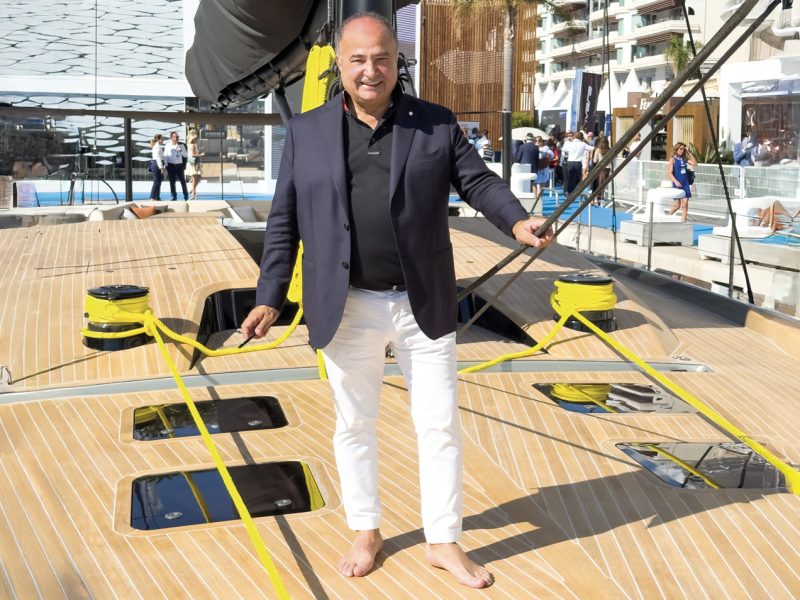
These are light-hearted thoughts I wish to contrast with the man in the courtyard of his shipyard, haranguing the workers who went on strike because they were not being paid. The energy this man dedicates to convincing them of his honesty, as he shouts that as long as he lives, he will fight to make those who brought him to the brink of ruin pay, is the other side of the coin in our metaphor. I wish him well in saving his company and the jobs of his workers and employees; I only hope that he is genuinely honest in assessing who is responsible for this situation. Ethics and aesthetics may overlap, but they should not be mistaken for one another. Over the years, we have written about this shipyard to highlight that there was something wrong with its boastful, fantastical claims. Unfortunately, speaking out about this today leaves a bitter and rhetorical taste. It certainly won’t help to pay the salaries of hundreds of people who are not at fault. Without necessarily wanting to make hasty judgments, I can only say that we are faced with a case of ambition that blinds and transforms the legitimate desire to succeed into something that destroys what has been built, a theme that recurs.
// «He who fights with monsters should ensure he does not become a monster himself. And if you gaze long into an abyss, the abyss will gaze back into you». Friedrich Nietzsche //
Ambition fuels commitment, growth, and creativity. It becomes hazardous when the end supersedes the means and core values. At that stage, the ego seeks success at any cost, and daily decisions are justified by the goal. Such actions can damage relationships, reputation, mental well-being, and a sense of integrity. Nietzsche warns that those who peer into the abyss risk being transformed by it; Milton demonstrates the illusion of pride that prefers to reign in evil rather than serve good; Shelley, with Ozymandias, reminds us of the fleeting nature of glories founded on arrogance. Everyone remembers the idea that how power or fame is achieved influences the lasting value of a person’s life’s work.
Standing out is not a sin; the sin lies in letting anxiety corrupt one’s personal ethics. Poets and thinkers remind us that what remains of a life is not only visible success, but also the consistency and goodness with which it was pursued. Cultivating humility, awareness, and truthful relationships is the best defence against the clouding of ambition. You might be curious why I don’t name this gentleman. It’s not out of fear of being sued, like others who oppose him, but because it isn’t necessary and, most importantly, because of my bitterness at seeing wealth and beauty threatened. Our world is full of them, and we should be grateful for the opportunities that present themselves each day. Instead of fighting to make the person who put him in this situation pay, seek an investor willing to help him out of trouble and enjoy his well-deserved retirement.
(Back row – Barchemagazine.com – Excerpted from Barche, April 2026)