A new shipyard, a new eight-metre RIB, soon to be joined by others. Breva Marine is already producing a wide range of vessels, from tenders to maxi RIBs
by Niccolò Volpati
The Breva is a thermal wind that blows from the south of Lake Como towards Domaso, i.e., from south to north. It usually rises in the afternoon and is consistent, though it can reach considerable strength. It is considered a good omen by sailors and the new shipyard, which takes its inspiration from the name of this wind. The shipyard presented its first model at the last Cannes Yachting Festival, and it is destined not to be the only one. The schedule is packed because Breva Marine is already performing well. The shipyard has plans for a range of tenders, including the 300, 335 and 400 models, as well as three other inflatable boats: the Breva 630, Breva 1300 and Breva 1100.
With a hull less than eight metres long, it is not easy to guarantee a rich interior design or ease of movement on board. Breva 800 has succeeded in doing just that.
The Breva 800 has a hull designed by Alessandro Chessa, who oversaw the entire project in collaboration with the shipyard’s technical department. It is a new shipyard, but its founder has extensive experience in the sector. Building an eight-metre boat is like wearing a gauntlet. It is a size that many have recently abandoned, as they move towards larger models. Breva Marine must have thought that this market trend would enable it to fill a gap and establish its own niche. Furthermore, it differs from the usual models of this size. It has a refined design and bespoke solutions – a feature rarely found on inflatable boats of this size. It can be fitted with or without a bathroom and powered with one or two engines.
The Breva 800 offers many customisation options, including the choice between single- and twin-engine configurations.
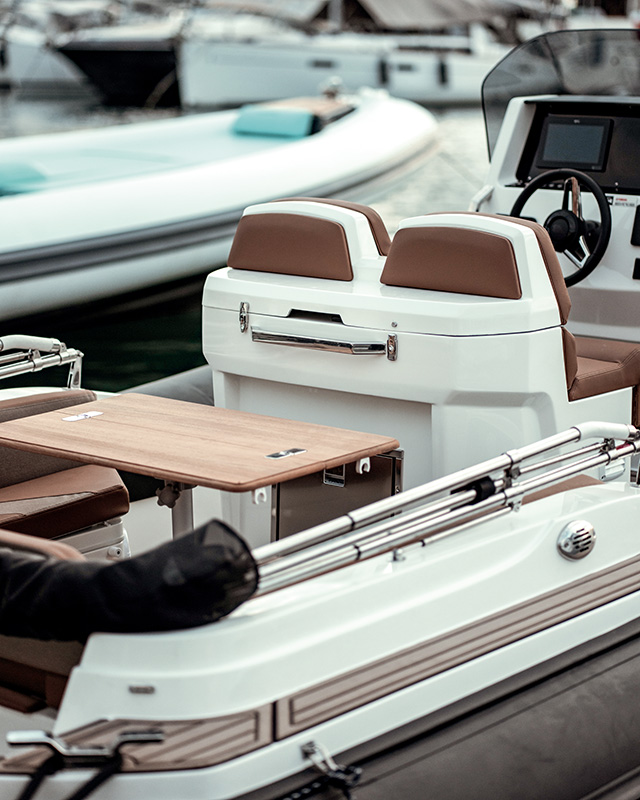
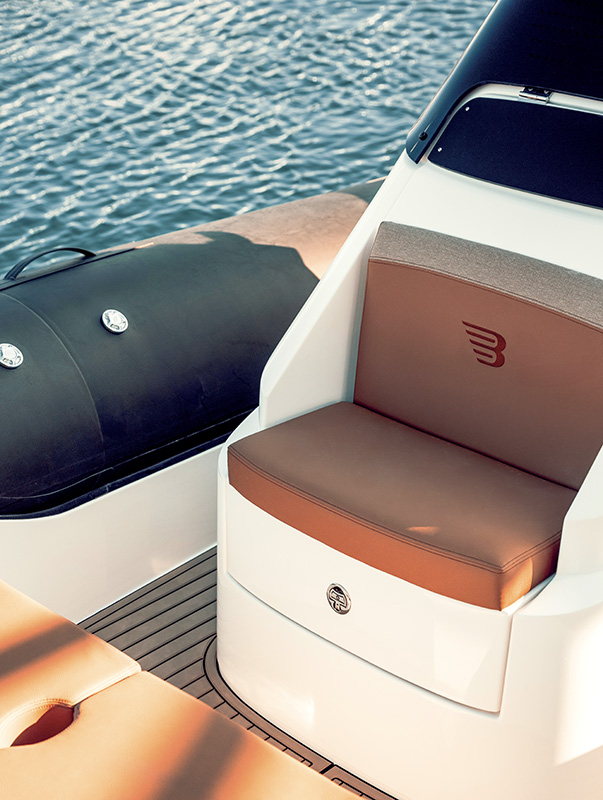
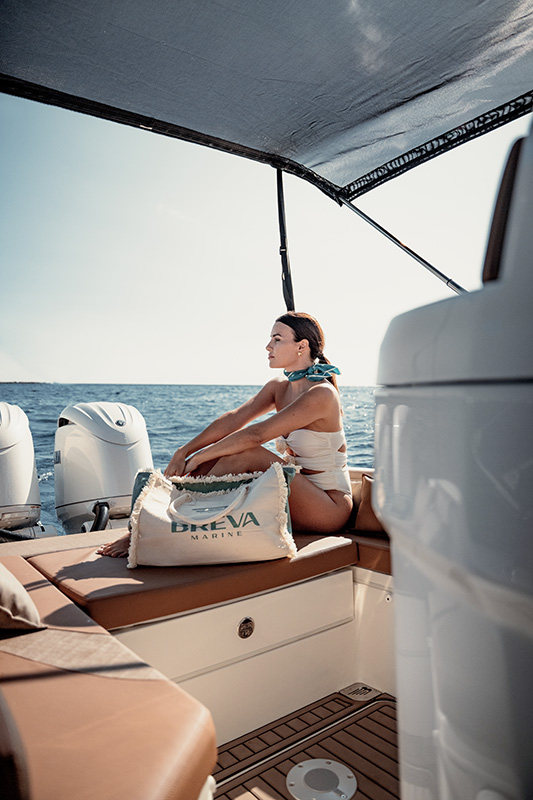
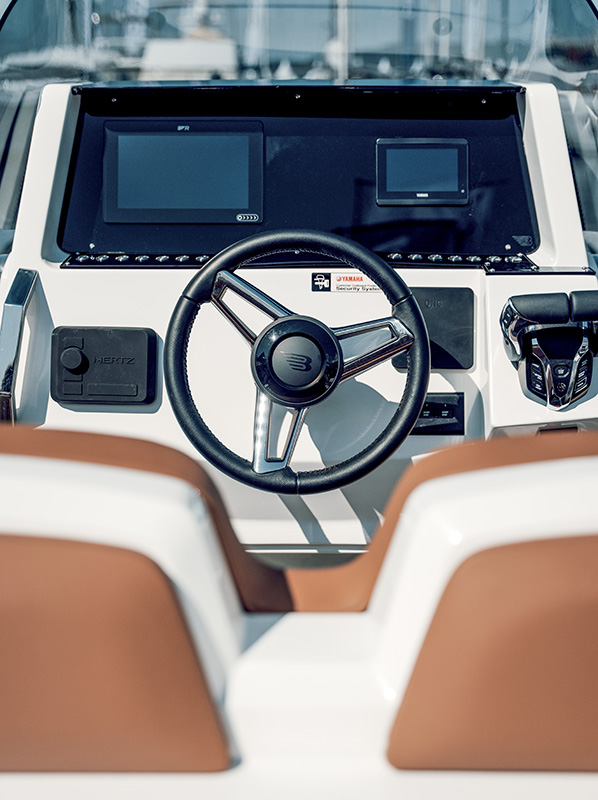
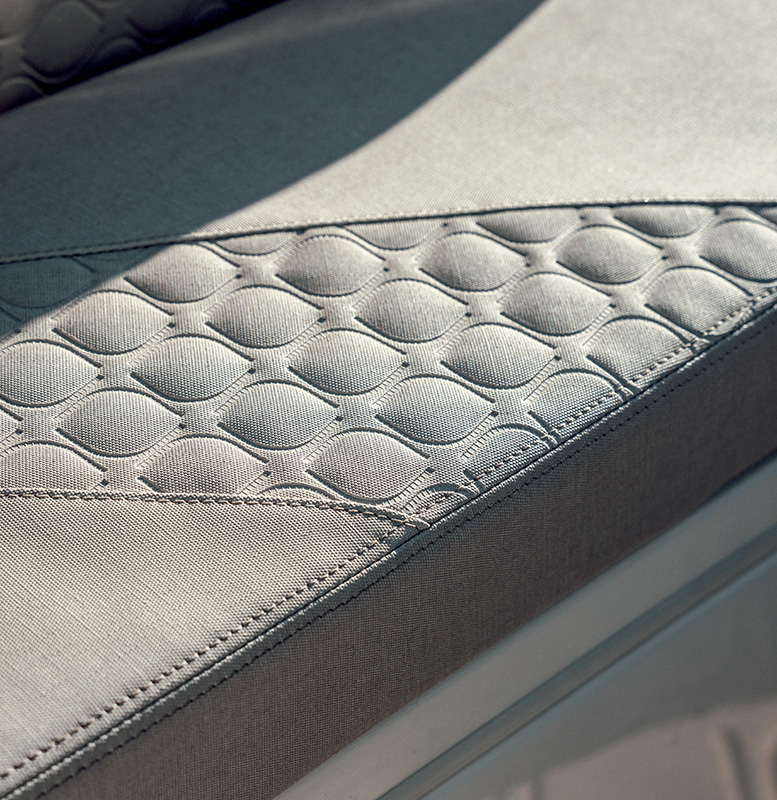
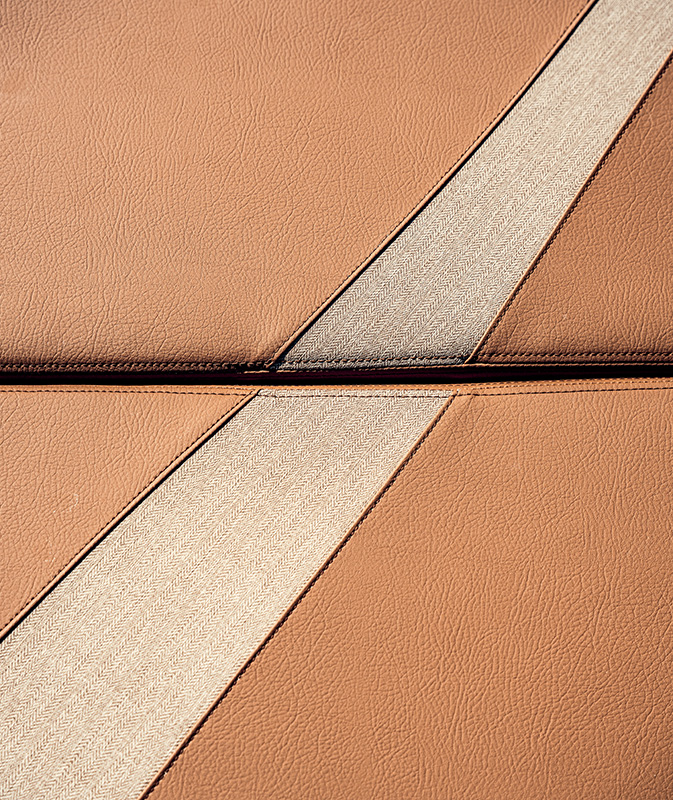
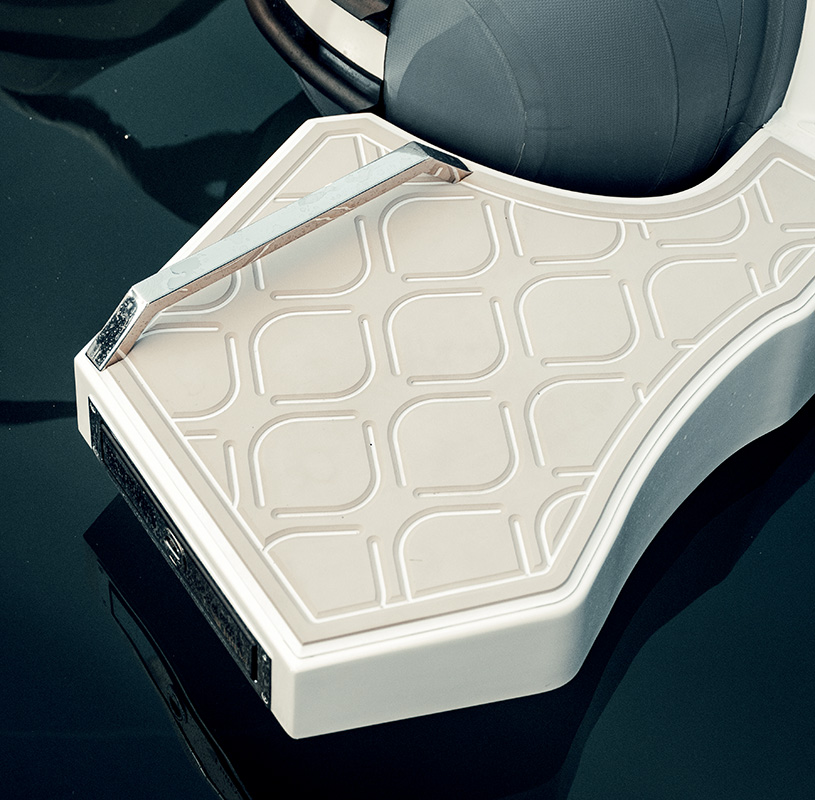
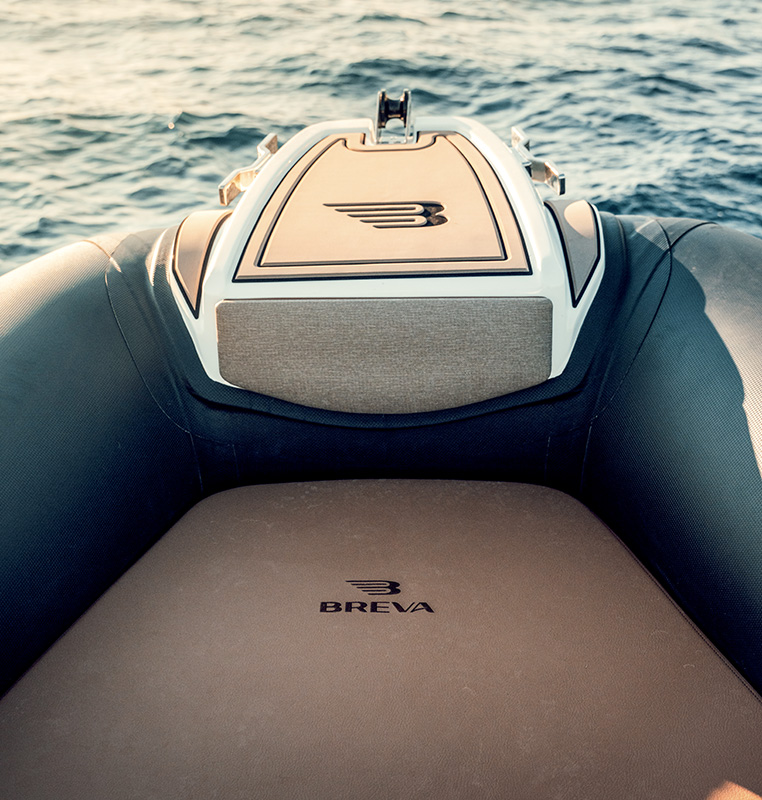
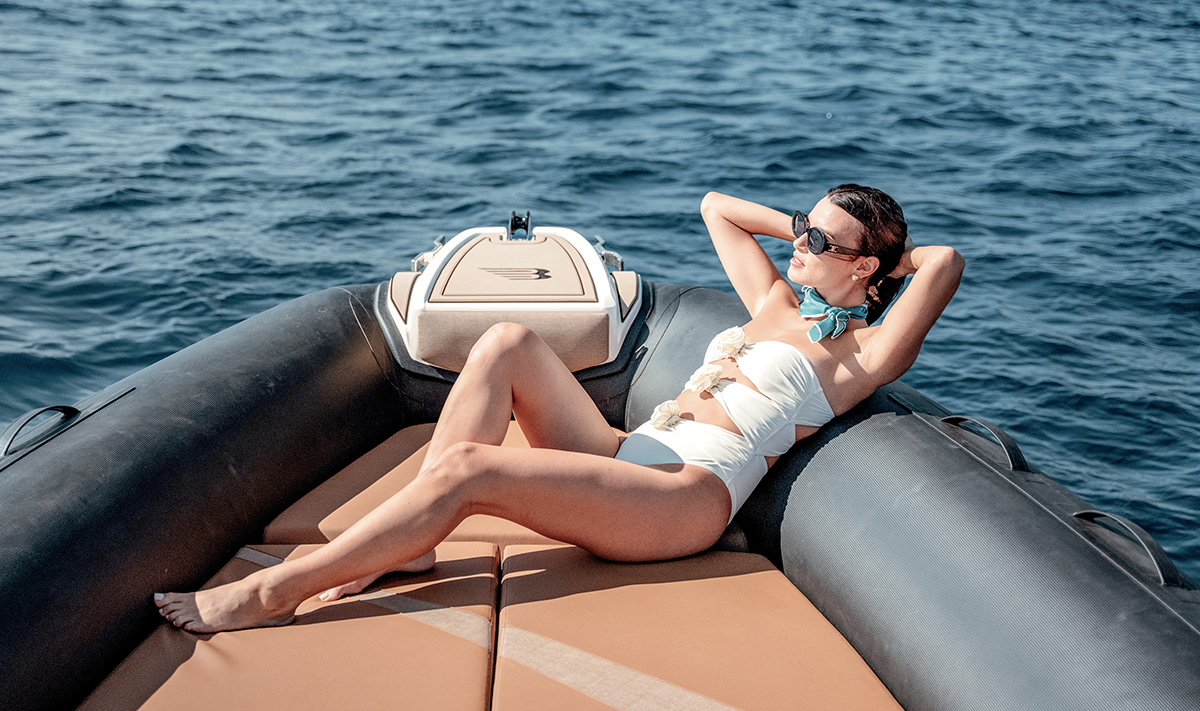
The moulds are made in Turkey, while all the fittings, including cushions, are made in-house. It is precisely this organisation that allows Breva Marine to offer extensive customisation. The deck layout features a well-protected square cockpit surrounded by fibreglass and containing a U-shaped sofa. The pilot and co-pilot seats and the steering console are located in the centre of the boat. The spaces are optimised, as the bridge is large enough to accommodate all the necessary instrumentation, and the windscreen is not bulky. Nevertheless, it provides adequate protection, and it is always easy to move around the boat. The bow area is designed as a sunbathing area, while at the stern, the bimini top protects the living area, which can obviously be converted into a second sunbathing area.
Specific details show that whoever designed and built this boat knows what is needed for sailing. The bollards, for example, are numerous, well-sized and located in the right place. The anchor roller solution is also efficient. There is just the right amount of fibreglass: neither too much nor too little. The roller is therefore solid and well supported, but not bulky, in the sense that it does not obstruct the view towards the bow, even when the Breva 800 is not yet out of the water.
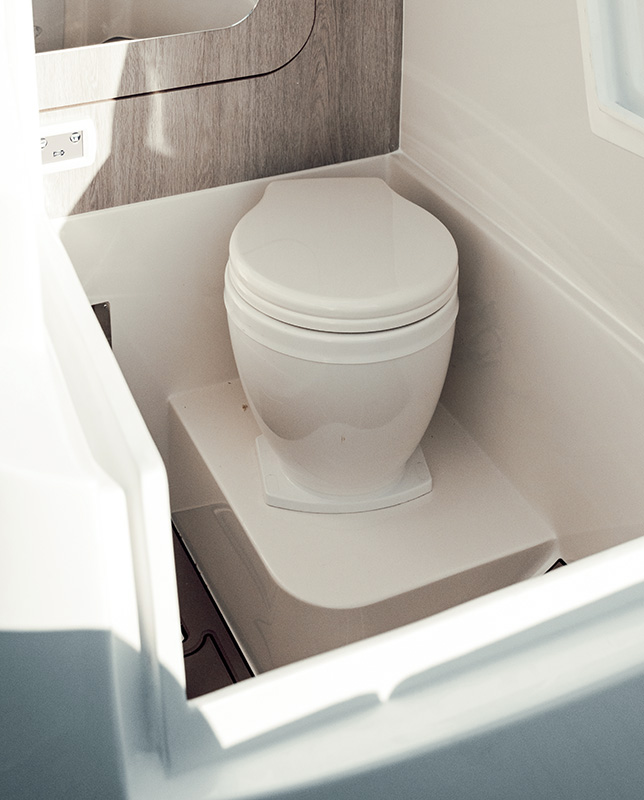
The Breva 800 can be fitted with or without a bathroom and powered with one or two outboard engines.
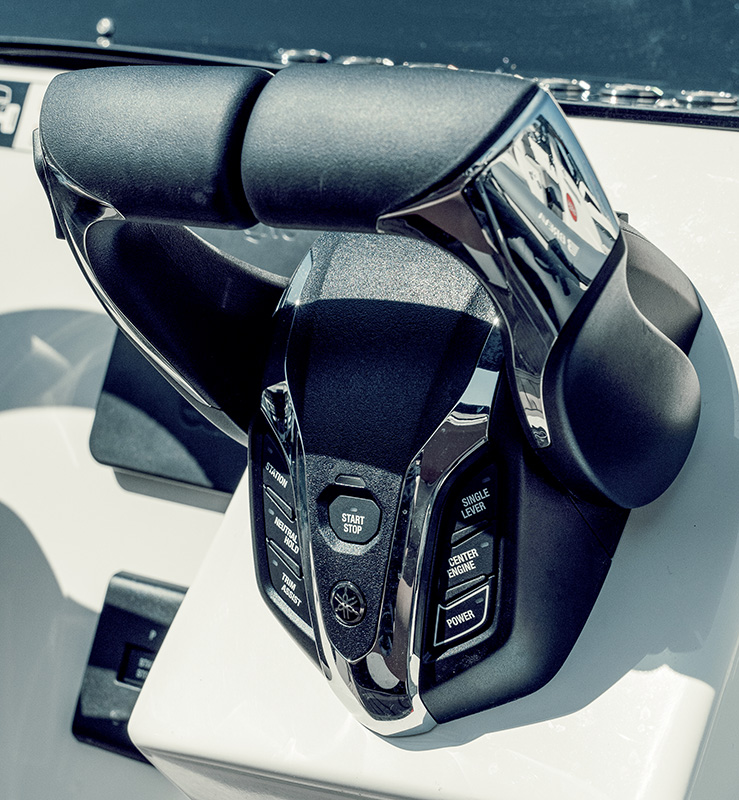
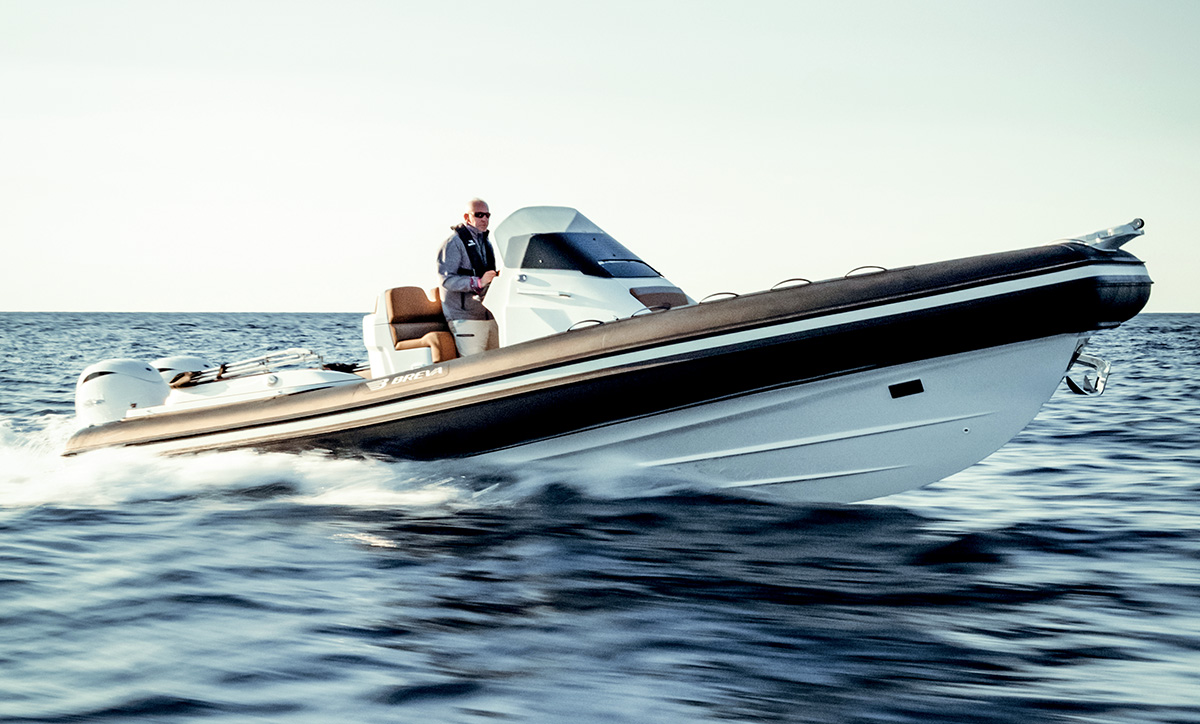
Among the many options, there is also the choice of motorisation. The possibility of choosing between single and twin engines allows you to prioritise the safety offered by a pair of outboards or the economic savings, both in terms of purchase and maintenance, provided by a single engine. The test model had just one engine: a 300 hp Mercury Verado V8. The thrust was more than sufficient, reaching a top speed of 38 knots. With a different propeller pitch, it would probably have been possible to rev the engine to its maximum and get an even higher top speed.
The rule of three S’s is respected: stable, safe and straightforward. Breva 800 has a hull that guarantees all these characteristics.
At the helm, the boat felt very manoeuvrable and easy to steer. Half-metre waves were never a problem, even at top speed. This means that the V-shaped bow performs its task very well. But the deadrise angle of the hull is also correct, as the hull is always stable and well planted on the water. The hull’s waterlines are particularly appreciated for their ability to reach and maintain planing speed. I slowed to 2400 rpm and just under 11.5 knots, and the Breva 800 was still planning. Such a low planning speed also implies a wide range of possible cruising speeds. Between 11.4 and 38 knots, all things considered, there are more than twenty-five knots to choose from for your preferred speed.
Engine data
A single 300-horsepower engine was more than enough to deliver excellent performance in both acceleration and speed.
HULL L.O.A. 8.57m • Length 7.85m • Maximum beam 2.99m • Draft 0.40m • Tube’s diameter 0.61m • 6 compartments • Dry weight 1,500 kg • Fuel tank volume 450 l • Water tank volume 70 l • Maximum power rated 400 hp
MAIN PROPULSION Mercury Verado 300 • Outlet mechanical power 229 kW (300 hp) • 8 V-shaped cylinders • Swept volume 4.6 l • Dry weight 272 kg
EC CERTIFICATION CAT B
PRICE* The price is € 96,000 + VAT, including: 300 hp engine (Mercury or Yamaha, customer’s choice), 9” GPS + Probe (Raymarine or Garmin, customer’s choice), Hertz Marine Audio Package (Radio + 2 Speakers)
*The price refers to January 2026
(Breva 800 – The wind is still blowing – Barchemagazine.com – Excerpted from Barche, January 2026)