Design, efficiency, and technology all come together in the Grand Soleil Blue, a sailing boat equipped with an auxiliary electric motor, which has its sights set on the future of the weekend cruiser
by Joseph Culicchia
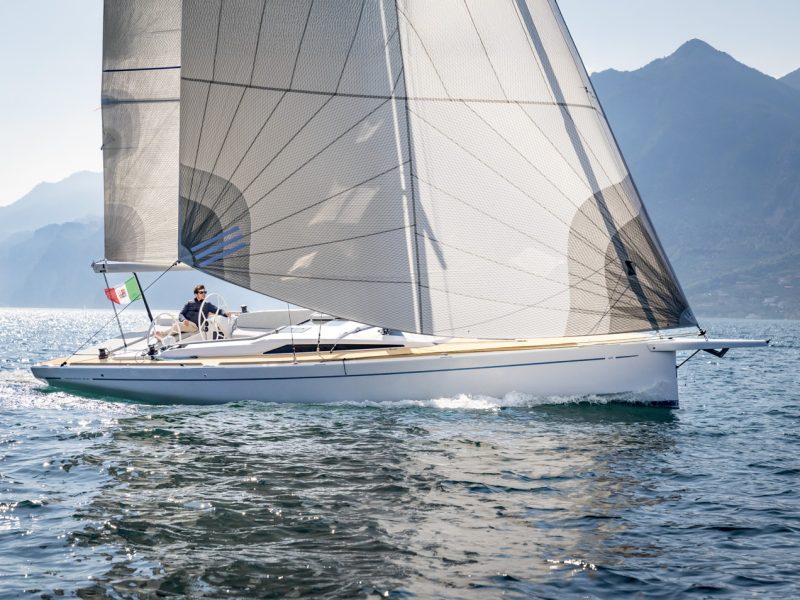
We tried out the Grand Soleil Blue, whose naval architecture was designed by Matteo Polli, and whose interiors and deck are the work of Nauta Design. It is 11.30 metres long overall, and the hull is 9.99 metres, giving it a natante small boat classification. The beam reaches up to 3.70 metres, providing ample room, and the draught is 2.20 metres. The mast is set well back, allowing for a sizable jib, while the mainsail features a square top.
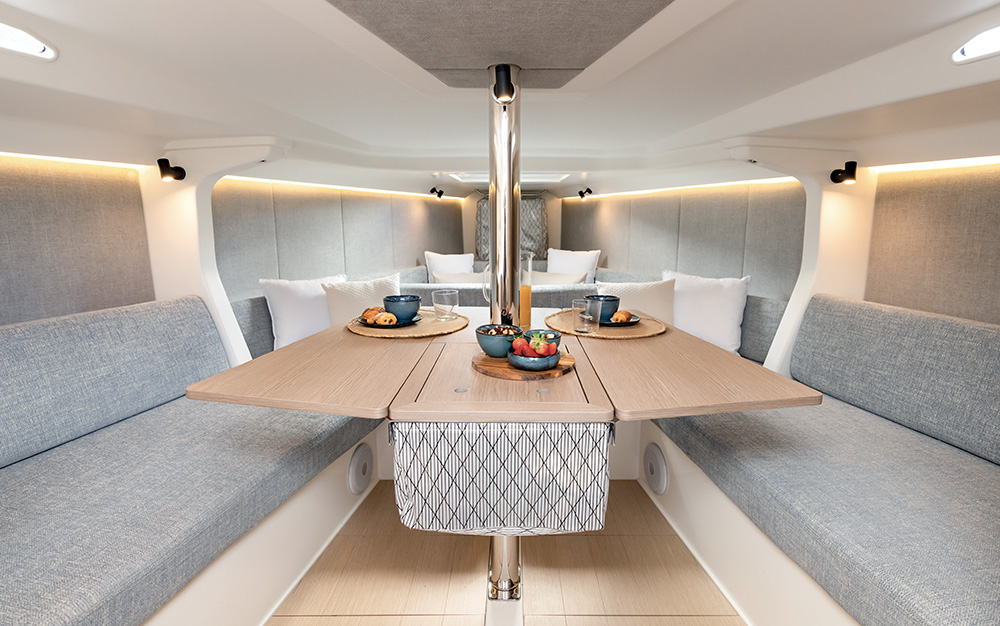
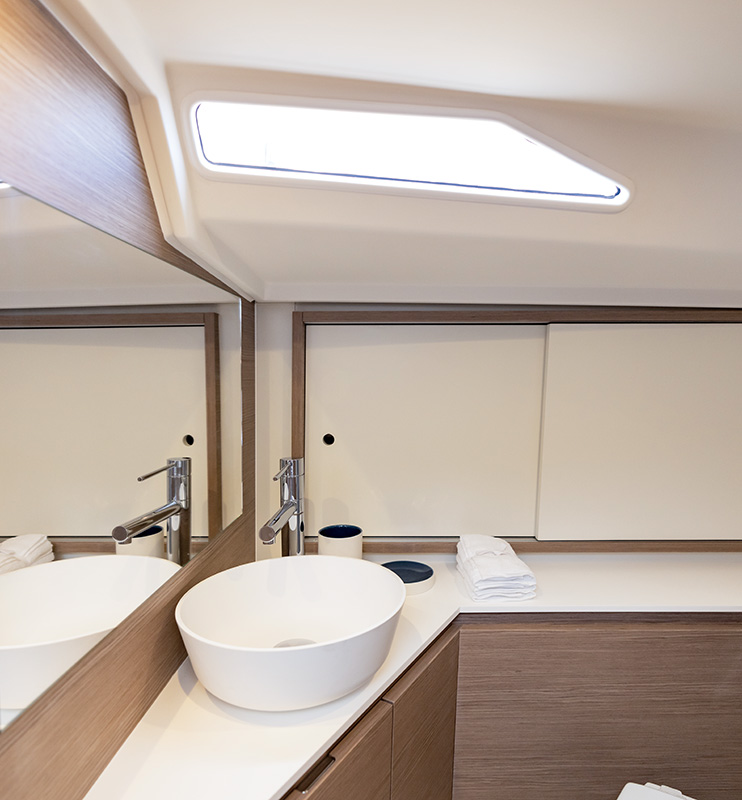


The GS Blue is also ideal for enjoying a day or a weekend at sea. The sun deck at the stern can be extended to provide additional space during harbour stops. The interior is not exceptionally spacious, but it features a sofa that converts into a berth, a small galley and a bathroom.
The boat features a streamlined shape with a wide and spacious aft section. The sun pad, which is also comfortable for use while underway, is fitted with sofas aft of the two wheels on the stern. With such a wide stern, the wake is flat, and that makes it comfortable when sailing. You can add lifelines in carbon fibre or Dyneema, and the stanchions can be left up or taken down as you like. The design of the boat reflects the vision of the engineer who, as an enthusiast and competitive sailor, has made the boat fast, using a different concept from the two preceding models.


The boat was made using thermoplastic resin, a recyclable technology developed by NL Comp. Through a chemical process that does not require heat, the resin can be melted and separated from the glass fibres. This enables the fibres to be cleaned and reused.
The sloping cross-trees make the boat very pleasant, even when manoeuvring. During the test at Malcesine, located on the northern shore of Lake Garda, we experienced flat water with the southern Ora wind varying from 10 knots upwards, accompanied by gusts of up to 19 knots. One of the first things I noticed was how easy it was to handle the boat, even without assistance from others, thanks in part to the self-tacking jib and furler. The foresail is fitted with fabric sliding sails. All of the halyards run through to the stern, and there is no need to go forward to raise and trim the mainsail on the cleats around the mast. A significant aspect of this approach to yachting is that the winches are electric, allowing the mainsail, jib, and jennaker to be raised and lowered easily.

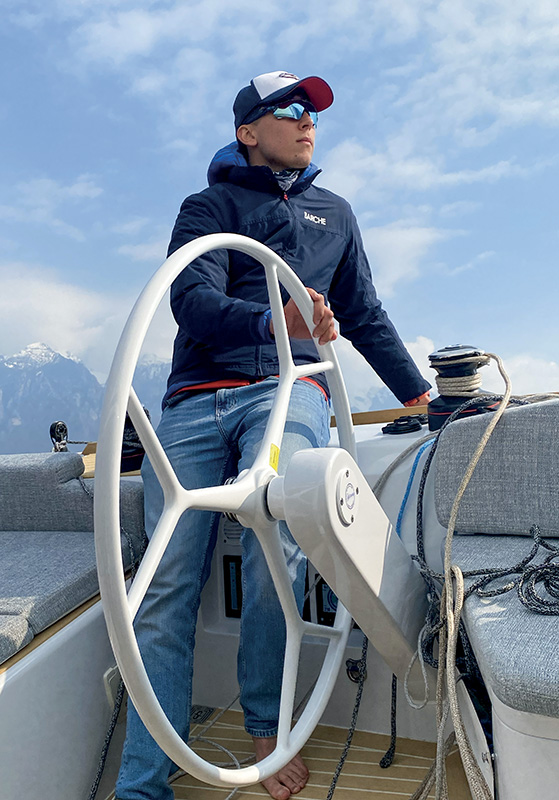
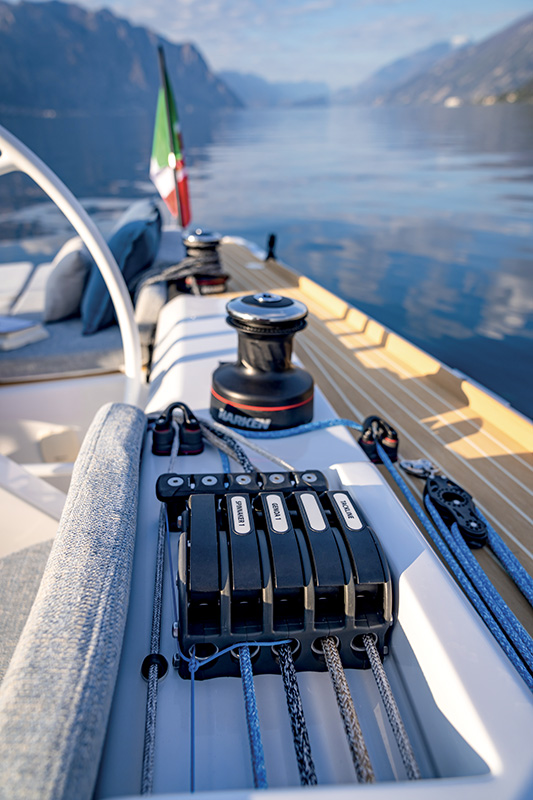
When running on the quarter, at an angle of 130–155°, the boat performs well without any sudden bursts of speed in gusts, which is consistent with a hull designed for comfort. When sailing close-hauled (40° TWA), the result is surprisingly good for a cruising boat: speeds of around 6.5–7 knots can be achieved.
The boat was perfectly set up for the weather conditions during our test, featuring a full-batten mainsail (38 m²) without reefing, a jib (26 m²), and, while going downwind, a 100 m² jennaker. It also has a code zero and genoa. The sails have been made from thermo-plastic materials produced by the OneSails firm, and the 4T FORTE are the first “green sails” in the world. The membranes and their assembly are designed to satisfy the highest standards in terms of environmental impact and recycling options. Sailing close hauled was pleasant, with an angle of 40 degrees and 15 knots of wind, it maintained a speed of between 6 and 7 knots. We got to 10.4 knots on a broad reach. Going downwind, the boat tilted to an angle of 130/155 degrees with an average speed of 8.5 knots.

The choice to fit a double wheel was, I would say, in line with the concept of favouring comfortable movement on board; even though, while manoeuvring, I would have preferred a single wheel to get greater precision when coming out of a manoeuvre. The boat is built using a new generation thermoplastic resin, which emerged from R&D by NL Comp, a firm specialising in sustainable innovation in the nautical sector. In contrast to traditional resins, this material is completely recyclable at the end of its life cycle. Using a chemical process which does not require heat, this resin can be liquefied and separated from the glass fibre that composes the structure. Once cleaned, the fibres can be reused for new applications, significantly reducing the environmental impact and promoting a circular economy even in boat building.
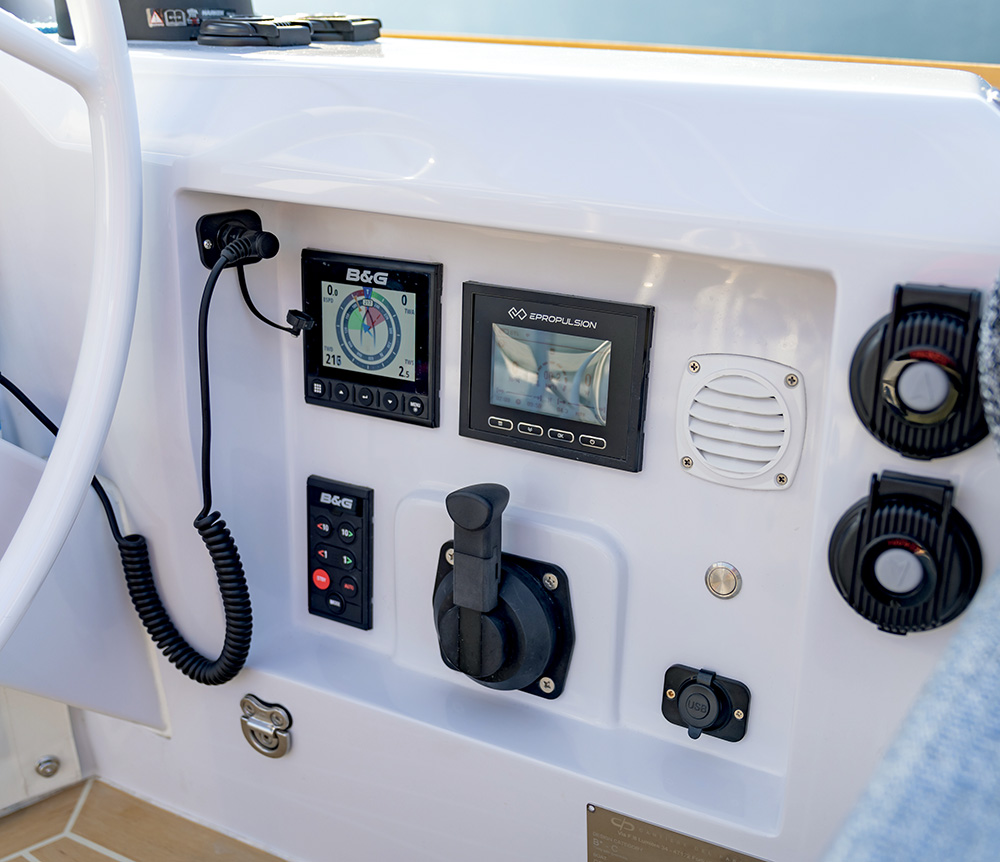
They have also paid attention to sustainability with the innovative 6 kW system by e-Propulsion, which is driven by 8 kW lithium batteries for optimal duration. Furthermore, the boat is equipped with a hydrogenation system that integrates with the propeller and propulsion pod, allowing it to generate 250 watts at a speed of six knots. To complete the system, solar panels provide an additional 340 watts, contributing to a greater range and making the boat even more eco-friendly. The naval architect Matteo Polli, a yachtsman and designer of this and a lot of other Cantiere del Pardo sailing boats, talked about this aspect: “The batteries that feed the electric engine can recharge from solar panels on the foredeck, or when back at the quayside, using a quick charge of around half a day to top it right up, with 230-volt cables. The system has also been designed to recharge using hydrogenation while underway; that way, the propeller recharges the battery when it turns, like an electric car going downhill”.
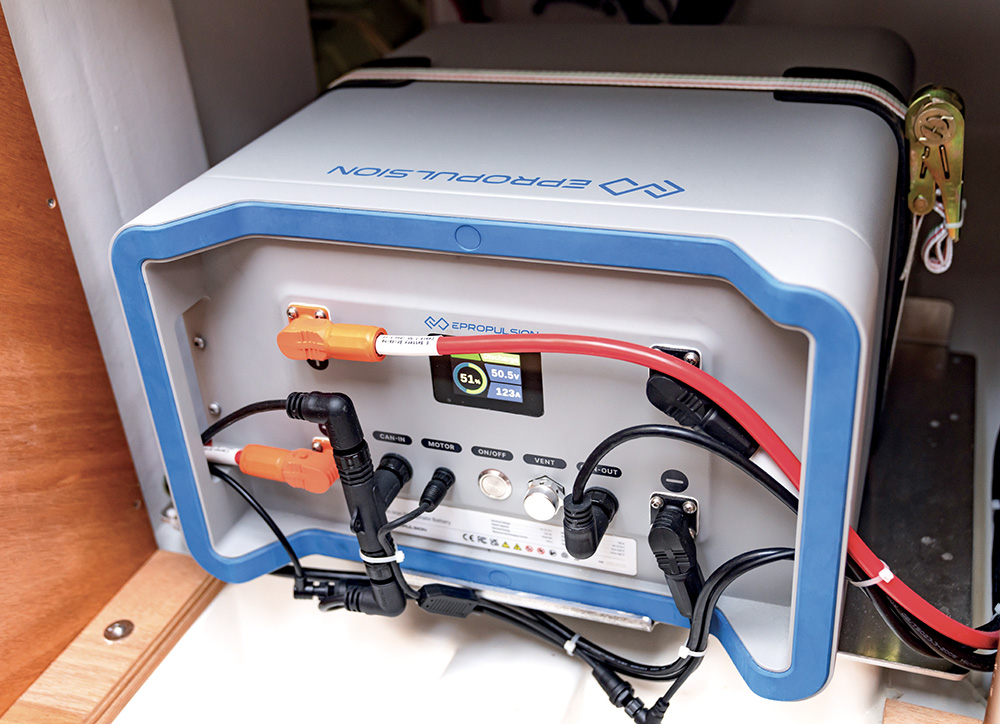
Hydrogenation is necessary because if you limit your use of the propeller during the day, the energy obtained from it while sailing will allow you to return to port with the batteries in the same condition as when you left. Solar panels enable charging during the week. Let’s assume that the boat is only used at weekends. Thanks to the solar panels, the batteries are fully charged by the end of the week. This means that it is not necessary to connect to the shore power supply to ensure the propulsion system is ready for use. It is also possible to recharge the batteries using a cable and a charging station.
The standard battery pack enables the GS Blue to travel approximately thirty nautical miles at a speed of around five knots, which translates to around six hours of continuous engine use. With the double pack, that increases to twelve hours. The Solbian photovoltaic system, which produces approximately 340 watts, is seamlessly integrated into the deckhouse and is designed to be walked on, featuring an anti-slip finish for added safety. In addition to recharging the engine battery pack, this system can transfer excess energy to the pack that powers on-board hospitality services, ensuring an optimal balance of loads and improved overall energy efficiency. If you use the solar panels alone, it takes around a week to completely recharge the batteries, which aligns with the design project’s idea of having them recharge before going out again on the weekend, without needing to set up a cable on the quayside. There is also a separate battery pack, which is distinct from the engine’s battery, due to safety and ease of use considerations for the electric winches. This allows you to raise the sails with minimal effort while sitting in the cockpit.

«The entire project was designed to facilitate the easy separation of materials, including wood and steel. To recycle a boat, the materials must be separated without incurring excessive costs». Matteo Polli
CANTIERE DEL PARDO
Via F.lli Lumiere 34
I-47122 Forlì (FC)
T. +39 0543 782404
www.cantieredelpardo.com
PROJECT
Matteo Polli (naval architecture) and Nauta Design (interiors and superstructure)
HULL
LOA 11.30m • Length 9.99m • Maximum beam 3.70m • Draft 2.20m • Displacement 3,500 kg • Main sail surface 38 m² • Jib surface 26 m² • Jennaker surface 100 m²
EC CERTIFICATION
CAT C
PRICE*
From 229,000 € Excl. VAT as standard
*The price refers to August 2025
(Grand Soleil Blue – Set the course for sustainability – Barchemagazine.com – Excerpted from Barche, August 2025)