A Magnum 40 from the 1990s with modern technology for the ultimate sailing experience. The credit for this goes to Yacht Stabilizers in Viareggio
by Niccolò Volpati – photo by Andrea Muscatello
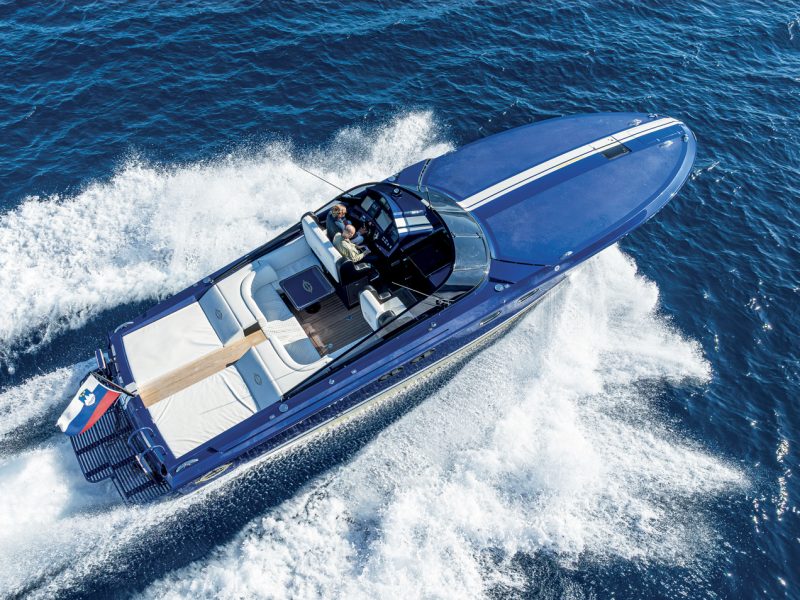
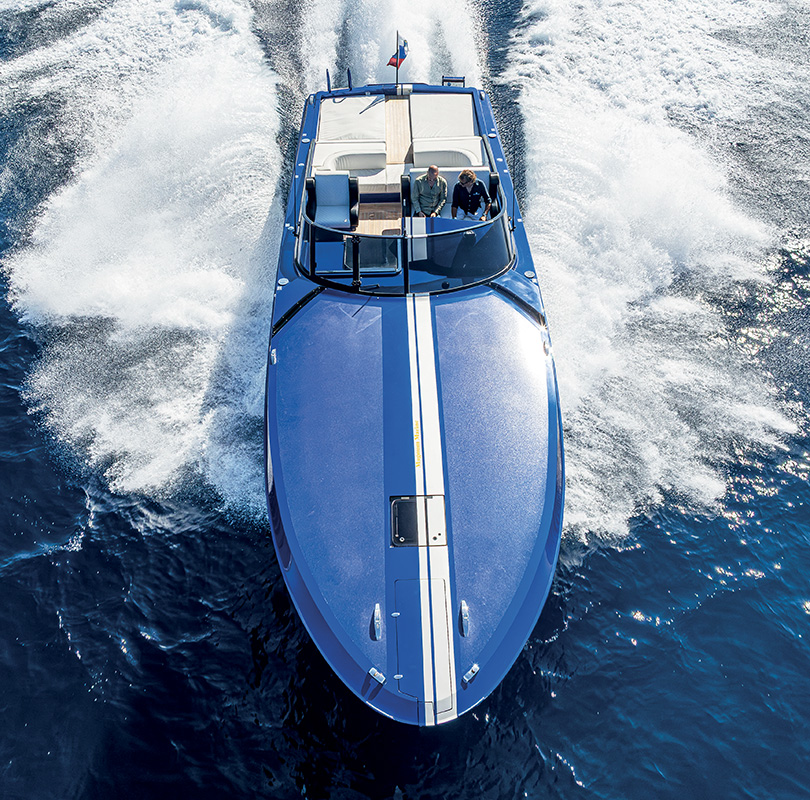
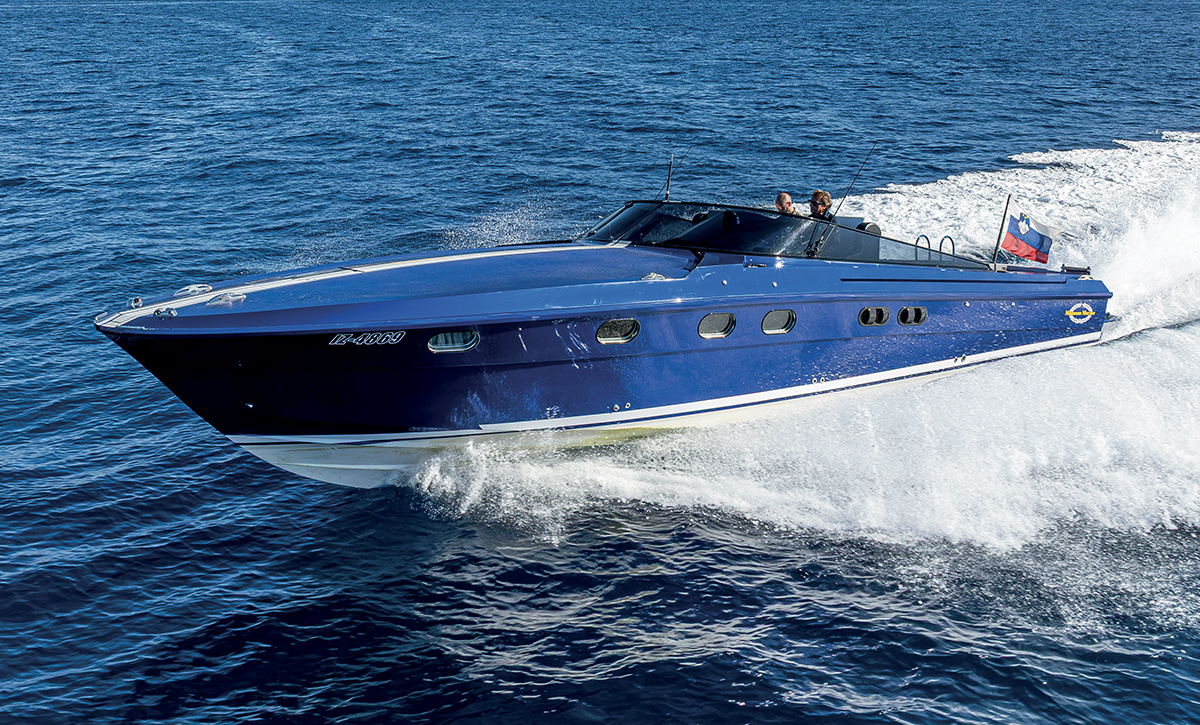
Walking around Pavilion B of the Genoa Boat Show, it was impossible not to notice it. Not least because whoever refitted it chose an electric blue colour that certainly does not go unnoticed. There it was, the Magnum 40. Using a term that is overused these days, it can rightly be called an iconic boat. It dates back to 1990, but it doesn’t seem outdated at all. In fact, the feeling I get when I look at it from the quay is the same as when I look at an old photo. Anyone portrayed in an image from a few decades ago seems perfectly fit and slender. We were slimmer and more beautiful, and that wasn’t just because we were younger.
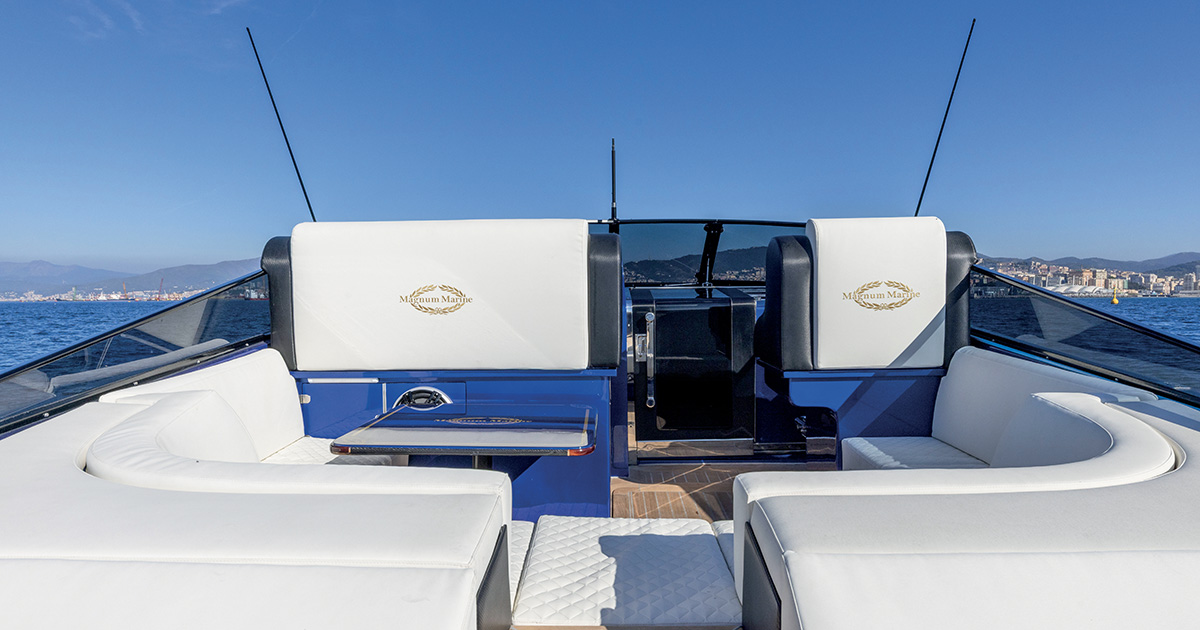
The boat is designed exactly like in the old days: living area in the centre, proper motorboat deckhouse, stern platform for access to the sea, and surface propellers covered.
The same applies to boats. Aesthetics mattered once, but not today. Modern boats often look very different at first glance. They are wider and taller than they are long, and resemble a photograph of overweight people. They are decidedly less slender than they used to be. Magnum 40 is a motorboat, a beautiful motorboat, which needs no further definition… day, weekender, long cruise… no, none of that. It is simply a motorboat, just as you have always imagined it, just as you have always dreamed of it.
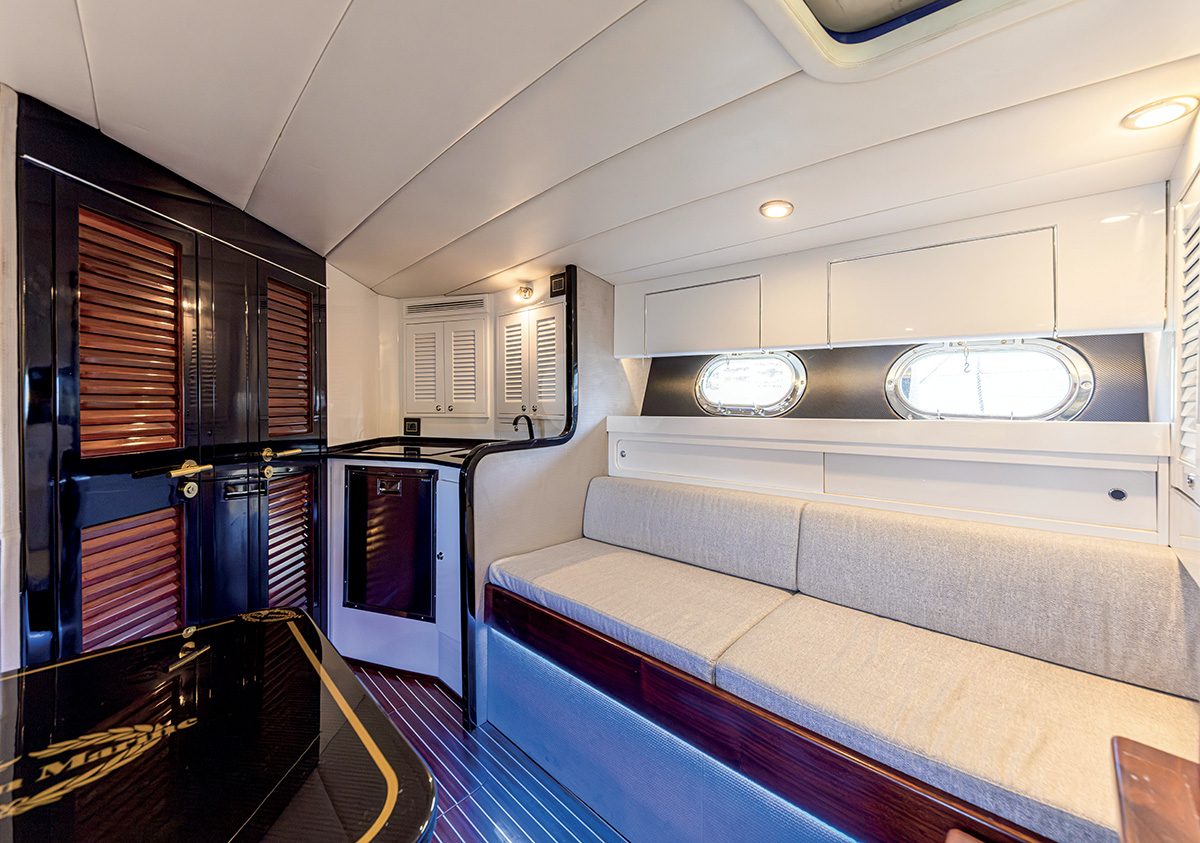
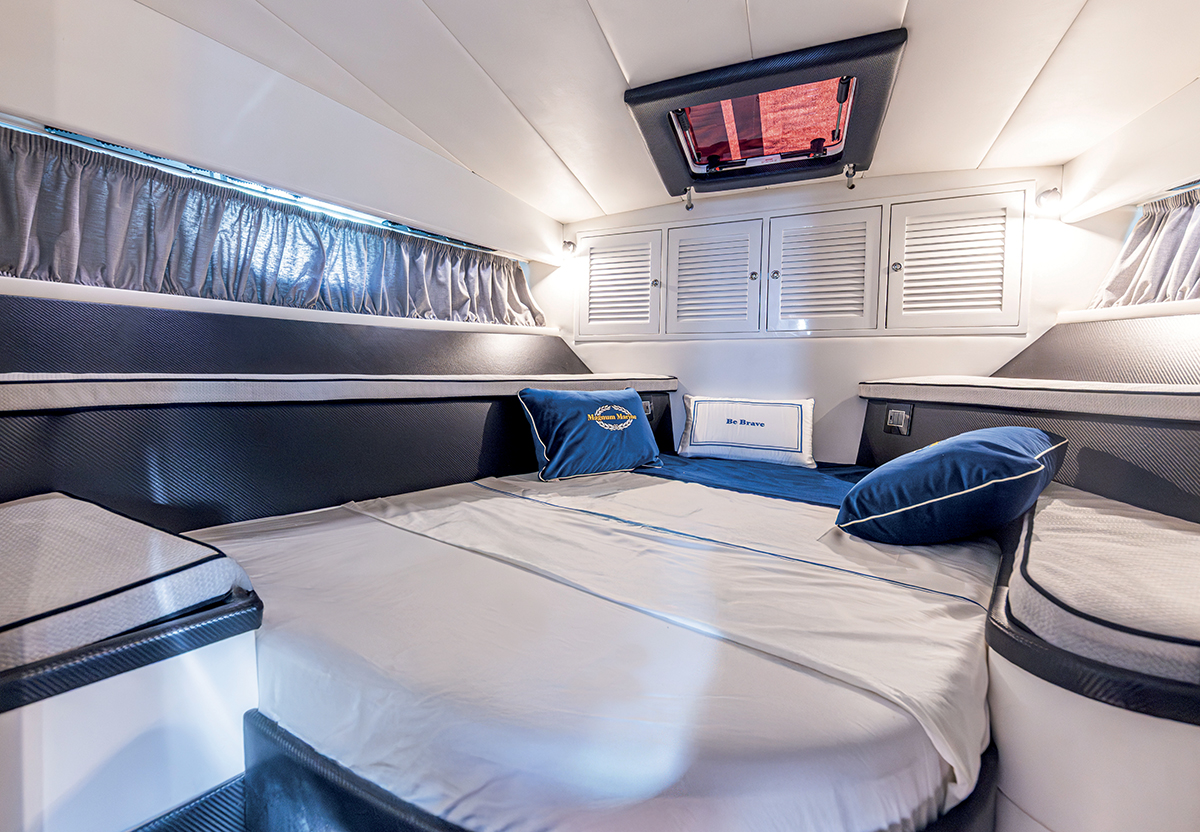
The fabrics and some interior materials have been changed, but the layout remains essentially the same. The dinette is comfortable even when riding the waves, as is the cabin.
“It was a challenge for us because this isn’t just a simple refit, but a complete reconstruction”, says Marcello Porciani, Project Manager and Sales Representative at Yacht Stabilizers in Viareggio. Climbing aboard, I feel as if I’ve been transported back to the 1990s. The intervention is significant, but it fully respects the original spirit of this nautical icon. Yacht Stabilizers’ philosophy is to remain faithful to the original, making the necessary improvements to bring the boat up to date and make it more comfortable.
Nothing has been radically changed, but the changes are significant, for example, in the use of carbon fibre. It is no coincidence that the boat weighs two tonnes less than the original Magnum 40.
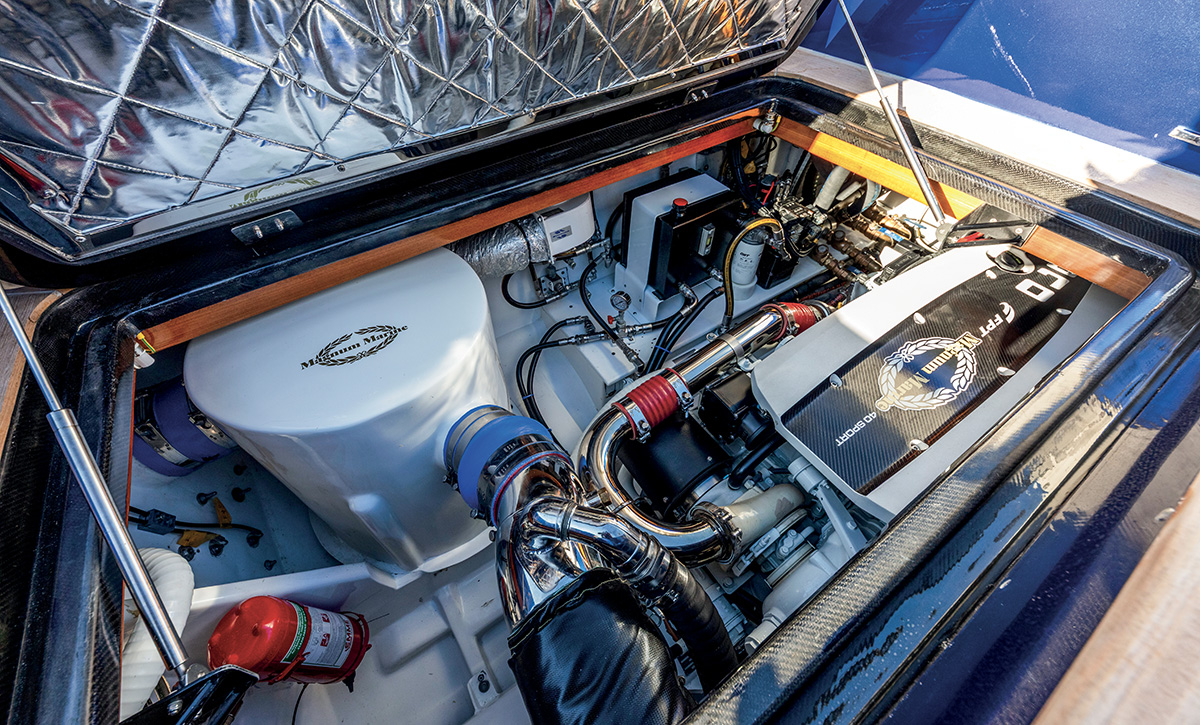
“In the past, engine rooms were only resin-coated and barely gel-coated, and an oil stain would remain forever. Here, however, we have panelled and enamelled it, treating it like the exterior of a hull. We then added accessories and systems, including the Seakeeper gyroscopic stabiliser, and paid particular attention to the routine maintenance of everything in the engine room. In other words, we focused on making it easier to access the systems.It is not true that the engine rooms of the past were small and cramped. There is space, but it is often distributed lengthwise rather than heightwise. It is therefore necessary to set it up sensibly, so that maintenance can be carried out without having to dismantle or remove everything inside it”, explains Porciani. I find the same philosophy both on deck and inside. Nothing has been radically changed, but the changes are significant, for example, in the use of carbon fibre. It is no coincidence that the boat weighs two tonnes less than the original Magnum 40. The advantage, as you might expect, is that performance is even better in terms of both speed and fuel consumption.
«It was a challenge for us because this is not a simple refit, but a complete reconstruction». Marcello Porciani
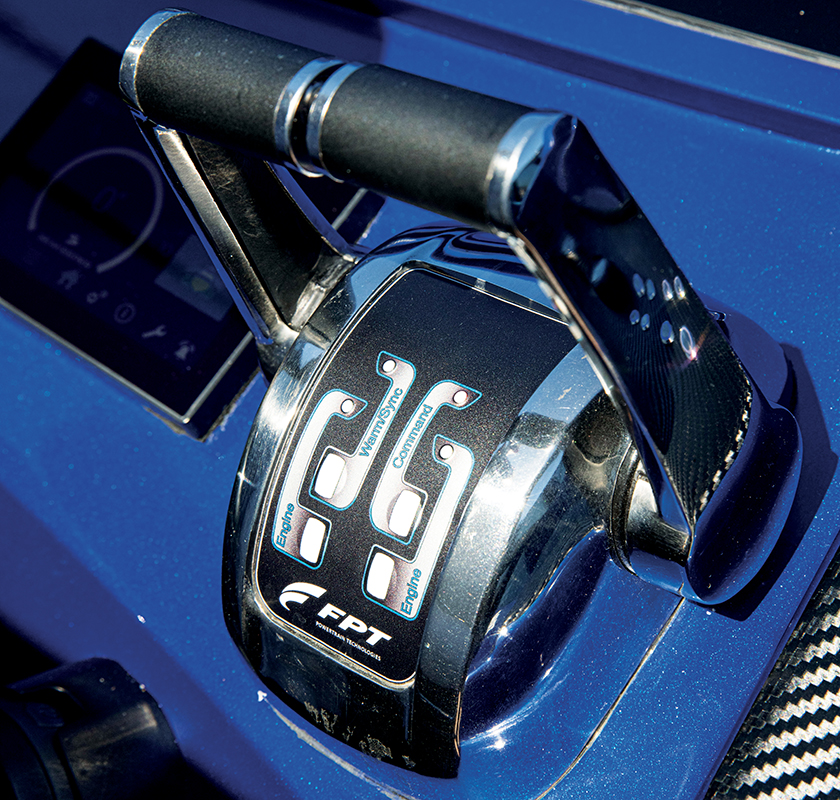
The engines installed are two 6.7-litre FTPs, each with 570 horsepower. Once we leave the breakwater at Genoa, we can speed up to a maximum of 42.6 knots, which is really exciting! At all cruising speeds, we use 5 litres of fuel per mile, but that’s not the best part. The best part is the feeling you get at the helm. It’s like diving back into an experience I had already had and moored in some remote corner of my brain. Wow! That’s what sailing was all about! Now I remember. A smooth hull that cuts through the wake without any problems and a hull that tilts just enough, turning neither too much nor too little. I rediscovered the balance that designers and shipyards were able to achieve magically, even though they designed waterlines without the help of software or fluid-dynamics studies. Fluid dynamics was in their DNA, and they passed it on to the hulls they built.
The Seakeeper 3 stabiliser is also highly effective when sailing. With the sea abeam, it can even increase the boat’s speed.
The Magnum 40 by Yacht Stabilizers is a boat made for sailing. Do you remember what sailing means? It is not a particularly tedious activity to get from one dock to another. Sailing is a wonderful feeling, and this boat lets you experience it. The Seakeeper 3, once installed, is just what you need to increase comfort, not only at anchor but also while sailing. The effectiveness of the gyroscopic stabiliser is beyond question, but in this case, it was not a foregone conclusion. “Seakeeper works well on ‘unsuitable’ boats. Those with imperfect or very high waterlines, which are subject to intense rolling, are the perfect example of this. The gyroscope is remarkably effective in such cases”, explains Marcello Porciani. But how does it perform with a Magnum? Despite not being a three-storey building and having an almost perfect hull, it significantly improves comfort when sailing, particularly in crosswinds. To see this, switch it on and off. Seakeeper on the Magnum 40 is the classic icing on the cake. Not everything new is bad. The same applies to Arneson surface propellers, which, thanks to electronics, have become very easy to use. FTP and Arneson, in fact, have an automatic flap and trim adjustment system that lets you focus exclusively on navigation without worrying about trim
Engine room
The two 570-horsepower FTP engines are ideal for achieving a top speed of over 42 knots and very low fuel consumption.
HULL Loa 12.24m • Maximum beam 3.80m • Draft 0.80 m • Dispacement 8.5 t • Fuel tank volume 1,400 l • Water tank volume 300 l
MAIN PROPULSION 2x FTP N67 EVO • Outlet mechanical power 419 kW (570 hp) • 6 cylinders in line • Swept volume 6.7 l • Compression ratio 15.8:1 • Bore & Stroke 104mm x 132mm • Rotation speed 3200 rpm • Dry weight 721 kg
EC CERTIFICATION CAT B
(Magnum 40 – Italians do it better – Barchemagazine.com – Excerpted from Barche, January 2026)